








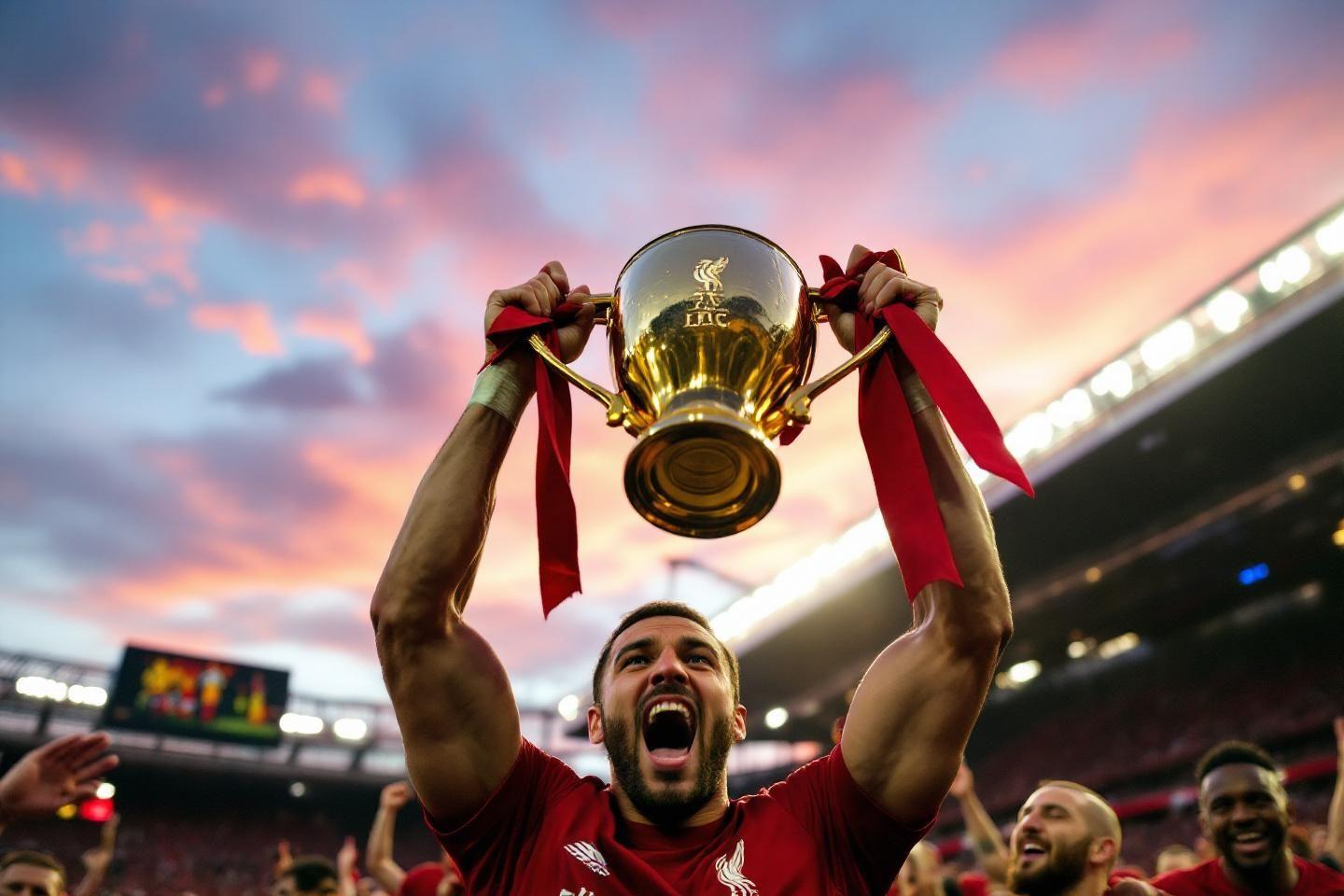
Financial performance in professional football continues to evolve as clubs seek new revenue streams and commercial partnerships. The latest Deloitte Football Money League rankings reveal significant shifts among Europe’s most lucrative sporting institutions, with Liverpool’s historic achievement marking a watershed moment for English football. The Merseyside club’s ascension reflects both their on-pitch success and their ability to maximize commercial opportunities in an increasingly competitive market.
Historic achievement marks new era for Merseyside giants
Liverpool’s emergence as the highest-earning English club represents a remarkable milestone in their storied history. The Anfield outfit generated 836 million euros in revenue, surpassing traditional powerhouses to claim this distinction for the first time. This financial breakthrough coincided with their Premier League title triumph, demonstrating how sporting excellence directly translates into enhanced commercial value. The club’s ability to leverage their brand across multiple revenue streams has positioned them at the forefront of English football’s financial landscape.
The achievement is particularly noteworthy when considering the competitive nature of modern football economics. Manchester United’s decline to eighth position marks their lowest ranking since the Money League’s inception 29 years ago. The Old Trafford club, which previously topped the rankings on 10 occasions with their last appearance in first place coming in 2017, now faces challenges in maintaining their historical financial dominance. Their absence from European competition and early exits from domestic cup competitions have significantly impacted their matchday income, illustrating how on-field performance directly influences financial outcomes.
Meanwhile, Manchester City experienced a drop from second to sixth position with revenues of 829 million euros. This shift demonstrates that even sustained sporting success cannot guarantee financial supremacy when other clubs optimize their commercial operations more effectively. The landscape of English football finance has become increasingly dynamic, with major transfer investments reflecting clubs’ ambitions to maintain competitive advantages both on and off the pitch.
European giants dominate global football revenue rankings
Real Madrid retained their position as the world’s highest-earning club with revenues reaching 1.2 billion euros, despite failing to secure either the Champions League or La Liga titles. Their commercial prowess alone generated 594 million euros, a figure that would independently place them in the top 10. This remarkable achievement underscores the Spanish club’s exceptional brand power and their ability to monetize their global fanbase effectively.
Barcelona reclaimed their spot in the top three for the first time since the 2019-20 season, generating 975 million euros despite the significant disruption of playing away from their iconic Nou Camp stadium during renovations. Bayern Munich occupied third position with 861 million euros, while Paris St-Germain, the reigning Champions League victors, secured fourth place with 837 million euros. These figures demonstrate the continuing financial strength of Europe’s traditional powerhouses.
| Club | Revenue (millions) | Position |
|---|---|---|
| Real Madrid | €1,200 | 1st |
| Barcelona | €975 | 2nd |
| Bayern Munich | €861 | 3rd |
| Paris St-Germain | €837 | 4th |
| Liverpool | €836 | 5th |
Premier League dominance in financial rankings
English football’s commercial strength is evident through the representation of six clubs within the top 10. Arsenal positioned themselves seventh with 822 million euros, while Tottenham claimed ninth place with 673 million euros. Chelsea rounded out the top 10 with revenues of 584 million euros. This concentration of wealth within the Premier League reflects the competition’s global broadcasting appeal and its ability to attract lucrative commercial partnerships.
Beyond the elite tier, three additional English clubs featured in the top 20. Aston Villa secured 14th position with 450 million euros, Newcastle United ranked 17th with 400 million euros, and West Ham United completed the English contingent in 20th place with 276 million euros. The following breakdown illustrates the key revenue categories driving this growth :
- Commercial revenues increased to 5.3 billion euros from 4.9 billion euros
- Matchday income grew at the fastest rate, rising 16% to 2.4 billion euros
- Broadcast revenues expanded by 10% following expanded tournament formats
- Stadium utilization on non-matchdays contributed significantly to commercial growth
Balancing financial growth with player welfare concerns
The aggregate revenue of the top 20 clubs reached a record 12.4 billion euros, representing an 11% increase from the previous year. Tim Bridge, lead partner at Deloitte Sports Business Group, highlighted how clubs are increasingly taking ownership of their revenue-generating capabilities. The expanded Fifa Club World Cup, hosted in the United States, contributed to broadcast revenue increases, with participating clubs experiencing a 17% rise in this category.
However, this financial prosperity comes amid growing concerns about fixture congestion and player welfare. Fifpro, the global players’ union, has initiated legal action against Fifa regarding the expansion of the football calendar. Bridge emphasized that while new and expanded tournaments present substantial financial opportunities, clubs must balance revenue optimization with protecting both the value of on-field performance and player wellbeing. Money League clubs averaged more games during the 2024-25 season compared to previous campaigns, reflecting both tournament expansion and the sporting ambitions of elite institutions.
Deloitte’s methodology converted all figures using a 12-month average exchange rate of 0.84 British pounds per euro. The analysis demonstrates that while Manchester United once set industry benchmarks for matchday and commercial revenues, their competitive advantages have diminished as rivals have developed sophisticated commercial strategies and maximized alternative revenue streams.