



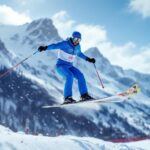



When spectators watch freestyle skiing and snowboarding competitions at the Winter Games, they might be surprised to see the Australian flag appearing regularly on the podium. This southern hemisphere nation, better known for its beaches and sunshine than its alpine terrain, has emerged as an unexpected powerhouse in winter sports. With five medals secured at the 2026 Milan Cortina Games, including multiple gold finishes, Australia has shattered its previous Winter Olympics records and established itself as a legitimate contender on the snow.
The question naturally arises : how does a country synonymous with summer activities develop world-class athletes in disciplines typically dominated by nations with extensive winter infrastructures ? The answer lies in strategic planning, government investment, and the same innovative spirit that has propelled Australian athletes to excellence across numerous sporting arenas.
The transformation from national embarrassment to Olympic excellence
Australia’s journey toward winter sports success has its roots in a summer setback. During the 1976 Montreal Olympics, the Australian team failed to secure a single gold medal for the first time since 1936. This disappointing performance triggered a national conversation about the country’s approach to elite athletic development and sparked what would become a revolutionary transformation in Australian sports.
The government’s response was decisive. In 1981, then-Prime Minister Malcolm Fraser inaugurated the Australian Institute of Sport in Canberra on Australia Day. This facility was designed to identify promising young athletes and provide them with world-class training environments, cutting-edge sports science, and professional coaching. The AIS quickly became recognized internationally as a model for athletic development, producing champions across multiple disciplines.
The impact was dramatic for summer competitions. Australia climbed back to prominence, winning 18 gold medals at the 2024 Paris Games and securing 53 medals overall. This success demonstrated that systematic investment in athlete development could yield remarkable results, even for a nation with a relatively small population. The question then became whether this model could be adapted for winter sports despite the obvious geographical and climatic challenges.
Building winter sports infrastructure in an unlikely environment
Australia does experience winter and possesses a mountain range called the Australian Alps, with several ski resorts operating in New South Wales and Victoria. However, these facilities face significant limitations compared to European or North American counterparts. Lower elevations and inconsistent snowfall create challenges for year-round training, and climate change has exacerbated these difficulties.
Recognizing these obstacles, the Australian Olympic Committee established the Olympic Winter Institute of Australia in 1998. Rather than attempting to compete across all winter disciplines, the OWIA focused resources strategically on action sports like freestyle skiing and snowboarding, along with sliding events and speed skating where Australian athletes could realistically compete for medals.
Investment in domestic facilities has grown substantially as success breeds further support. Jakara Anthony, who claimed gold in women’s dual moguls, highlighted the improved training environments now available within the country. Mt. Buller and Mt. Parisher feature excellent mogul courses, while the Geoff Henke training center near Brisbane includes a state-of-the-art water ramp facility. These developments allow athletes to train at home for significant portions of the year, reducing costs and maintaining connections with family and support networks.
| Training Facility | Location | Specialty |
|---|---|---|
| Mt. Buller Mogul Course | Victoria | Moguls skiing |
| Mt. Parisher Training Area | New South Wales | Freestyle disciplines |
| Geoff Henke Center | Near Brisbane | Water ramps, aerial training |
Solving the tyranny of distance through European strategy
Perhaps the most ingenious solution to Australia’s geographical challenges came in 2011 when the AIS opened a European training base in Gavirate, approximately 70 miles from Milan. This facility emerged from a reciprocal training agreement with Italy and was strategically positioned near the Swiss border and Lake Lugano, providing easy access to numerous World Cup venues across Europe.
Fiona de Jong, director of the Gavirate facility, explained that the center addressed what she called “the tyranny of distance.” Australian athletes competing on the World Cup circuit would otherwise face repeated 24-hour flights between their home country and competition venues. This exhausting travel schedule makes it nearly impossible to maintain peak performance and recover adequately between events.
The European base allows athletes to remain closer to competition venues during the winter season, participating in more events and gaining crucial experience against top international competitors. Athletes can train consistently without the physical toll of constant long-haul travel. The facility’s proximity to Milan Cortina, though coincidental when it opened, has proven particularly advantageous during these Games.
Creating a culture of belief and sustainable success
Beyond infrastructure and geography, Australia’s winter sports success stems from a developing culture of excellence within the athlete community. Matt Graham, who earned bronze in men’s dual moguls, described witnessing this evolution firsthand over four Olympic cycles. At the 2014 Sochi Games, the team was young but hungry, with veteran athletes demonstrating what was possible and inspiring the next generation.
Key elements of Australia’s approach include :
- Peer inspiration : Success breeds belief as younger athletes see compatriots winning medals
- Unique training methods : Australian teams develop distinctive approaches that give them competitive advantages
- Long-term athlete development : Programs support competitors across multiple Olympic cycles
- Government funding stability : Consistent investment allows for strategic planning and facility improvements
Josie Baff, gold medalist in women’s snowboard cross, emphasized that Australian teams have developed their own distinctive methods that foster mutual inspiration among teammates. This collaborative environment, combined with world-class facilities and coaching, creates conditions where athletes can achieve their full potential despite training far from traditional winter sports powerhouses.
The future looks increasingly bright as young Australians witness their heroes succeeding on the world stage. Anthony expressed excitement about the next generation of athletes who will benefit from opportunities that didn’t exist when she began her career. With each Olympic cycle bringing improved infrastructure, greater experience, and expanding talent pools, Australia’s presence on winter sports podiums will likely continue growing in the years ahead.