








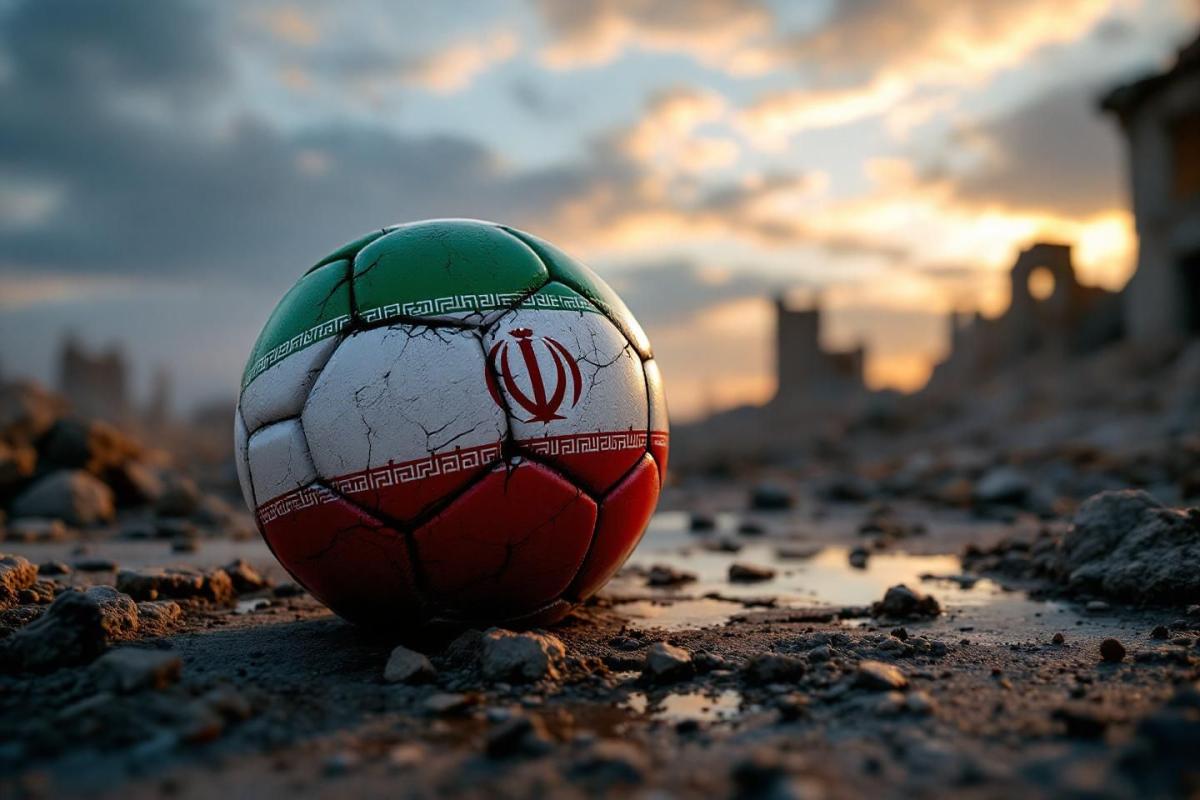
The upcoming FIFA World Cup in North America faces unprecedented uncertainty as Middle Eastern conflicts raise serious questions about team participation. With escalating tensions between Iran and the United States, the tournament scheduled to begin in June confronts challenges that extend far beyond the pitch. The situation has evolved rapidly, transforming what was already a controversial sporting event into a potential diplomatic crisis that could reshape the competition’s landscape.
Geopolitical turmoil threatens Iranian participation
The Islamic Republic finds itself in an extraordinarily precarious position as military confrontations with Washington and Tel Aviv intensify. Following devastating strikes that eliminated key leadership figures, including Supreme Leader Ayatollah Ali Khamenei, the nation faces a profound power vacuum. This political instability creates immense uncertainty regarding who possesses the authority to make decisions about the national team’s World Cup involvement.
Mehdi Taj, president of Iran’s football federation, expressed grave concerns through statements to Varzesh3. His remarks suggested that expecting the country to anticipate the tournament with enthusiasm seems unrealistic given current circumstances. The leadership crisis complicates matters further, as the succession process for selecting Khamenei’s replacement remains murky. Without clear governmental direction, determining whether Iran will withdraw from or maintain its commitment to the competition becomes increasingly complex.
The timing could hardly be worse, with the nation’s opening group stage match against New Zealand scheduled for June 15 in Los Angeles. As violence escalates across the region, Iranian football officials must balance national pride in sporting achievement against the realities of wartime priorities. FIFA general secretary Mattias Grafström acknowledged the situation during an International Football Association Board meeting in Wales, noting that the organization continues monitoring developments while maintaining focus on delivering a safe tournament with full participation.
Pre-existing diplomatic obstacles compound current crisis
Even before recent military escalations, significant barriers to Iranian participation already existed. The Trump administration’s travel restrictions, implemented in previous years, prevent Iranian supporters from entering United States territory. This policy creates an unusual situation where passionate fans cannot follow their national team during group stage matches scheduled for California and Washington state venues.
Athletes and coaching staff received exemptions from these travel prohibitions, yet tensions surfaced during preparations for the World Cup draw ceremony. Tehran threatened to boycott the December event in Washington after American authorities initially denied visas to delegation members. Eventually, a limited Iranian contingent attended the proceedings, including the national team’s head coach, but the incident highlighted underlying friction between the nations.
| Group G Teams | FIFA Ranking Estimate | Previous World Cup Appearance |
|---|---|---|
| Belgium | Top 10 | 2022 |
| Iran | 20-30 Range | 2022 |
| Egypt | 30-40 Range | 2018 |
| New Zealand | 40-50 Range | 2010 |
The draw placed Iran in Group G alongside New Zealand, Egypt, and Belgium. This grouping presents competitive challenges under normal circumstances, but current geopolitical realities transform preparation and participation into questions of national security rather than merely sporting strategy. The contradiction between hosting a global celebration of football while maintaining policies that exclude certain nations’ supporters reveals deeper tensions within the tournament’s organization.
Regional disruptions affect broader sporting landscape
The Middle Eastern conflict’s ripple effects extend beyond Iran’s potential absence from the competition. Qatar’s football federation suspended all domestic tournaments and matches indefinitely after Doha became a target for Iranian airstrikes. Authorities advised residents to shelter in place as violence threatened civilian infrastructure. The QFA announcement carefully avoided direct references to military operations but acknowledged that competition resumption dates would be announced when circumstances permit.
Transportation challenges have emerged as another complication affecting international sports. Formula 1 teams preparing for the season-opening Australian Grand Prix faced significant logistical hurdles. Melbourne’s March 8 race date approaches, yet many participants typically transit through Doha and Dubai airports, now subject to airspace restrictions and security concerns. These disruptions demonstrate how regional conflicts create cascading effects across global sporting calendars.
The expanded World Cup format, featuring 48 participating nations across matches in the United States, Canada, and Mexico from June 11 through July 19, was designed to celebrate football’s global reach. However, the tournament now confronts questions about whether universal participation remains achievable amid international tensions. FIFA must navigate complex diplomatic waters while maintaining its stated commitment to hosting a safe and inclusive competition.
Uncertain timeline raises fundamental questions
With approximately 100 days remaining until tournament kickoff, the situation’s rapid evolution makes prediction exceptionally difficult. Several critical factors will determine Iran’s ultimate participation status :
- Political stabilization within Iran following leadership transitions and succession processes
- Diplomatic negotiations between Washington and Tehran regarding travel restrictions and security guarantees
- FIFA’s willingness to accommodate or enforce participation requirements amid extraordinary circumstances
- Regional conflict de-escalation that might reduce immediate security threats
The Iranian national team represents more than sporting ambition for millions of supporters worldwide. Their presence or absence from the World Cup carries symbolic weight far exceeding match results. Whether diplomatic channels can facilitate participation or whether military realities will force withdrawal remains uncertain. As events continue unfolding across the Middle East, the football world watches anxiously, hoping that sport might transcend conflict even as that prospect seems increasingly fragile. The coming weeks will prove decisive in determining whether Iran takes the field when the tournament begins, or whether geopolitical forces will claim another casualty in this most global of sporting events.