








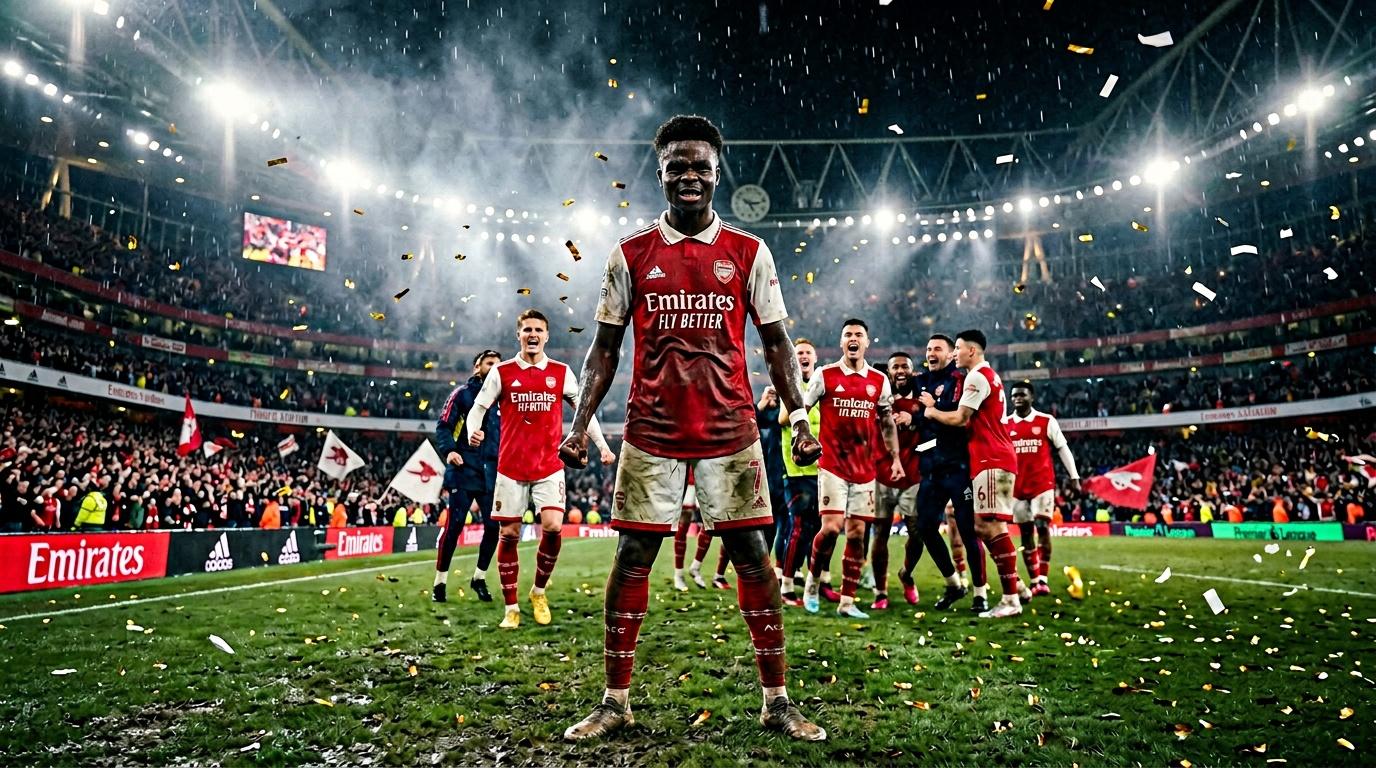
The Premier League title race has taken a fascinating turn, with Arsenal positioning themselves as the team everyone loves to criticise. Yet their controversial 1-0 victory over Brighton on March 5th, 2026, might prove to be the pivotal moment that secures their first championship in over two decades. While Mikel Arteta’s squad faces mounting scrutiny over their tactical approach, the seven-point cushion they’ve established suggests that criticism matters little when silverware is at stake.
The match at Amex Stadium was far from a footballing spectacle. Arsenal registered a meagre 0.01 expected goals in the first half, with Bukayo Saka’s early strike proving decisive. The Gunners managed just two shots on target throughout the ninety minutes, yet emerged victorious. This marked their tenth single-goal victory of the campaign, underlining their ability to grind out results regardless of performance quality.
Brighton’s boss challenges Arsenal’s competitive approach
Fabian Hurzeler did not mince his words when assessing the encounter. The Brighton manager had publicly questioned Arsenal’s time-wasting tendencies before kick-off, and the match itself only reinforced his concerns. His post-match assessment was scathing : “I think there was only one team who tried to play football today”, he declared, expressing pride in his players’ commitment to attractive football despite the defeat.
The German coach went further, questioning whether anyone genuinely enjoyed watching the spectacle unfold. He suggested that perhaps only one dedicated Arsenal supporter in the room might claim satisfaction with the entertainment value. Hurzeler’s frustration centred on what he perceived as systematic time-wasting and gamesmanship, tactics he vowed never to employ regardless of circumstances. He called for clearer boundaries from Premier League officials and referees to prevent such approaches from dominating matches.
His philosophical stance was clear : while acknowledging that every team engages in game management to some degree, he insisted limits must exist. The absence of effective regulation, he argued, allows teams to exploit the rules without consequence. For Hurzeler, this match represented everything wrong with prioritising results over footballing integrity, though his perspective was undoubtedly coloured by the frustration of dropping valuable points at home.
Arteta’s unwavering defence of his squad’s mentality
The Spanish manager responded to criticism with characteristic defiance. When confronted with Hurzeler’s pre-match comments, Arteta delivered a sarcastic “what a surprise” before noting the predictability of such accusations. He referenced previous games where similar criticisms had emerged, suggesting a pattern of opposition managers targeting Arsenal’s competitive edge when unable to secure positive results.
His most passionate defence came when discussing his players directly. “I love my players” became his mantra, repeated emphatically when addressing external scrutiny. Arteta argued that the attention Arsenal receives demonstrates their players’ significance within English football, sarcastically suggesting they might be the most loved ones in the country given how frequently they dominate discussion.
| Aspect | Arsenal’s approach | Critics’ perspective |
|---|---|---|
| Tactical philosophy | Pragmatic, results-focused | Overly defensive, time-wasting |
| Set-piece reliance | Strategic advantage | Limited open-play creativity |
| Competitive mentality | Championship-winning attitude | Dark arts employment |
| Entertainment value | Secondary to winning | Diminishes spectacle |
The manager’s “we look after our own garden” remark encapsulated his philosophy perfectly. Arsenal’s internal focus remains fixed on their objective rather than external perception. Whether this approach makes them unpopular or unloved champions is irrelevant to Arteta’s mission : delivering that long-awaited Premier League trophy after 22 years of waiting.
The villain narrative and championship credentials
Arsenal’s transformation into the antagonists of this title race stems from several factors. Their tactical approach has drawn particular attention, with opponents and pundits alike highlighting their proficiency in gamesmanship. The reliance on set-piece situations for goals has also attracted criticism, with detractors suggesting it masks deficiencies in open-play creativity.
However, the numbers tell a compelling story. Manchester City’s failure to beat Nottingham Forest on the same evening extended Arsenal’s advantage to seven points, a potentially insurmountable gap with the season entering its decisive phase. Key elements of Arsenal’s success include :
- Consistent ability to secure victories in tight matches where margins are minimal
- Defensive solidity that prevents opponents from capitalising on limited possession
- Mental resilience to withstand criticism while maintaining competitive standards
- Strategic mastery of set-pieces that provides reliable scoring opportunities
The question of whether Arsenal will care about their reputation if they secure the championship answers itself. After more than two decades without England’s top prize, the manner of victory pales against the achievement itself. History remembers champions, not the aesthetic quality of their performances along the journey.
Defining moments shape championship campaigns
The Brighton victory, ugly as it appeared, may ultimately be remembered as the turning point in Arsenal’s title pursuit. Championship campaigns are built on such nights, where character trumps quality and determination overcomes adversity. While neutrals might have found little entertainment value, Arsenal supporters celebrated wildly at the final whistle, understanding the significance of grinding out results when performance levels drop.
This isn’t a popularity contest requiring public approval or neutral appreciation. The Premier League championship rewards the team accumulating the most points over 38 matches, regardless of style or external opinion. Arsenal currently lead that race convincingly, their controversial methods proving effective despite generating disapproval from opposition managers and observers.
The joyous scenes among Arsenal’s travelling supporters contrasted sharply with Hurzeler’s frustration, perfectly capturing the divergent perspectives on the evening’s events. For the Gunners faithful, this represented another crucial step towards ending their championship drought. The combination of their victory and City’s dropped points created the perfect storm, potentially establishing an decisive advantage as the season approaches its climax.