








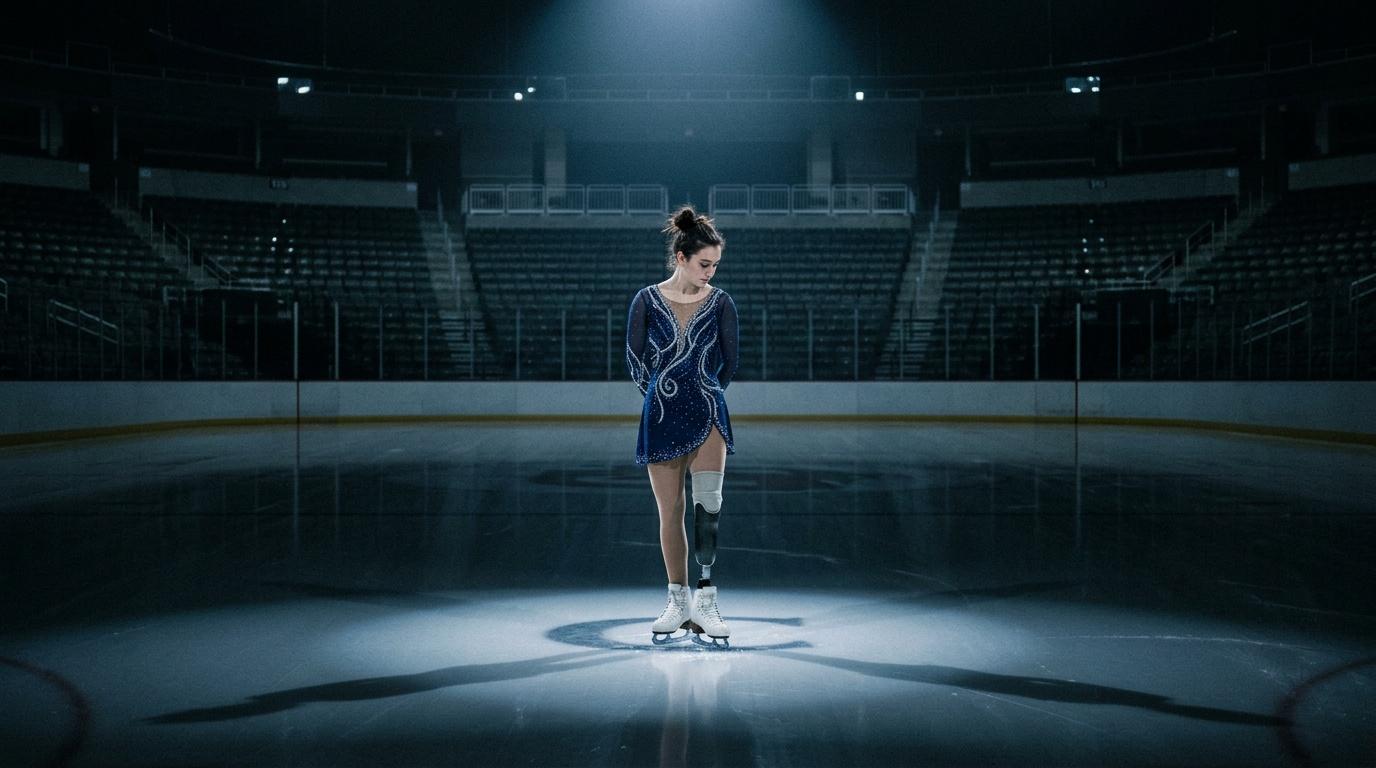
At the Milan-Cortina Winter Paralympics 2026, many fans noticed something unexpected. Figure skating, one of the most beloved disciplines in winter sports, is nowhere to be found on the programme. While millions worldwide associate ice skating with Olympic prestige and emotion, its absence from the Paralympic Games raises legitimate questions. Understanding why requires looking at both technical regulations and the current state of adaptive skating worldwide.
The current sports at the 2026 Winter Paralympics
The Milan-Cortina Games offer a focused but competitive programme. Only six Para sports are officially on the schedule, each meeting strict international standards set by the International Paralympic Committee (IPC).
Here is the complete list of sports featured at the 2026 Winter Paralympics :
- Para-Alpine skiing
- Para-biathlon
- Para-cross-country skiing
- Para-ice hockey
- Wheelchair curling
- Para-snowboard
What stands out immediately is that no skating discipline appears on this list. Neither figure skating nor short track speed skating made the cut. This is not an oversight or a logistical issue specific to Italy. It reflects a deeper, structural reality about how new sports are admitted into the Paralympic movement.
It is also worth noting that Para-snowboard was the last discipline added to the Winter Paralympics programme, back in 2014. That means over a decade has passed without any new sport joining the schedule. This stagnation frustrates many athletes and advocates who believe adaptive skating deserves a global stage.
Why figure skating is missing from the Paralympic programme
The road to Paralympic inclusion is long and demanding. For figure skating to appear at the Winter Paralympics, a very specific process must be followed. The International Skating Union (ISU), which governs figure skating and speed skating worldwide, must first obtain official recognition from the IPC. Without this recognition, no skating discipline can even be considered for inclusion.
But recognition alone is not sufficient. The IPC also requires that several key conditions be met before approving a sport. These include :
| Requirement | Details |
|---|---|
| Venue standards | Facilities must meet Paralympic-level accessibility and technical requirements |
| Financial viability | Costs related to organisation and athlete participation must be sustainable |
| Classification system | Clear categories must exist to ensure fair competition among Para athletes |
| International development | The sport must demonstrate genuine global reach and competitive depth |
This last point is perhaps the most critical. IPC President Andrew Parsons addressed the issue directly before the Milan-Cortina Games. He explained that the IPC has not yet reached the athlete or sport quota agreed upon with the International Olympic Committee (IOC). Capacity, therefore, is not the obstacle.
According to Parsons, “we don’t have skating sports, we don’t have short course, we don’t have figure skating, because these sports are not on an international level.” This frank assessment points to a gap between the sport’s popularity at the able-bodied level and its current development within the Para sport world. Adaptive figure skating exists and is growing, but it has not yet reached the competitive depth or global consistency that the IPC demands.
Growing momentum and the future of Para figure skating
Despite its current absence, adaptive figure skating is generating increasing attention. Athletes with disabilities who practise skating are becoming more vocal in their calls for Paralympic recognition. Their advocacy is beginning to reach international sports bodies, and the conversation is clearly shifting.
The IPC itself has publicly stated its desire to expand the Paralympic programme in future editions. This openness is encouraging for skating communities around the world. However, desire alone does not create inclusion. The ISU must take concrete steps toward IPC recognition, and the adaptive skating community must continue building international competition structures.
The challenge is partly one of infrastructure. Paralympic classification for skating is complex. Athletes with limb differences, visual impairments or other physical conditions all require specific and well-defined categories. Establishing these classifications fairly and consistently across multiple countries takes years of coordinated effort between national federations and international governing bodies.
There is also the matter of visibility. When sports like Para-snowboard were added in 2014, they benefited from an existing network of athletes, coaches and competitive events. Adaptive figure skating is still building that ecosystem. World-level competitions remain limited, and funding for Para skating programmes is uneven across different countries.
Yet history shows that Paralympic inclusion is achievable when the right foundations are in place. Short track speed skating faces similar challenges and is also absent from the Games. Both disciplines could theoretically appear at a future Winter Paralympics — but only if the ISU acts decisively and the global Para skating community grows its competitive base significantly.
The absence of figure skating from Milan-Cortina 2026 is not permanent by nature. It reflects where adaptive skating stands today, not where it could stand tomorrow. With sustained effort from athletes, federations and international bodies, the glittering world of Paralympic figure skating may one day find its rightful place on the biggest winter stage.