








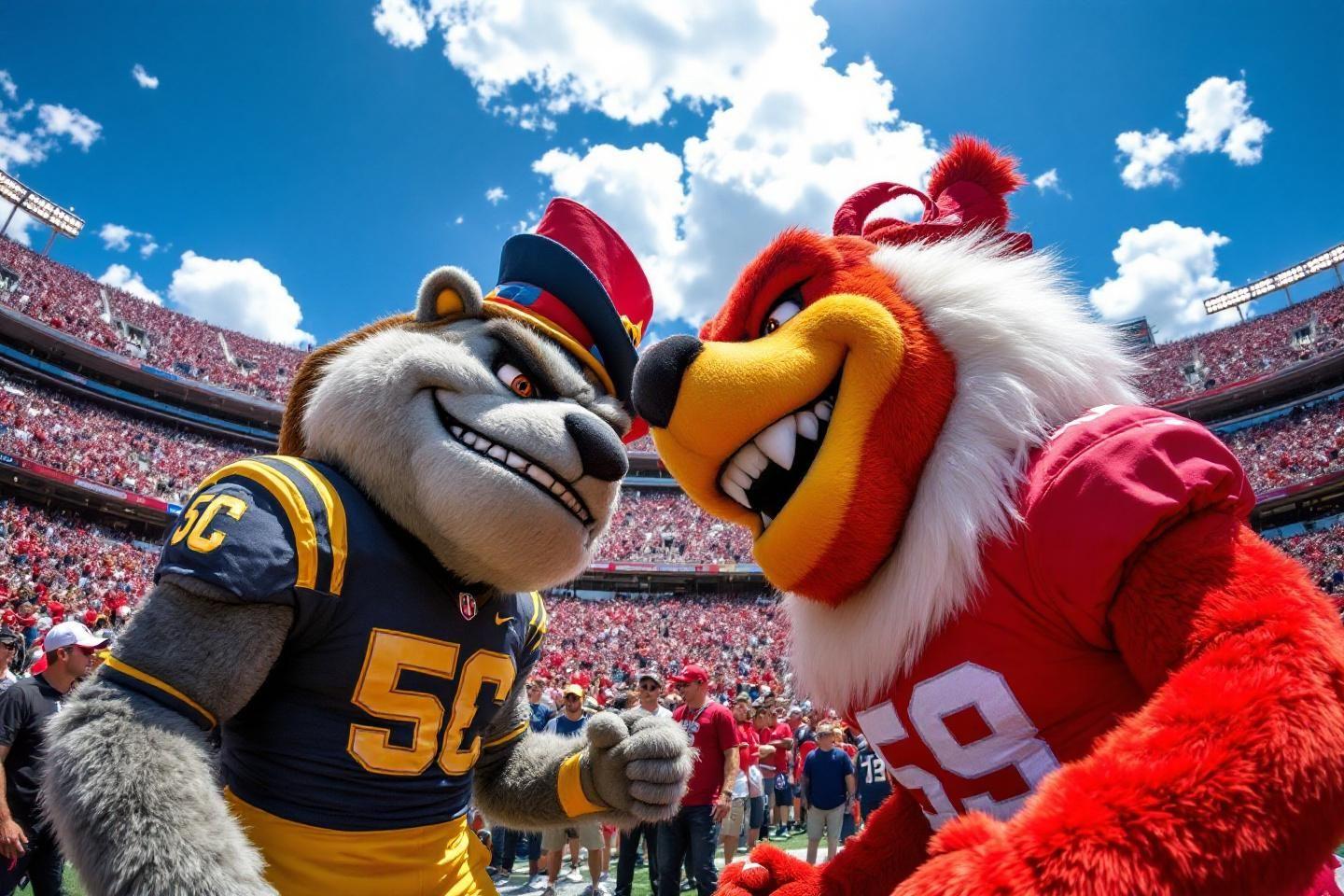
The relationship between college football’s two most powerful conferences has deteriorated dramatically, creating an embarrassing spectacle that threatens the future structure of the sport’s premier postseason competition. What began as a promising alliance just months ago has crumbled into a contentious standoff that leaves stakeholders wondering whether these once-aligned powerhouses can find common ground.
A partnership dissolved amid growing tensions
The contrast between past cooperation and present discord couldn’t be starker. When SEC commissioner Greg Sankey and Big Ten commissioner Tony Petitti first announced their collaborative framework in February 2024, the initiative promised transformative solutions for college athletics. Their February 2025 gathering in New Orleans represented what many considered a genuine attempt to address systemic challenges facing the sport. Joint press conferences and coordinated messaging suggested these conferences were building something sustainable.
Fast forward to mid-January 2026, and the landscape looks entirely different. During meetings at a luxury South Beach property, conference leaders found themselves unable to bridge fundamental disagreements about playoff expansion. The three-hour Sunday session concluded without resolution, highlighting how dramatically circumstances have shifted. Where collaborative spirit once flourished, competitive self-interest now dominates decision-making processes. No more joint meetings appear scheduled, and the shared vision that characterized earlier discussions has evaporated.
Mississippi State president Mark Keenum, serving as CFP board chairman, acknowledged the difficulty facing negotiators. The atmosphere inside the Loews Hotel mirrored the unusual gloom outside, with stormy weather providing an apt metaphor for internal conflicts. One participant bluntly identified “self interest” as the primary obstacle preventing agreement, while another college leader labeled the situation “an embarrassment for the sport.”
Competing visions for playoff expansion create deadlock
The central disagreement revolves around dramatically different approaches to expanding the current twelve-team playoff format. The SEC advocates for a measured increase to sixteen teams, while the Big Ten champions a more aggressive jump to twenty-four programs. These aren’t merely numerical preferences; they reflect fundamentally different philosophies about balancing competitive opportunity, calendar constraints, and commercial interests.
A compromise proposal surfaced weeks ago suggesting a transitional approach : implement sixteen teams for approximately two seasons before committing to twenty-four. However, SEC leadership resists making long-term guarantees given the unprecedented volatility affecting college athletics. The lack of consistent enforcement around athlete compensation and the evolving professional nature of the sport create uncertainty that makes multi-year commitments problematic.
ESPN established Friday as the absolute deadline for implementing format changes for next season, following previous extensions. CFP executive director Rich Clark confirmed this represents the final opportunity to modify the structure. Without agreement, the playoff remains at its current twelve-team configuration. Petitti acknowledged “still more work to do” when departing Sunday’s session, though Keenum suggested negotiations continue and Friday might still produce results.
| Conference | Preferred format | Key considerations |
|---|---|---|
| SEC | 16 teams | Protects regular season, minimizes calendar disruption |
| Big Ten | 24 teams | Maximizes participation, increases revenue potential |
| Other conferences | Varied support | Publicly favor 16, privately open to 24 |
Beyond playoffs : deeper fractures across multiple fronts
Playoff format represents just one battleground in a broader conflict consuming college athletics leadership. These conferences disagree about fundamental operational elements including calendar structure, enforcement mechanisms for compensation rules, and whether private equity should participate in collegiate sports financing. The challenges extend far beyond postseason tournaments into the very governance of the sport.
American Conference commissioner Tim Pernetti succinctly noted that resolution depends on “two people in the room,” referencing the commissioners who wield extraordinary influence over outcomes. The SEC and Big Ten received exclusive authority over format decisions from the eight other FBS conferences during spring 2024, concentrating power in ways that now complicate consensus-building.
Other conference leaders express varied perspectives on expansion. Most publicly support sixteen teams with automatic qualifiers for each power conference plus the strongest non-power champion, alongside eleven at-large selections. However, private conversations reveal greater flexibility, with some administrators willing to explore the twenty-four team concept featuring :
- Four automatic berths for each power conference
- Two guaranteed positions for Group of Six programs
- Six at-large selections based on performance metrics
- Expanded revenue distribution across participating institutions
Historical context and uncertain future trajectory
The current impasse gains perspective when considering expansion history. The original four-team playoff required five years of negotiation before growing to twelve teams. That lengthy process demonstrates how difficult achieving consensus proves among competing interests with divergent priorities. Keenum reminded observers that conversations happening now, while contentious, at least represent engagement around shared challenges.
Ironically, expansion discussions began before the inaugural twelve-team playoff concluded its first season. Now in year two of that format, stakeholders already debate radical restructuring. This timeline reflects both the commercial pressures driving change and the instability characterizing modern college athletics. High-priced recruiting battles and professionalization without comprehensive oversight create competitive dynamics that complicate collaborative governance.
The SEC reportedly considers conference-only governance models, suggesting some leaders question whether cross-conference cooperation remains viable. Such exploration indicates how profoundly relationships have fractured since those optimistic early alliance announcements. The industry faces fundamental questions about whether conferences with billions in revenue can simultaneously compete fiercely while governing cooperatively, or whether structural realignment becomes inevitable when financial stakes reach current levels affecting college football’s premier programs and their championship aspirations.