








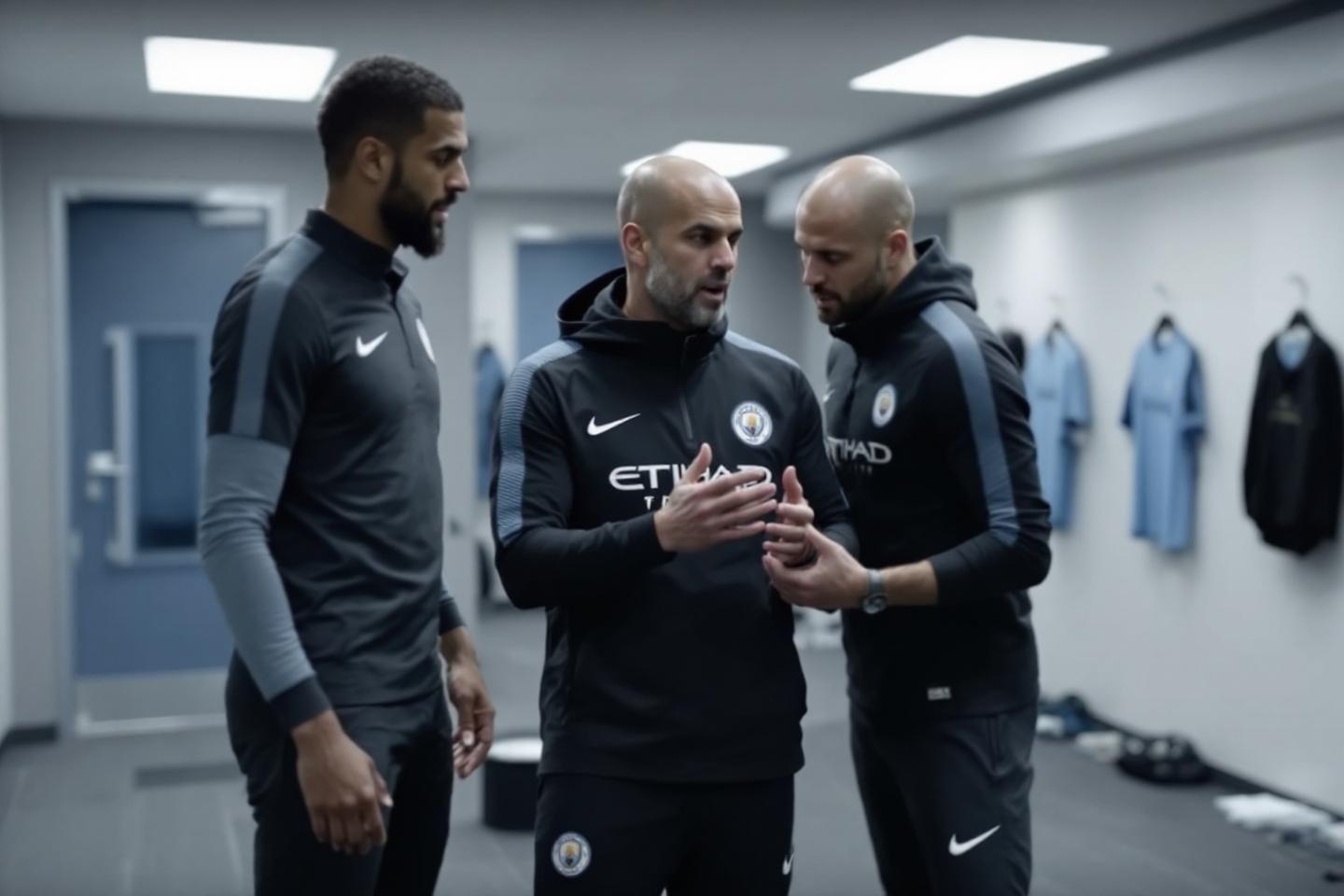
Manchester City’s recruitment strategy has evolved into something far more sophisticated than a simple reliance on Pep Guardiola’s presence. The January 2026 signings of Antoine Semenyo and Marc Guehi demonstrate how the club’s institutional strength extends well beyond any single individual, regardless of their legendary status. Both players committed their futures to the Etihad with full awareness that the Catalan manager’s tenure is likely approaching its conclusion, yet they signed contracts stretching until 2030.
When examining the decision-making process behind these transfers, it becomes evident that City’s appeal transcends coaching personnel. Semenyo and Guehi weren’t simply seduced by the opportunity to work under one of football’s greatest minds. Instead, they were convinced by a comprehensive vision that guarantees success regardless of who occupies the dugout. This fundamental shift in perception represents a watershed moment for the club’s long-term planning.
The competitive landscape for elite talent
The competition for both players was intense and revealing. Semenyo’s £65m release clause at Bournemouth attracted attention from Manchester United, Chelsea and Tottenham, with Liverpool also monitoring the situation. The 26-year-old forward had no shortage of prestigious options, yet he prioritised a move to the Etihad Stadium. Remarkably, Tottenham’s financial package actually exceeded City’s offer, proving that salary alone wasn’t the determining factor.
Guehi’s situation was even more dramatic. As an out-of-contract England defender at season’s end, he commanded interest from Europe’s most powerful clubs. Bayern Munich, Inter Milan and Atletico Madrid prepared serious proposals for a free transfer, while Barcelona and Real Madrid hovered in the background. Arsenal and Tottenham attempted to keep him in London with attractive propositions. Liverpool’s well-documented pursuit added another layer of competition.
Despite this extraordinary level of interest, Guehi chose City. This decision speaks volumes about the club’s positioning strategy within the modern football hierarchy. Sources close to both transfers reveal that City’s pitch centred on a virtual guarantee of competing for major honours and consistent Champions League participation. This promise of sustained excellence, rather than short-term managerial glamour, proved decisive.
Strategic advantages beyond the touchline
Manchester City’s infrastructure represents a significant competitive advantage in recruitment negotiations. The state-of-the-art training facilities, medical departments and analytical capabilities create an environment where players can maximise their potential. However, these physical assets only form part of the equation. The club’s commitment to assembling and retaining world-class talent demonstrates a long-term vision that resonates with ambitious footballers.
The contract extension strategy provides tangible evidence of this commitment. Erling Haaland’s remarkable 10-year deal, signed in 2025, exemplifies City’s approach to building continuity and stability. This policy of securing key players on extended terms creates a foundation that transcends any individual manager’s presence. It signals to prospective signings that the project remains constant even as personnel changes occur.
| Key recruitment factors | Impact on player decisions |
|---|---|
| Trophy-winning pedigree | Demonstrates consistent success under Abu Dhabi ownership |
| World-class infrastructure | Provides optimal environment for performance development |
| Squad quality retention | Guarantees competitive team regardless of managerial changes |
| Champions League presence | Ensures elite competition annually |
City’s track record under Abu Dhabi ownership predates Guardiola’s 2016 arrival. This historical perspective proves crucial when discussing succession planning strategies. The club won major trophies under Roberto Mancini and Manuel Pellegrini, demonstrating institutional capability beyond any single coach. This body of work provides reassurance that excellence will continue post-Guardiola.
Navigating uncertainty and external narratives
Rival club executives have attempted to weaponise the managerial uncertainty in recruitment battles. According to sources, competing teams suggest to potential signings that City’s dominance will diminish once Guardiola departs. However, the Semenyo and Guehi transfers prove this narrative holds limited persuasive power when confronted with City’s comprehensive proposition.
Financial considerations naturally factor into player decisions, and City rank among Europe’s most competitive payers. Yet reducing these transfers to purely monetary motivations oversimplifies a complex calculation. Both players rejected more lucrative packages elsewhere, indicating that the sporting project carries greater weight than marginal salary differences.
The ongoing legal proceedings regarding 115 alleged Premier League financial rule breaches create a backdrop of uncertainty. The club maintains its strong denial of any wrongdoing, and the case’s ultimate resolution remains unknown. However, City’s continued investment in squad rebuilding suggests they are not preparing for catastrophic outcomes. The recruitment activity over the past year indicates :
- Confidence in the club’s legal position and future stability
- Commitment to maintaining competitive standards regardless of external challenges
- Focus on long-term planning rather than short-term reactive measures
- Determination to position the squad for sustained success beyond current uncertainties
Building institutional resilience for the future
The arrivals of Semenyo and Guehi provide concrete validation that Manchester City’s recruitment operations function independently of Guardiola’s employment status. This represents the culmination of years of strategic planning designed to create an institution that thrives beyond individual personalities. The club’s football operation has been carefully constructed to ensure seamless transitions and continued excellence.
For prospective signings evaluating their options, the opportunity to work briefly with Guardiola offers undeniable appeal. However, committing five-and-a-half years based solely on six months under any manager would be irrational. Instead, these players recognised that City’s competitive advantages—from infrastructure to ambition to squad quality—create conditions for success regardless of coaching personnel.
This evolution in City’s positioning marks a mature phase in the club’s development. While Guardiola’s contributions have been transformative, the foundations established under Abu Dhabi ownership extend far beyond his tenure. The succession planning doesn’t require publicly announcing the next manager; instead, it involves creating systems and structures that guarantee continuity. The recruitment of elite talent during this transitional period proves that the strategy is working effectively, positioning the club for sustained dominance in English and European football for years to come.