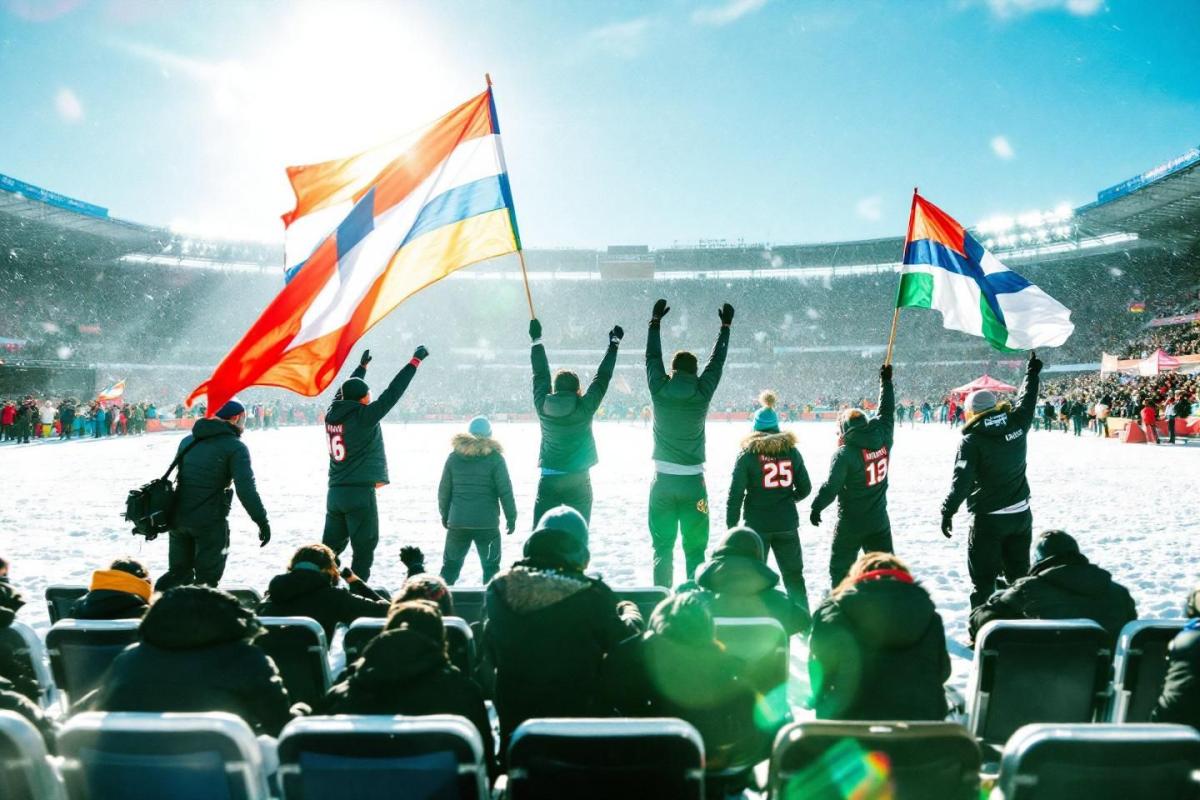
The upcoming Milan-Cortina Winter Paralympics marks a significant shift in international sporting policy, as ten athletes from Russia and Belarus prepare to compete under their respective national flags. This development follows years of complex negotiations and legal battles within the Paralympic movement, reflecting the ongoing tensions between sporting neutrality and geopolitical realities.
Appeal victory reshapes Paralympic participation rules
A landmark ruling by the Court of Arbitration for Sport in December fundamentally altered the landscape for Russian and Belarusian participation in winter sports. The decision came after both nations successfully challenged FIS, the international federation governing skiing and snowboarding disciplines. This legal victory not only permitted athletes to compete but also enabled them to accumulate crucial ranking points necessary for qualification to major championships.
The International Paralympic Committee had initially implemented comprehensive restrictions following Russia’s military actions against Ukraine in 2022. Belarus faced similar sanctions due to its strategic alliance with Russia. Throughout 2023, a modified approach allowed competitors from these nations to participate as neutral athletes, stripped of national symbols and anthems. However, the six sports featured at the Winter Paralympics remained under the jurisdiction of four separate governing bodies, each maintaining their own prohibition measures.
The recent developments represent a dramatic reversal of these policies. Six Russian athletes will now represent their country across three disciplines, while four Belarusian competitors will participate exclusively in cross-country skiing events. The allocation of slots through bipartite commission invitations provides these athletes with direct entry pathways, bypassing traditional qualification routes that had been blocked by previous restrictions.
Distribution of competition slots across disciplines
The International Paralympic Committee confirmed the specific allocation of Paralympic berths, demonstrating careful consideration of gender balance and sporting variety. Russian representation spans multiple disciplines, ensuring visibility across different competitive formats throughout the Games.
| Country | Discipline | Male Athletes | Female Athletes |
|---|---|---|---|
| Russia | Para-alpine skiing | 1 | 1 |
| Russia | Para-cross country skiing | 1 | 1 |
| Russia | Para-snowboard | 2 | 0 |
| Belarus | Para-cross country skiing | 1 | 3 |
The distribution reveals interesting patterns in competitive strengths and strategic priorities. Belarus concentrates its presence entirely within cross-country skiing, traditionally a discipline where the nation has demonstrated considerable technical proficiency. The gender split within the Belarusian delegation, heavily weighted toward female competitors, reflects both the depth of talent in women’s Nordic skiing and potentially the effects of ongoing military mobilization affecting male athlete availability.
Russian representation adopts a broader approach, securing positions across three distinct Paralympic sports. The decision to allocate both Para-snowboard slots to male competitors suggests strategic calculations about medal potential and ranking considerations. Para-alpine skiing and cross-country skiing maintain gender parity within the Russian delegation, indicating balanced development programs across these established winter Paralympic disciplines.
International reactions highlight political divisions
The announcement triggered immediate and forceful responses from government officials and sporting authorities in nations supporting Ukraine. Lisa Nandy, serving as Culture Secretary, described the IPC decision as “completely the wrong decision”, emphasizing the problematic optics of national flag competition while military operations continue. Her statement on social media platforms called for urgent reconsideration, reflecting broader concerns about the message sent by international sporting bodies.
Ukraine’s Sports Minister Matvii Bidnyi expressed even stronger opposition, characterizing the development as both disappointing and outrageous. His response underscores the profound challenges facing international sporting governance when attempting to balance inclusive athletic participation against solidarity with nations affected by armed conflict. The Ukrainian sporting establishment views the restoration of national flag competition as premature and insensitive to ongoing humanitarian concerns.
These political reactions illustrate the broader dilemma confronting Paralympic and Olympic movements globally. The following factors complicate decision-making processes :
- The principle of separating individual athletes from governmental actions and political contexts
- Legal obligations following Court of Arbitration for Sport rulings that establish precedent
- Pressure from nations advocating for comprehensive sporting boycotts as diplomatic tools
- Concerns about maintaining the universality and inclusivity that define Paralympic values
Implications for future international sporting policy
The Milan-Cortina Paralympics will serve as a critical test case for how international sporting federations navigate the intersection of athletics and geopolitics. The decision to permit national flag competition represents a significant departure from the neutral status approach that dominated 2023 and early 2024 competitive seasons. Observers across the sporting world will closely monitor reactions from other participating nations, spectator responses, and potential impacts on competitive dynamics.
The bipartite commission invitation mechanism demonstrates one avenue for maintaining athlete participation pathways even when traditional qualification systems face political obstacles. This approach allows Paralympic authorities to balance sporting merit considerations with diplomatic sensitivities, though it inevitably attracts criticism from multiple perspectives. Those supporting comprehensive exclusion view it as insufficient, while advocates for unrestricted participation consider it unnecessarily restrictive.
Future competitions will likely reference the Milan-Cortina precedent when establishing their own participation frameworks. The effectiveness of current policies in maintaining both competitive integrity and appropriate responses to international conflicts will influence decisions at subsequent Paralympic Games and world championships across winter sports disciplines.
