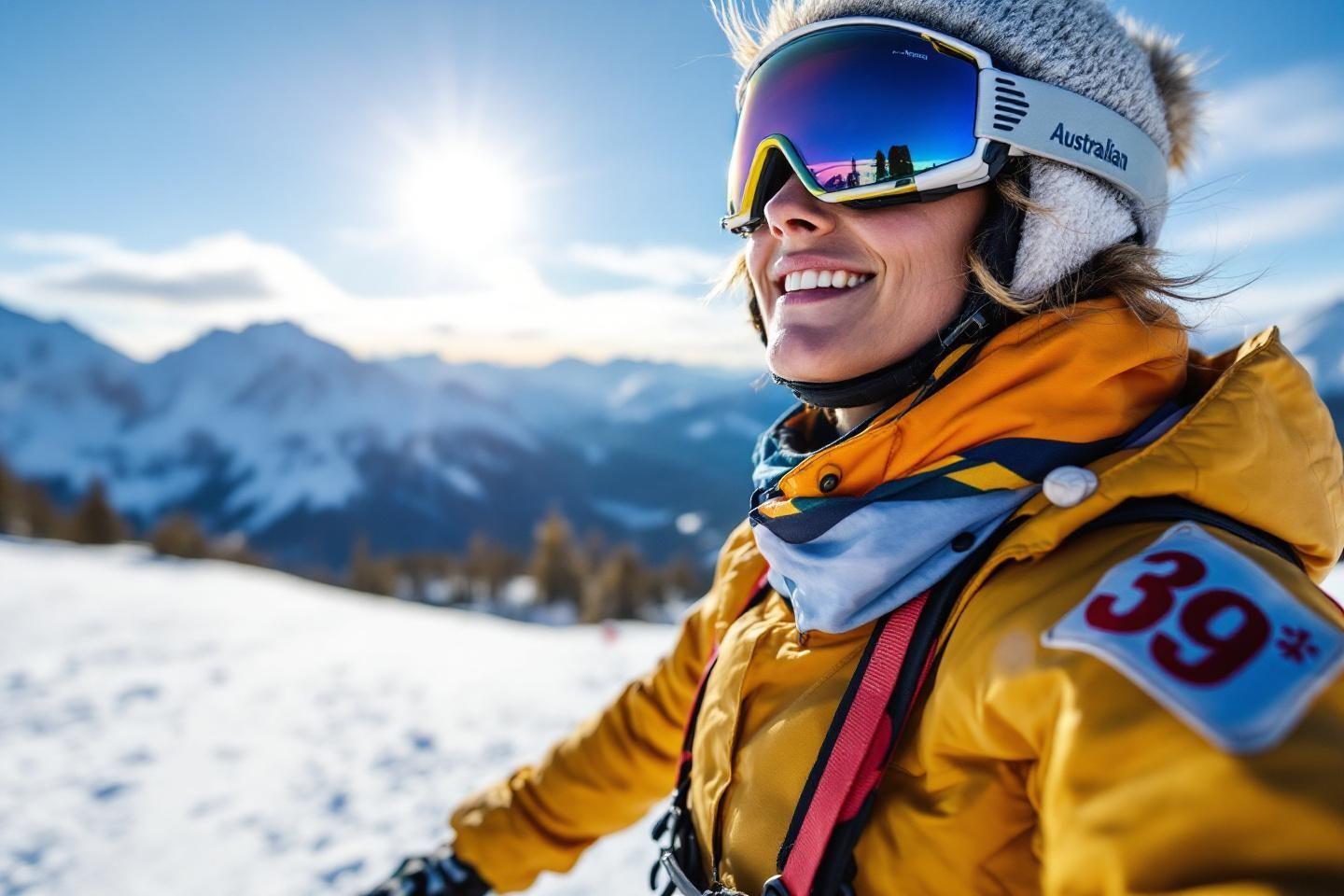
Australia’s remarkable success at winter sporting events raises eyebrows worldwide. Most people associate the nation with sun-drenched beaches and summer athletics, yet Australian athletes consistently climb podiums at snowy competitions. This phenomenon stems from strategic planning and innovative training methods that have transformed the country’s winter sports landscape over recent decades.
Strategic infrastructure development following national disappointment
The foundation for Australia’s winter sports achievements traces back to Montreal 1976, when the nation experienced its worst Olympic performance since 1936. That summer, Australian competitors failed to secure any gold medals, creating a watershed moment for the country’s sporting ambitions. The embarrassment sparked governmental intervention and a complete reimagining of how Australia approached elite athletics.
Prime Minister Malcolm Fraser inaugurated the Australian Institute of Sport in Canberra on Australia Day 1981. This government-funded facility revolutionized talent identification and athlete development across numerous disciplines. The AIS quickly established itself as a world leader in sports science, offering cutting-edge facilities and expertise that propelled Australian competitors to international prominence. Today, nearly every recognizable Aussie athlete has benefited from AIS programs at some stage of their career.
The institute’s success at summer competitions became undeniable. Australia captured 58 medals as Sydney hosts in 2000, then achieved a record 18 gold medals alongside 53 total in Paris. These results demonstrated how systematic investment and scientific approaches could overcome traditional disadvantages. The model proved so effective that authorities decided to replicate it for winter disciplines, despite the obvious geographical challenges.
Overcoming geographical obstacles through innovation
Australia possesses five major skiing areas within the Australian Alps, spanning New South Wales and Victoria. However, these resorts face limitations compared to renowned destinations in New Zealand or European nations. Lower elevations and inconsistent snowfall patterns, exacerbated by climate change, mean domestic facilities cannot match international standards naturally. Athletes seeking world-class training traditionally needed to travel enormous distances regularly.
The tyranny of distance presented a formidable barrier. World Cup circuits predominantly operate across Europe and North America, requiring 24-hour flights from Australian shores. Repeated intercontinental journeys drain athletes physically and financially, making sustained competitive campaigns nearly impossible without institutional support. This reality forced officials to devise creative solutions rather than simply replicating northern hemisphere approaches.
| Challenge | Australian Solution | Impact |
|---|---|---|
| Limited domestic snow conditions | European training base establishment | Reduced travel costs and fatigue |
| Distance from competition circuits | Strategic facility placement near Milan | Easy access to World Cup venues |
| Insufficient home infrastructure | Targeted investment in specialized facilities | Quality training options domestically |
| Small winter sports talent pool | Focus on action sports disciplines | Medals in freeski and snowboard events |
In 1998, the Olympic Winter Institute of Australia emerged as a specialized branch focusing exclusively on cold-weather competitions. Rather than spreading resources thinly across all winter disciplines, OWIA concentrated on action sports like freestyle skiing and snowboarding, plus sliding and speed skating events where Australians could realistically compete. This targeted approach maximized limited resources while building expertise in specific domains.
European presence and sustained medal success
The AIS opened a European training base in Gavirate during 2011, roughly 70 miles from Milan near the Swiss border. This facility resulted from a reciprocal agreement with Italian authorities and addressed the distance problem directly. Fiona de Jong, the center’s director, explained that proximity to Lake Lugano and major Alpine venues meant athletes could maintain consistent training schedules without constant intercontinental travel. The strategic positioning proved fortuitous when Milan Cortina won the 2026 Winter Olympics bid.
Results validate this infrastructure investment decisively. Matt Graham’s bronze in men’s dual moguls marked Australia’s fifth medal at these Games, already surpassing any previous winter performance. Golds in men’s moguls, women’s dual moguls, and women’s snowboard cross showcase depth across multiple disciplines. Scotty James captured silver in snowboarding halfpipe, while additional opportunities remained throughout the competition schedule.
Graham, competing at his fourth Winter Olympics, witnessed this progression firsthand. At Sochi 2014, the team was young but hungry, learning from veterans who demonstrated what seemed possible. That belief system cascaded to younger generations, creating a self-reinforcing cycle of expectation and achievement. As Josie Baff noted after winning snowboard cross gold, Australians develop their own distinctive methods that inspire mutual excellence.
Domestic facilities and future prospects
Success abroad encouraged investment at home. Jakara Anthony, after securing women’s dual moguls gold, highlighted how prior achievements unlocked funding for enhanced domestic infrastructure. Mt. Buller and Mt. Perisher now feature fantastic mogul courses, while the Geoff Henke training center near Brisbane provides a new water ramp facility. These developments stem from continued ministerial support recognizing that producing successful athletes requires accessible training environments.
The pipeline shows immense promise. Young Australian athletes now access opportunities unavailable to earlier generations, setting the stage for compound growth. Anthony expressed excitement about emerging talent and their potential impact :
- Enhanced training facilities provide year-round skill development options
- Proven pathways to success inspire more youngsters to pursue winter sports
- Visibility from medal performances raises awareness nationwide
- Government backing ensures sustained resource allocation for programs
This infrastructure maturation suggests Australian winter sports dominance will intensify rather than diminish. Each successful Games reinforces the model’s effectiveness while attracting fresh talent. The nation’s unique approach, born from necessity and refined through experience, demonstrates how strategic vision can overcome inherent disadvantages. What began as compensating for geographical isolation evolved into a competitive advantage, proving that summer sport countries can indeed master snow and ice when innovation meets determination.
