








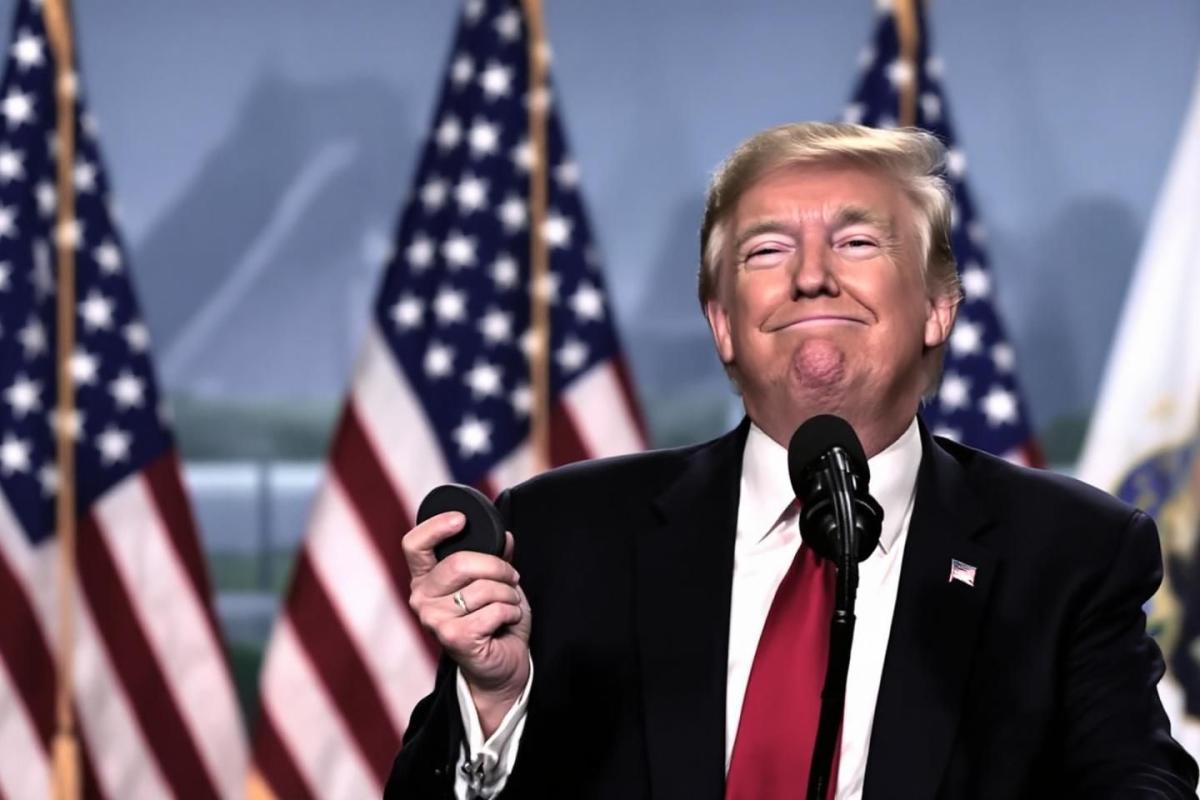
The recent triumph of Team USA in ice hockey at the Winter Olympics showcased American athletic excellence on the global stage. Both men’s and women’s teams secured gold medals, yet the political aftermath revealed troubling priorities. While Donald Trump extended an invitation to the men’s team for the State of the Union address, complete with military jet transportation, his treatment of the women’s champions exposed a fundamental contradiction in his rhetoric about supporting female athletes.
The president’s subsequent complaint about having to invite the women’s team drew laughter in certain circles but sparked outrage among those who recognize the performative nature of conservative support for women’s athletics. This moment crystallized a broader pattern of selective advocacy that prioritizes political messaging over genuine commitment to advancing opportunities for female competitors.
The hollow foundation of conservative women’s sports advocacy
The disconnect between Trump’s proclaimed role as a champion of female athletics and his dismissive humor reveals the superficial nature of right-wing engagement with women’s sports. Last February, the administration positioned itself as the guardian of opportunities for women and girls to compete safely and fairly. This framing appeared repeatedly in policy announcements and campaign messaging, creating an impression of dedicated support for female athletes.
However, this commitment occupies an extraordinarily narrow focus. The rhetoric of protecting women’s sports emerges almost exclusively in discussions about transgender participation, rather than addressing systemic challenges facing female athletes. The so-called “Save Women’s Sports” movement represents a coordinated political strategy rather than a genuine effort to elevate women’s athletics in American society.
This campaign benefits from substantial funding and sophisticated audience testing, crafting messages that resonate emotionally while making minimal concrete commitments. The framework presents female athletes as perpetual victims requiring protection, rather than celebrating their achievements or addressing tangible barriers to their success. When actual moments of women’s sporting excellence occur, as demonstrated by the Olympic hockey victory, they fail to generate enthusiasm from those claiming to champion the cause.
What authentic support for female athletes would address
Genuine advocacy for women in sports would tackle numerous pressing issues that receive scant attention from conservative political figures. The income disparity between men’s and women’s ice hockey teams exemplifies structural inequities that persist across athletics. While male players negotiate lucrative contracts and endorsement deals, their female counterparts often struggle for financial security despite reaching identical competitive heights.
The following challenges demand attention from anyone seriously committed to advancing women’s athletics :
- Pay equity across professional leagues, particularly in basketball where WNBA players contemplate labor action to secure fair compensation
- Media coverage imbalances that relegate women’s competitions to secondary broadcasting slots and minimal promotional budgets
- Investment in youth development programs that provide equal resources for girls pursuing athletic careers
- Facility access and training infrastructure that matches what male athletes receive at every competitive level
These substantive matters receive minimal attention from political figures who claim to prioritize women’s sports. Instead, the discourse remains fixated on cultural wedge issues that generate political capital without requiring meaningful resource allocation or policy change. The absence of legislative proposals addressing funding disparities or workplace conditions for female athletes speaks volumes about the sincerity of conservative advocacy.
The culture war framework and its limitations
Trump’s locker room comments illustrate how cultural politics supersede genuine concern for female athletic achievement. The joke resonated precisely because it aligned with longstanding gender attitudes that position men as naturally superior in athletic domains. This perspective contradicts the empowerment rhetoric deployed in culture war battles, revealing the ideological foundations beneath superficial feminist language.
| Rhetorical Claim | Actual Priority | Evidence |
|---|---|---|
| Protecting women’s opportunities | Excluding transgender athletes | Legislation focuses solely on participation restrictions |
| Celebrating female achievement | Platforming male athletes | State of the Union invitation disparity |
| Advancing women’s sports | Maintaining status quo inequality | Silence on pay equity and funding gaps |
The spectacle of political posturing around women’s sports has successfully weaponized athletics without elevating women’s position within the domain. This represents a profound failure of a movement ostensibly branded around female empowerment. When opportunities arise to highlight exceptional female athletes or address systemic inequities, conservative advocates consistently revert to dismissive attitudes that reveal their actual priorities.
Gender politics and the preservation of hierarchy
The treatment of Olympic champions serves as a microcosm of broader gender politics that have dominated American discourse for nearly a decade. These attitudes insist on maintaining traditional hierarchies where male achievement receives primary recognition and resources. The pseudo-feminist political program of the right places men at the center, relegating women to supporting roles even in supposedly woman-centered initiatives.
This approach doesn’t represent an inadvertent oversight or momentary lapse in judgment. Rather, it constitutes the logical conclusion of an empowerment project that functions through exclusion rather than inclusion. The framework demands keeping women in the shadow of men, both rhetorically and practically, while deploying feminist language to obscure this fundamental dynamic.
The dissonance between stated commitments and actual behavior reveals deeply held convictions about gender roles and athletic worth. When moments deviate from established ideological scripts, people default to pre-existing attitudes. Trump’s dismissive treatment of female Olympic champions demonstrates that cultural signifiers carry more weight than substantive achievement in conservative political calculus. The underlying belief structure positions women as inherently lesser in many life domains, contradicting any genuine commitment to athletic empowerment regardless of the rhetorical flourishes deployed in culture war battles.