








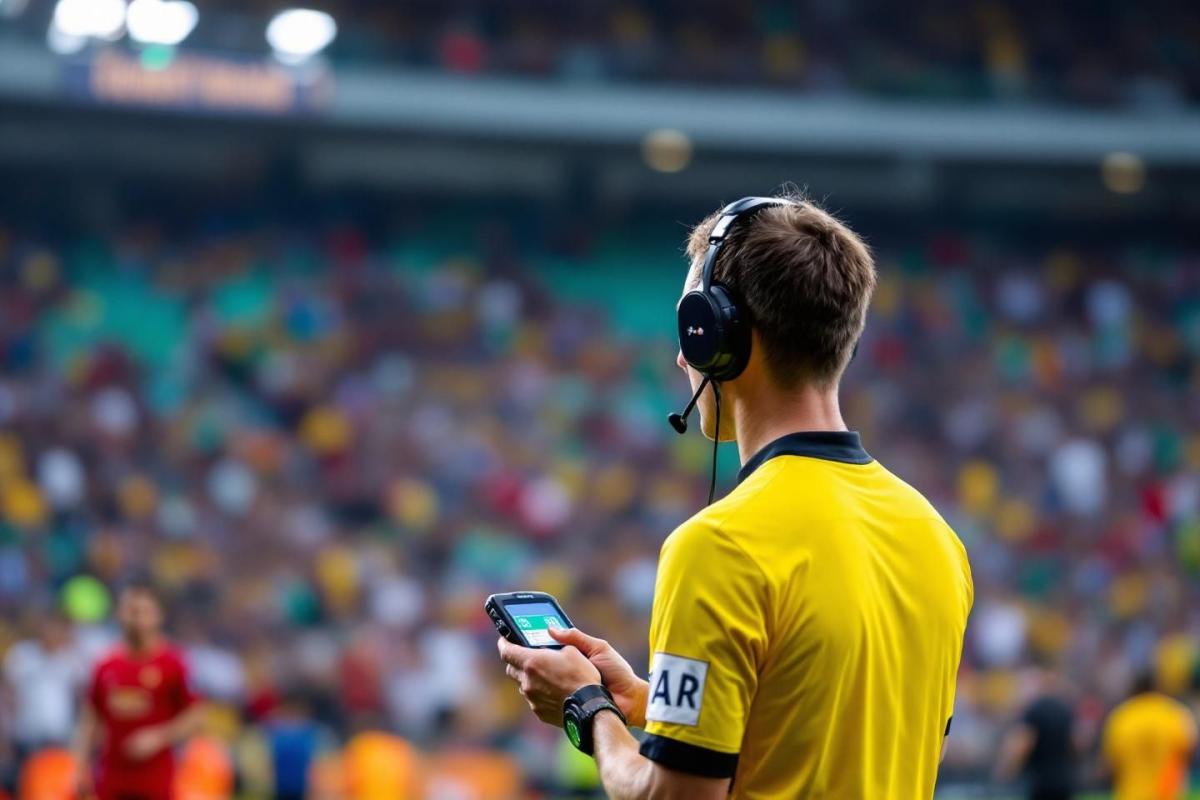
The International Football Association Board has revolutionized the game’s regulations with sweeping changes set to debut at the 2026 World Cup. These modifications target persistent issues around match tempo, technological assistance, and player behavior. Leagues worldwide will gain flexibility in adopting these measures, though certain protocols become mandatory from June 1, with full implementation scheduled for the 2026-27 season. The governing body convened at Hensol Castle in Wales, where delegates approved groundbreaking proposals that will fundamentally alter how football is officiated at the highest levels.
Technological assistance expands with optional features
The video assistant referee system will now encompass corner kick decisions and incorrectly awarded second yellow cards, marking a significant expansion of technological oversight. FIFA advocated strongly for corner reviews, citing the potential for wrongly awarded set pieces to dramatically influence match outcomes, particularly in knockout tournaments. However, this specific enhancement remains optional for domestic competitions, allowing leagues to preserve their preferred pace of play.
The Premier League appears unlikely to adopt corner reviews, with similar resistance expected from UEFA. Conversely, Italy’s Serie A has signaled willingness to implement the measure. Former Premier League assistant referee analysis suggests that 99 percent of corner decisions can be verified seamlessly without disrupting natural game flow. The system proved effective during December’s Arab Cup trials, where reviews occurred in the background while players prepared for set pieces.
Second yellow card reviews address a different concern entirely. Pierre Kalulu’s controversial dismissal for Juventus against Inter Milan highlighted systemic issues when referees cannot reverse clearly incorrect cautions. Referee designator Gianluca Rocchi publicly apologized for this “clearly wrong” decision. Over the past two seasons, 17 players were wrongly dismissed for accumulated cautions in Premier League matches, though none occurred this campaign. Importantly, VAR will not intervene for missed second yellows, as continuous review of every challenge by cautioned players would prove too intrusive.
| VAR expansion area | Adoption status | Expected impact |
|---|---|---|
| Corner kick reviews | Optional for leagues | Prevents goals from incorrect set pieces |
| Second yellow corrections | Mandatory globally | Fixes wrongly awarded dismissals |
| Wrong team bookings | Mandatory globally | Ensures correct player identification |
Time management innovations target pace disruption
Building on goalkeeper countdown success, new time restrictions apply to goal-kicks, throw-ins, and substitutions. Players dawdling over dead-ball situations will forfeit possession to opponents, transforming goal-kicks into corners or reversing throw-in awards. These measures directly combat tempo disruption that has plagued modern football, where tactical delays erode spectator enjoyment and competitive fairness.
Substitution protocols now impose strict timelines borrowed from Major League Soccer trials. Departing players must exit within ten seconds, or their replacement cannot immediately enter. Teams failing this requirement will play shorthanded for at least 60 seconds until the next stoppage. The regulation doubles existing injury treatment minimums, extending mandatory sideline time from 30 seconds to one full minute for outfield players receiving medical attention.
FIFA initially tested two-minute absences during the Arab Cup, but leagues worried about unintended consequences, such as teams conceding while numerical disadvantaged through genuine injuries. The finalized version includes sensible exemptions :
- Situations where opponents receive disciplinary sanctions
- Concurrent substitution scenarios
- Penalty kick situations
- Goalkeeper injuries, which remain exempt entirely
The controversial “tactical timeout” problem remains unresolved. Ifab technical panels extensively debated solutions for goalkeepers feigning injuries to disrupt opposition momentum. Proposals to temporarily replace keepers with outfield players were rejected over concerns that injured goalkeepers might avoid necessary treatment. Instead, the Women’s Super League will participate in trials exploring effective deterrents.
Offside revolution finally reaches testing phase
Arsene Wenger’s controversial offside proposal will undergo real-world evaluation in the Canadian Premier League starting April 2026. The former Arsenal manager, now FIFA’s head of global football development, has championed daylight offside since 2020. His system requires complete separation between attackers and defenders, rather than any body part overlap determining illegal positioning.
Critics argue this “daylight” approach excessively favors attacking teams, potentially unbalancing football’s competitive equilibrium. The concept languished for six years before Canada’s top division volunteered for implementation. Results will be presented to Ifab at year’s end, with potential worldwide adoption for the 2027-28 season. However, the Canadian league’s lack of VAR technology suggests additional trials in video-assisted competitions will prove necessary before global rollout.
Additional regulatory refinements address emerging issues
The “denying obvious goalscoring opportunities” regulation now encompasses team-mates of fouled players. Previously, defenders faced red cards only when bringing down isolated attackers. The updated law considers “location and number of attackers”, particularly during rapid counter-attacks where the fouled player might not personally threaten the goal but could pass to better-positioned team-mates.
When referees play advantage after such fouls and goals result, players will no longer receive yellow cards for their infractions. The “only the captain” communication guidelines and “double touch” penalty clarifications have been formally incorporated into law. Additionally, players can now tape non-removable jewelry for safety purposes, addressing practical concerns about religious and cultural items.
Ifab will also explore measures combating players covering their mouths during confrontations, following allegations that Benfica’s Gianluca Prestianni racially abused Real Madrid’s Vinicius Jr while concealing his face with his shirt. The Argentine denies these accusations but received provisional suspension from UEFA. Such behavioral protocols reflect football’s ongoing struggle to eliminate discrimination while maintaining competitive intensity across international competitions.