








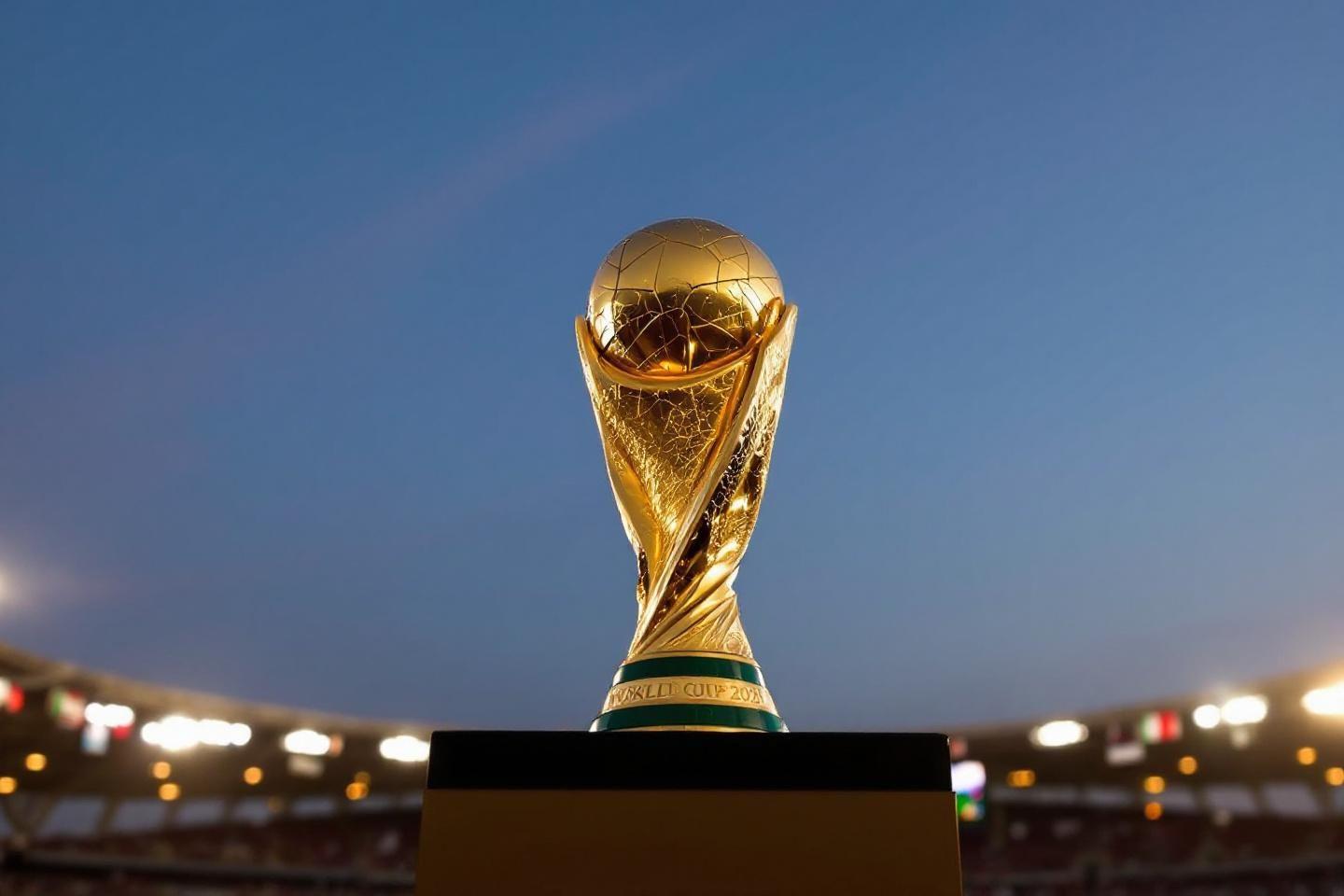
The intersection of global politics and international sports has reached a critical juncture as preparations continue for the upcoming FIFA World Cup. Recent geopolitical developments have raised fundamental questions about the tournament’s neutrality and the governing body’s relationship with host nations whose foreign policies spark international controversy.
FIFA’s controversial peace prize and political alignment
At the tournament draw ceremony held in December, FIFA awarded its first-ever Peace Prize to the current US administration, recognizing what the organization described as instrumental efforts in negotiating a ceasefire between Israel and Palestinian territories. The football governing body praised the administration’s attempts to resolve multiple international conflicts, a decision that has since attracted significant criticism from political observers and human rights advocates.
President Gianni Infantino has vigorously defended this choice, even attending the inaugural meeting of the President’s Board of Peace while wearing apparel marked with ’45-47′, symbolizing the presidential terms. This visible endorsement has prompted debates about whether FIFA has crossed traditional boundaries separating sports administration from political endorsement. Critics argue that such recognition fundamentally compromises the organization’s stated commitment to political neutrality, particularly when the honored party simultaneously engages in controversial military operations.
The weeks following the award ceremony have witnessed American military interventions in Venezuela, Nigeria, and Iran, alongside diplomatic tensions with Greenland, neighboring co-host Mexico, and Colombia. These developments have intensified scrutiny of FIFA’s decision-making process and raised questions about the appropriateness of honoring political figures during active conflicts. Cuba also received direct warnings about facing consequences unless agreements were reached, further complicating the political landscape surrounding the tournament.
Parliamentary opposition and calls for sanctions
Legislative bodies across the Atlantic have responded forcefully to these developments. In January, a coalition of 27 British parliamentarians representing Labour, the Liberal Democrats, Green Party, and Plaid Cymru submitted a formal motion calling for international sporting organizations to evaluate potential expulsion of the United States from major competitions, including the World Cup. The motion explicitly stated that prestigious sporting events should never serve to legitimize or normalize violations of international law by powerful nations.
This parliamentary initiative reflects growing concern that sporting events are being weaponized for political legitimacy rather than serving their traditional role as neutral platforms for athletic competition. German Football Association officials have similarly suggested considering a tournament boycott, arguing that continued participation might implicitly endorse controversial foreign policy decisions. These calls could intensify following recent retaliatory attacks, with Gulf states potentially demanding sanctions against Iran for strikes on their territory.
| Year | Host Nation | Geopolitical Controversy | FIFA Response |
|---|---|---|---|
| 2018 | Russia | Crimea annexation, Salisbury attack | Tournament proceeded as planned |
| 2022 | N/A | Ukraine invasion | Russia banned from competition |
| 2026 | USA/Mexico/Canada | Multiple military interventions | Peace Prize awarded, no sanctions |
Patterns of neutrality and selective enforcement
FIFA maintains that its statutory obligations require strict neutrality in geopolitical matters. President Infantino articulated this position when resisting pressure to sanction Israel after a United Nations commission concluded the country had committed genocide against Palestinians in Gaza. The Israeli foreign ministry categorically rejected these findings, dismissing the report as distorted and false. FIFA’s leadership insisted that football organizations cannot solve geopolitical problems, a stance that critics argue selectively applies depending on the nations involved.
This is not the first instance where FIFA has faced criticism over host nation actions. The 2018 tournament proceeded in Russia despite the country’s annexation of Crimea four years earlier, along with allegations of cyber warfare, election interference, and the Novichok nerve-agent attack in Salisbury. Russia eventually faced a ban in 2022 following its Ukrainian invasion, but only after European countries threatened to boycott matches against Russian teams. Interestingly, Infantino has recently suggested this punishment has proven ineffective and expressed desire to lift it.
Critics argue that FIFA’s rules require strengthening to enable appropriate responses to serious international violations. The organization’s selective application of neutrality principles has created perceptions of inconsistent standards. Key concerns include :
- Commercial interests potentially outweighing ethical considerations in decision-making processes
- Lack of clear criteria for determining when host nation actions warrant sanctions or tournament relocation
- Insufficient mechanisms for addressing ongoing conflicts that emerge after host selection but before tournament commencement
- Inconsistent application of neutrality principles depending on the economic and political power of involved nations
Navigating an increasingly complex political environment
The recent escalation in regional tensions has transformed what was already a challenging political situation into an even more precarious environment for international football’s premier event. Despite multiple calls for accountability and intervention, there appears to be no indication that FIFA leadership intends to sanction the United States, regardless of how controversial its foreign policy becomes. This reluctance stands in stark contrast to actions taken against other nations for similar or lesser violations of international norms.
The tournament’s tri-national hosting arrangement further complicates matters, as tensions between the United States and Mexico add another layer of diplomatic sensitivity. The question remains whether sporting events can truly remain apolitical when host nations actively engage in military conflicts and diplomatic confrontations. The coming months will test whether FIFA’s commitment to neutrality can withstand mounting pressure from politicians, human rights organizations, and potentially participating nations who may reconsider their involvement based on evolving geopolitical circumstances.