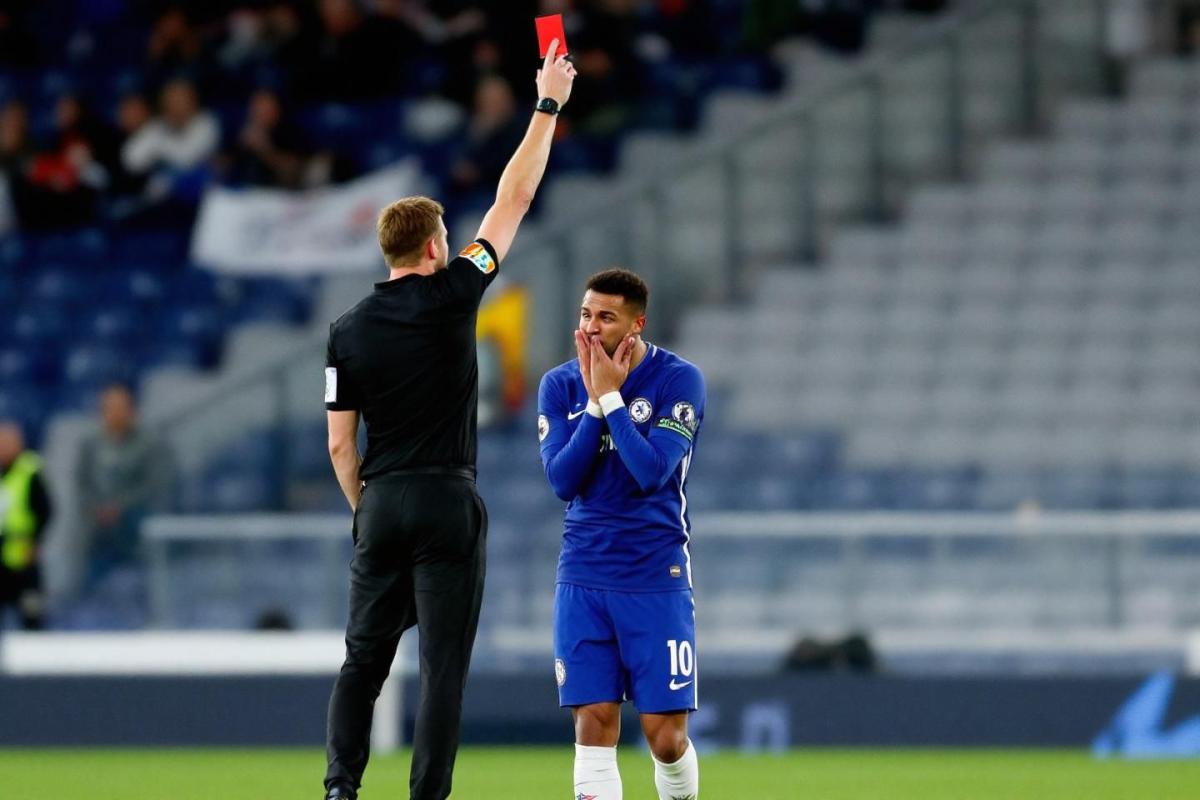
The disciplinary crisis gripping Chelsea Football Club has emerged as one of the defining narratives of their turbulent campaign. With dismissals accumulating at an alarming rate, the team finds itself locked in a pattern of self-destruction that threatens to derail what remains of their season. The shocking frequency of these infractions has positioned the west London outfit perilously close to historical records for all the wrong reasons, raising fundamental questions about the team’s mentality and institutional culture.
Record-breaking indiscipline threatens Chelsea’s campaign
Chelsea’s players have walked down the tunnel prematurely on nine separate occasions across all competitions this season, placing them within striking distance of unwanted Premier League history. They stand just one dismissal away from matching the joint record of eight different players receiving red cards in a single campaign, a dubious distinction currently held by Sunderland. More alarmingly, they need only two more sendoffs to equal the top-flight record for most expulsions in one season.
This epidemic of indiscipline represents far more than an isolated anomaly. The statistical evidence reveals a persistent institutional problem that has plagued the club through multiple managerial regimes. Currently anchored at the bottom of the Premier League’s fair play standings, Chelsea occupied the penultimate position last season under former boss Enzo Maresca and finished rock bottom the previous year during Mauricio Pochettino’s tenure. The consistency of these poor disciplinary rankings across different leadership structures suggests systemic issues rather than temporary aberrations.
Current manager Wayne Rosenior initially believed he had addressed these behavioral concerns, with the team completing a ten-match sequence without dismissals. However, the return of back-to-back red cards shattered that progress, forcing Rosenior to confront the reality that fundamental changes have not taken root despite his efforts. This regression highlights the difficulty of implementing lasting cultural transformation within a relatively short timeframe.
| Season | Manager | Red Cards | Fair Play Position |
|---|---|---|---|
| 2023-24 | Pochettino | Multiple | Bottom |
| 2024-25 | Maresca | Multiple | Second-bottom |
| 2025-26 | Rosenior | 9 (ongoing) | Bottom |
Youth and leadership deficiencies contribute to recurring dismissals
Several interconnected factors help explain why Chelsea continues to hemorrhage players through ill-discipline. The squad’s demographic composition stands out as a significant contributor, with the youngest roster in the Premier League lacking seasoned voices capable of providing stabilizing influence during high-pressure moments. Former England international Matthew Upson articulated this reality succinctly, noting that younger players naturally exhibit greater susceptibility to lapses in judgment when emotions run high.
The absence of natural leaders compounds this vulnerability. While captain Reece James represents one of the designated figures tasked with arresting this disciplinary decline, even he acknowledged the persistent nature of the problem. His observation that each offense involves different individuals rather than repeat offenders suggests a broader cultural issue rather than isolated behavioral problems with specific players. This distributed pattern of indiscipline makes targeted interventions considerably more challenging.
Maresca himself recognized the severity of these issues before his departure, launching his own internal review after initially downplaying concerns. The fact that such problems transcended his management and continued under his successor demonstrates the deep-rooted nature of these behavioral patterns. Key factors contributing to Chelsea’s disciplinary challenges include :
- Squad composition : An exceptionally young roster lacking experienced heads
- Leadership vacuum : Insufficient natural authority figures to police teammates
- Competitive intensity : The demanding nature of Premier League fixtures magnifying mistakes
- Institutional culture : Historical patterns persisting across multiple managerial cycles
Addressing cultural problems requires foundational shifts
Upson’s assessment emphasized that meaningful change in this area cannot be implemented mid-season through tactical adjustments or isolated interventions. Instead, he characterized disciplinary standards as fundamentally cultural elements that must be established during pre-season and systematically reinforced throughout a campaign. This requires player buy-in at every level, with the squad itself policing standards and maintaining accountability amongst themselves.
The concept demands measured and controlled responses during critical moments, precisely the qualities that appear absent from Chelsea’s current setup. Building this type of institutional discipline represents a long-term project rather than a quick fix, requiring patience that may not align with the immediate pressures facing Rosenior and his staff. The manager’s comments revealed both frustration and determination, expressing respect for his predecessor while acknowledging that problems initially appeared resolved before resurging unexpectedly.
James highlighted the compounding effect these dismissals create on the pitch. Competing in the world’s most demanding league presents enormous challenges even with numerical parity. Operating with ten men against eleven intensifies these difficulties exponentially, regardless of opposition quality. Each red card effectively concedes competitive advantage before tactical considerations even come into play, transforming winnable fixtures into uphill battles that drain points and confidence simultaneously.
Strategic implications and future considerations
The ongoing disciplinary crisis carries implications extending far beyond individual match results. Accumulating suspensions depletes squad depth, forcing rotation and disrupting tactical cohesion precisely when consistency becomes most critical. Financial consequences also emerge through potential fines and the opportunity cost of dropped points affecting European qualification prospects and associated revenue streams.
Rosenior faces the unenviable task of implementing cultural change while managing immediate competitive demands. His acknowledgment that internal reviews remain necessary demonstrates awareness of the problem’s severity. However, translating that awareness into tangible behavioral modification among a young, diverse squad presents formidable challenges. The manager must balance accountability with support, avoiding a punitive atmosphere while establishing clear standards that players internalize and uphold collectively.
Looking ahead, Chelsea’s leadership will need to consider whether targeted recruitment priorities should emphasize experienced professionals capable of providing dressing room authority alongside technical ability. The current approach of assembling talented young players offers long-term potential but creates short-term vulnerabilities in high-pressure situations demanding composure and discipline. Successfully navigating these competing priorities will likely determine whether this disciplinary malaise represents a temporary obstacle or a more enduring impediment to the club’s ambitions.
