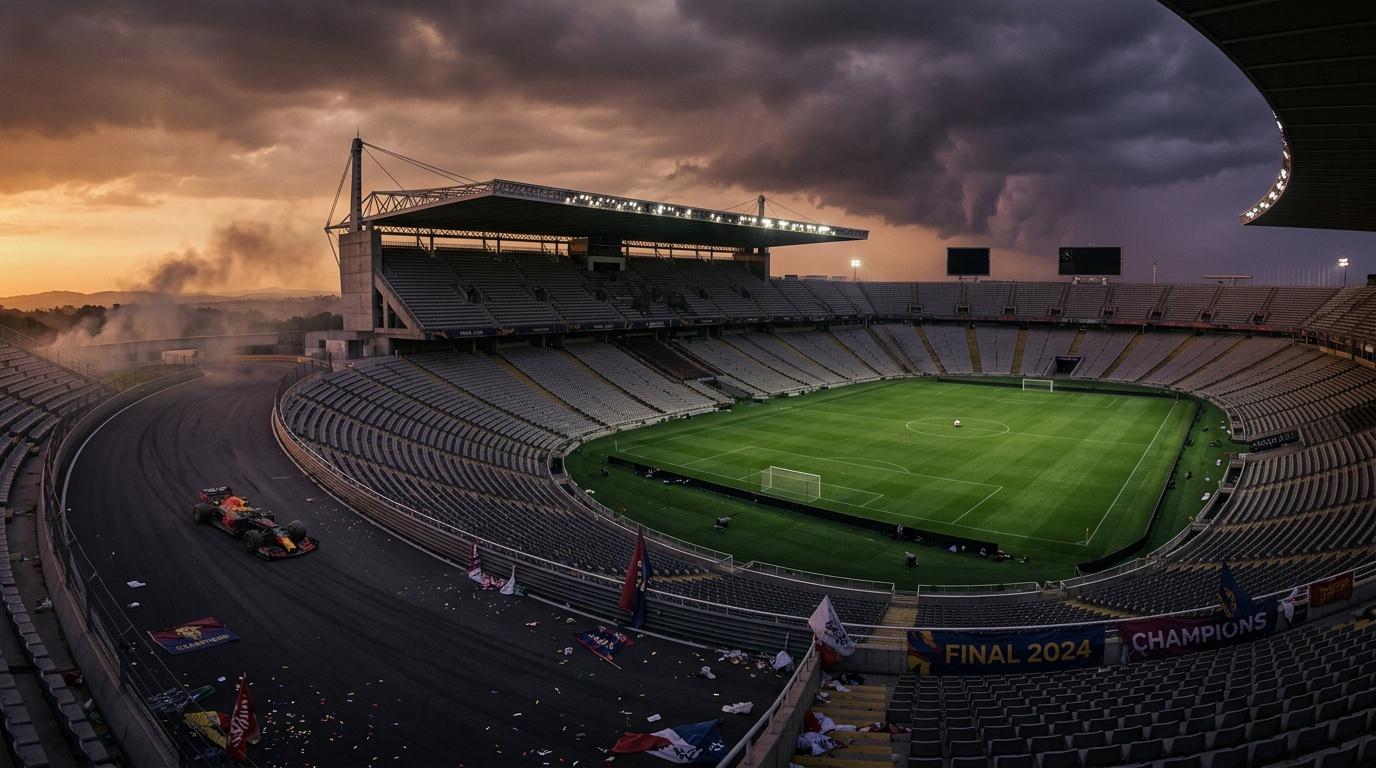
The escalating tensions throughout the Middle East have sent shockwaves across the international sporting landscape, creating unprecedented disruption at what should have been one of the most exciting periods on the global sports calendar. Following coordinated strikes by the United States and Israel against Iran that resulted in the death of Supreme Leader Ayatollah Ali Khamenei, Tehran launched retaliatory missile and drone strikes targeting Israel and multiple American military installations. The fallout has extended far beyond military targets, with sports venues and events across Gulf nations bearing the brunt of escalating hostilities. Iranian projectiles have struck or threatened major cities including Doha, Dubai, Abu Dhabi, Manama, and various Saudi Arabian locations, forcing sports administrators to make difficult decisions about athlete safety and event continuity.
Tennis tournament suspended amid security concerns
The immediate impact became starkly apparent when an ATP Challenger tournament in Fujairah, United Arab Emirates, was abruptly halted during competitive play. Belarusian player Daniil Ostapenkov and Japan’s Hayato Matsuoka were mid-match when debris from intercepted drones ignited an oilfield approximately 13 kilometers from the tennis venue. Dramatic footage circulated on social media showed players diving for cover as explosions echoed nearby. Ukrainian competitor Vladyslav Orlov described the harrowing experience on Instagram, noting the sound of jets overhead and visible smoke near the mountains while competition was underway.
The tournament’s cancellation sparked initial controversy when the Professional Tennis Players Association suggested a charter evacuation flight costing each player $5,800. However, following player outcry, Belarusian competitor Ilya Ivashka later confirmed that the ATP Tour arranged complete evacuation coverage at no cost to athletes. This incident highlighted the logistical challenges facing individual sports where athletes often bear significant financial burdens, demonstrating how rapidly deteriorating security situations can transform routine tournaments into emergency evacuations.
Football competitions face widespread postponements
The beautiful game has encountered perhaps the most extensive disruption across the region. The Asian Football Confederation announced the indefinite postponement of all scheduled Asian Champions League fixtures in Middle Eastern territories, citing paramount concerns for player, official, and spectator safety. Qatar’s domestic football authorities suspended all matches within their borders, while the highly anticipated Finalissima showdown between Copa America champions Argentina and European titleholders Spain hangs in uncertainty. Originally scheduled for March 27 at Lusail Stadium in Doha—the same venue where Lionel Messi lifted the World Cup trophy in 2022—the prestigious match now awaits a final decision from UEFA by week’s end.
European football’s governing body maintains discussions with Qatari organizers who have invested considerable effort in preparation, though no alternative venue has been formally considered. The broader implications extend to FIFA World Cup 2026 qualification, with Iran’s participation remaining doubtful and Iraq’s ability to travel for their crucial playoff match uncertain. Iran faces the victor between Bolivia and Suriname in Mexico on March 31, but the team’s capacity to fulfill this fixture remains questionable given the current geopolitical climate.
| Sport | Event affected | Location | Status |
|---|---|---|---|
| Tennis | ATP Challenger | Fujairah, UAE | Cancelled |
| Football | Finalissima | Doha, Qatar | Decision pending |
| Motorsport | WEC opening race | Lusail, Qatar | Postponed |
| Formula One | Bahrain & Saudi GPs | Sakhir & Jeddah | Under review |
Formula One season encounters major obstacles
Motorsport’s premier championship faces significant operational challenges as the new season unfolds. The World Endurance Championship opening race, scheduled for March 26-28 at Qatar’s Lusail International Circuit, has been delayed until later in 2026, with organizers prioritizing competitor and spectator safety above competitive considerations. Formula One teams scrambled to charter emergency flights transporting hundreds of essential personnel to Melbourne for the Australian Grand Prix season opener, with approximately one-quarter of the F1 workforce originally scheduled to transit through Middle Eastern aviation hubs.
Greater concern surrounds upcoming Gulf races, particularly the Bahrain and Saudi Arabian Grands Prix scheduled for April in Sakhir and Jeddah respectively. The Jeddah circuit, positioned along the waterfront, previously experienced security issues in 2022 when Houthi forces struck an oil facility just 11 kilometers away during race weekend. Despite smoke visible from the track, the race ultimately proceeded following emergency consultations. FIA President Mohammed Ben Sulayem emphasized that safety considerations would dictate any decisions regarding these upcoming events, while both venues had already sold out grandstand tickets before hostilities escalated.
Key challenges facing motorsport organizers include :
- Ensuring personnel safety during transit through conflict-affected regions
- Coordinating with multiple governmental and security agencies across jurisdictions
- Managing logistics for rescheduling sold-out events affecting thousands of spectators
- Maintaining championship integrity while prioritizing human welfare
Athletes stranded as aviation routes collapse
The closure of significant airspace throughout Gulf nations has created cascading effects on international sporting competitions far beyond the immediate conflict zone. India’s two-time Olympic medalist PV Sindhu withdrew from badminton’s All England Open after spending days stranded at Dubai airport, eventually returning home rather than continuing to the competition. Cricket teams eliminated from the ICC Men’s T20 World Cup in India—including Zimbabwe, West Indies, and South Africa—faced extended delays returning home due to suspended Middle Eastern flight connections that typically provide the most efficient routing.
West Indies coach Darren Sammy expressed frustration on social media about his squad receiving no travel updates for five consecutive days, posting simply “I just wanna go home” before eventually confirming arrangements had been made. The Zimbabwean team managed partial evacuation three days after their final match, while South Africa’s semifinal elimination meant they joined the queue of stranded athletes. These disruptions underscore how the Gulf region’s role as a critical aviation crossroads affects global sports logistics, with millions of passengers typically transiting through Doha, Dubai, and Abu Dhabi airports connecting Eastern and Western destinations.
