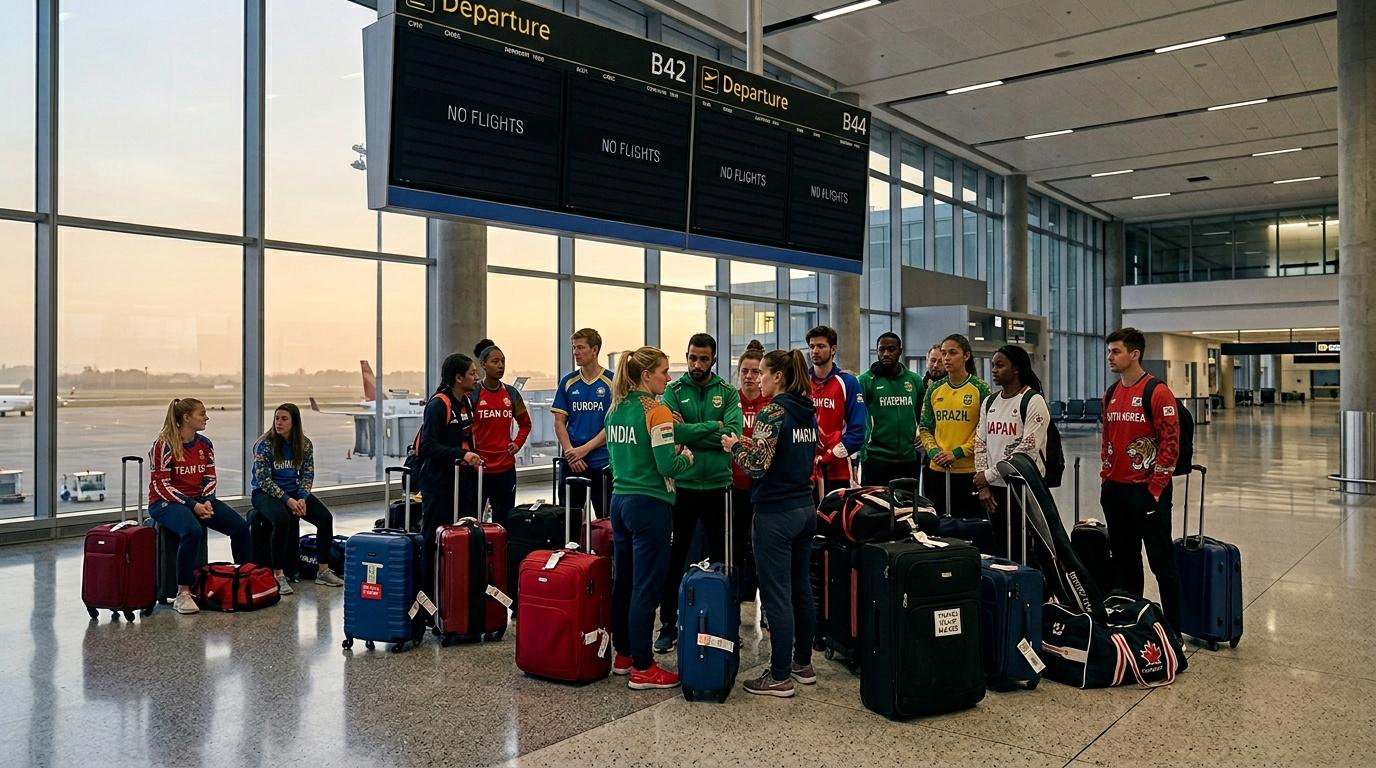
Sporting organizations worldwide face unprecedented challenges as regional tensions in the Middle East create significant logistical complications for international teams and events. The escalating situation has forced cricket boards, tournament organizers, and national federations to rapidly reassess their operational plans, with player safety becoming the paramount concern amid restricted airspace access and limited travel routes through traditional regional hubs.
Cricket development programmes facing immediate cancellations
The England Lions squad, comprising approximately thirty players and coaching personnel, encountered substantial disruption during their scheduled series against Pakistan Shaheens in the United Arab Emirates. Andrew Flintoff, leading the development programme alongside Test captain Ben Stokes, saw the tour curtailed abruptly when security assessments prompted the England and Wales Cricket Board to prioritize evacuation over competitive fixtures. The second match scheduled for Abu Dhabi on Sunday had already been scrapped before authorities made the decision to cancel all remaining encounters.
The ECB confirmed its commitment to facilitating swift repatriation arrangements for all personnel involved in the Lions programme. Originally scheduled to remain in the Emirates until Tuesday, March 10th, the squad found themselves in limbo as commercial flight availability diminished rapidly. Meanwhile, England’s women’s team faced similar complications, with their one-month preparation camp in Abu Dhabi cancelled before departure. The board emphasized its determination to establish alternative training environments that would adequately prepare the squad for the upcoming Women’s T20 World Cup on home territory, commencing in June.
Individual players voiced their concerns publicly, with Jonny Bairstow, present in Abu Dhabi independently of the Lions contingent, directly addressing UK Prime Minister Sir Keir Starmer’s parliamentary statement regarding Iran. His social media inquiry requesting governmental assistance with repatriation highlighted the personal anxieties experienced by athletes caught in the deteriorating situation, separated from families during uncertain times.
Teams stranded following tournament participation
| Team | Current Location | Original Destination | Status |
|---|---|---|---|
| West Indies | Kolkata, India | Caribbean | Working with ICC on alternatives |
| Zimbabwe | India | Via Dubai hub | Coordinating new routing |
| England Lions | UAE | United Kingdom | Awaiting ECB arrangements |
Following their elimination from the T20 World Cup on Sunday, the West Indies contingent discovered themselves unable to commence their journey homeward from India. The Caribbean squad remained in Kolkata as traditional flight corridors became inaccessible, forcing Cricket West Indies to collaborate intensively with the International Cricket Council on establishing viable alternative pathways back to their island nations. This represented a particularly complex logistical puzzle given the geographical distance and limited direct routing options available.
Zimbabwe encountered parallel complications, having originally planned their return journey through Dubai’s major international airport. Zimbabwe Cricket officials confirmed that all players and support staff remained in satisfactory condition whilst arrangements were being finalized. Both Cricket West Indies and Zimbabwe Cricket issued reassuring statements emphasizing personnel welfare whilst acknowledging the extraordinary coordination efforts required to navigate the evolving transportation landscape.
Broader implications for international sporting schedules
The current disruptions raise fundamental questions about how global sporting federations manage risk assessment and contingency planning when geopolitical instability intersects with competitive calendars. Several critical considerations have emerged :
- Venue selection protocols may require enhanced political stability criteria beyond traditional infrastructure assessments
- Insurance frameworks covering cancellations due to regional conflicts need comprehensive review
- Communication channels between sporting bodies and diplomatic services require strengthening
- Player welfare mechanisms must incorporate mental health support during unexpected stranding scenarios
- Alternative hosting arrangements should be pre-identified for major tournaments in potentially volatile regions
The concentration of sporting infrastructure and connectivity hubs within the Middle East has created systemic vulnerabilities for international competition schedules. Major airlines based in the Gulf states typically serve as crucial connectors for teams traveling between continents, particularly for routes linking Europe, Asia, Africa, and Australasia. When these aviation corridors become compromised, the ripple effects extend far beyond teams physically present in affected territories.
Adaptive strategies for tournament organizers
Tournament directors and national federations must now contemplate whether current operational models adequately protect participant interests when regional tensions escalate unpredictably. The experiences of cricket teams in early March 2026 demonstrate that reactive approaches prove insufficient when airspace restrictions emerge suddenly. Forward-thinking organizations are beginning to implement multilayered contingency frameworks that anticipate various disruption scenarios.
These frameworks incorporate pre-approved alternative venues in politically stable jurisdictions, maintained relationships with charter aviation providers capable of deploying at short notice, and enhanced real-time intelligence gathering about developing situations. Financial provisions for unexpected accommodation extensions and alternative transport arrangements are becoming standard budget line items rather than afterthoughts. The International Cricket Council’s coordination efforts with stranded Zimbabwe and West Indies teams exemplify how centralized sporting authorities can leverage their diplomatic connections and logistical resources to support member nations.
Looking beyond immediate crisis management, the sporting industry faces broader questions about its relationship with geographically concentrated hosting patterns. While the Middle East offers world-class facilities, favorable weather conditions, and substantial financial investment, the current disruptions highlight the wisdom of distributing major events across diverse geographical regions with varying risk profiles, ensuring that sporting excellence remains accessible regardless of localized political developments.
