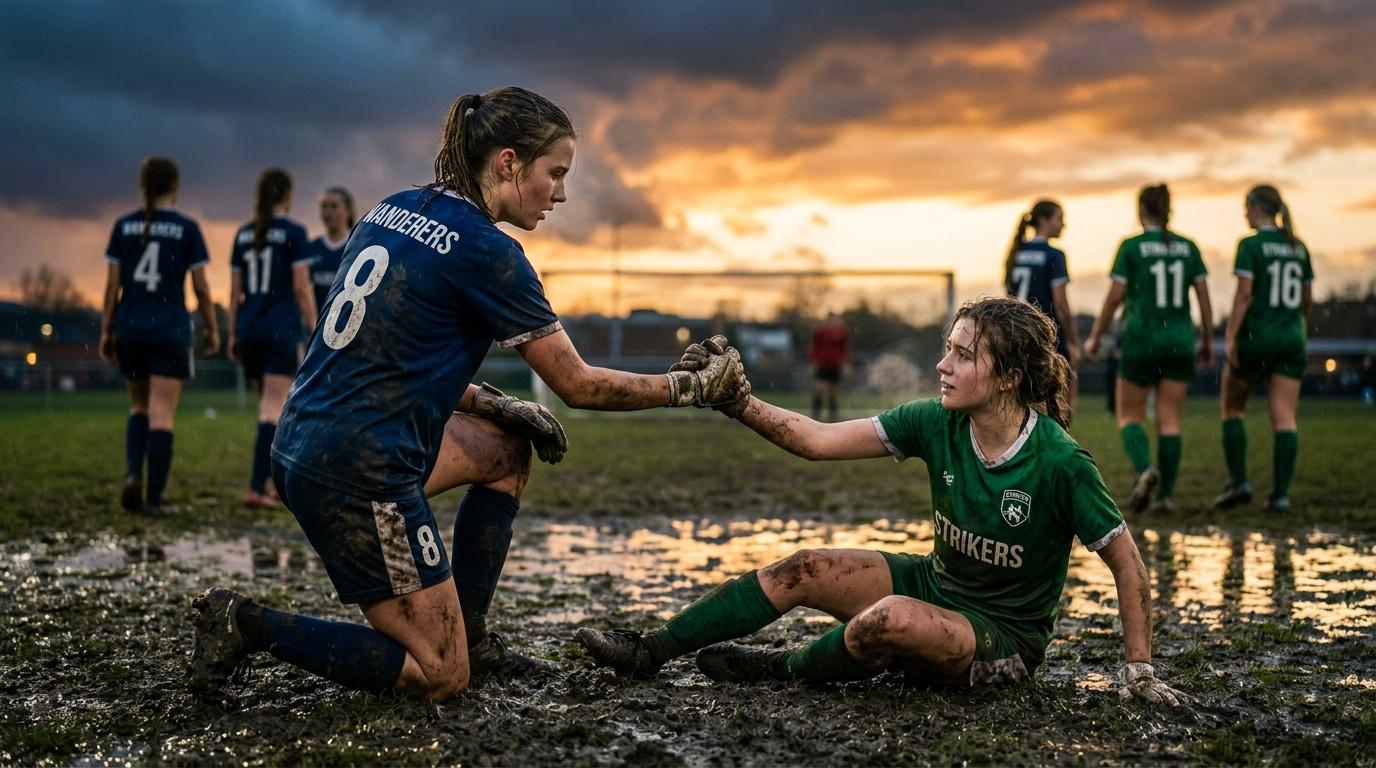
Every weekend, thousands of young athletes compete on fields, courts, and pools across the country. Parents cheer loudly, coaches shout instructions, and referees try to maintain order. Yet beneath this familiar scene, something troubling is unfolding. Sportsmanship in youth and high school sports has been deteriorating at an alarming rate. Incidents of brawling, punching opponents, and even coaches making illegal bets with their own students have made headlines with disturbing regularity. A soccer player at St. Benedicts Academy in New Jersey was suspended after grabbing a photographer by the throat. A football player from Natchitoches Central High School punched an opponent after a high-stakes game, sending him to the hospital. These are not isolated cases. They reflect a wider cultural shift in how competitive sports and moral values interact — or fail to.
When winning overshadows integrity in youth sports
Despite the surge in poor behavior, a 2024 Harris poll revealed that 93 percent of parents believe sports build character in children. That belief, however, sits awkwardly alongside the reality many coaches and officials witness daily. Thousands of sports referees have quit their roles because of worsening behavior — particularly among parents on the sidelines. Schools draft mission statements pledging commitment to honesty and integrity, yet these words rarely challenge the actual culture of their athletic programs.
Sharon Stoll, who runs the Center for Ethics at the University of Idaho, draws a sharp distinction between two types of character development. Sports reliably build what she calls social character — qualities like teamwork, perseverance, and work ethic. But these traits carry no inherent moral weight. As Stoll bluntly puts it, terrorists can also be disciplined and hardworking. When it comes to genuinely ethical qualities — justice, honesty, responsibility, and compassion — athletes are statistically no more likely to develop them than kids sitting in the bleachers.
“Most sports are about motor skills, not moral skills,” Stoll explained. Good values don’t emerge automatically from physical effort. They require deliberate teaching, consistent modeling, and a structured environment where ethical thinking is treated as seriously as athletic performance. Without that intentional framework, mission statements remain empty words on a school website.
The growing pressure around Name, Image and Likeness (NIL) deals in college athletics adds another layer of complexity. High school athletes increasingly view their sports careers as brand-building opportunities. Talk of selflessness and team loyalty sounds quaint when a teenager is thinking about their social media following and future sponsorships. This commercial mindset pushes winning to the center of everything, further squeezing out space for genuine character education.
How some coaches are making ethics a team priority
Not every program has surrendered to the win-at-all-costs mentality. At the Menlo School in California, water polo coach Jack Bowen has built a model worth examining closely. He begins ethics education during preseason, assigning players non-sports-related readings and then facilitating group discussions — first in small clusters to encourage emotional honesty, then as a full team. The approach is neither preachy nor occasional. It runs throughout the entire season.
The team’s athletic mission centers on four clear principles :
- Pursue excellence in every practice and competition
- Celebrate the team above individual performance
- Honor the game and its traditions
- Uphold strong personal and collective values
During the 2025 season, Bowen pulled one of his own players out of the pool after catching him mocking an opponent with a sarcastic wave. It wasn’t a punishment. It was a teaching moment, followed by a long conversation about what it truly means to honor your opponents and the sport itself. The team understood and respected the decision immediately.
At Roxbury Latin School in Massachusetts, basketball coach Sean Spellman takes a different but equally intentional approach. He distributed a 65-question survey to his players — questions that went far beyond basketball. Who do they admire ? When do they feel most themselves ? He introduced “Teammate Jeopardy” during film sessions to help players genuinely know each other as people, not just teammates.
| Coach | School | Key method | Core focus |
|---|---|---|---|
| Jack Bowen | Menlo School, California | Preseason readings and ethical discussions | Moral reasoning through team dialogue |
| Sean Spellman | Roxbury Latin, Massachusetts | Personal surveys and film session conversations | Genuine connection and shared identity |
Spellman deliberately uses timeout calls not just for tactical adjustments but to remind players that how they handle pressure defines who they become. He is transparent about athletic performance while consistently affirming that a player’s worth as a person is never tied to their stats. “I cherish what this high school sports experience is,” he said — a statement that feels radical in today’s metrics-obsessed sports culture.
Building real character through sports demands more than good intentions
Both Bowen and Spellman acknowledge that the broader cultural environment makes their work harder. Individual performance has increasingly colonized team sports, with young athletes obsessing over personal metrics at the expense of collective goals. Social media amplifies this tendency. Coaches find themselves selling values that society at large no longer actively teaches.
To help coaches navigate these tensions, Samantha Lewis, a graduate student of Sharon Stoll, launched a podcast called The Coach’s Dilemma : What Will You Do to Win ? It addresses real ethical situations coaches face — trash talk, NIL pressures, and the temptation to prioritize results over principles. It’s a practical resource for a profession that rarely receives structured ethical training.
Stoll’s research is clear : young people need engaged role models, supportive environments, and both formal and informal guidance to develop genuine moral character through sports. The potential is real, but it never unfolds on its own. Character in sports doesn’t happen by accident. It happens because coaches, schools, and communities decide it matters — and then act accordingly, even when winning is on the line.
