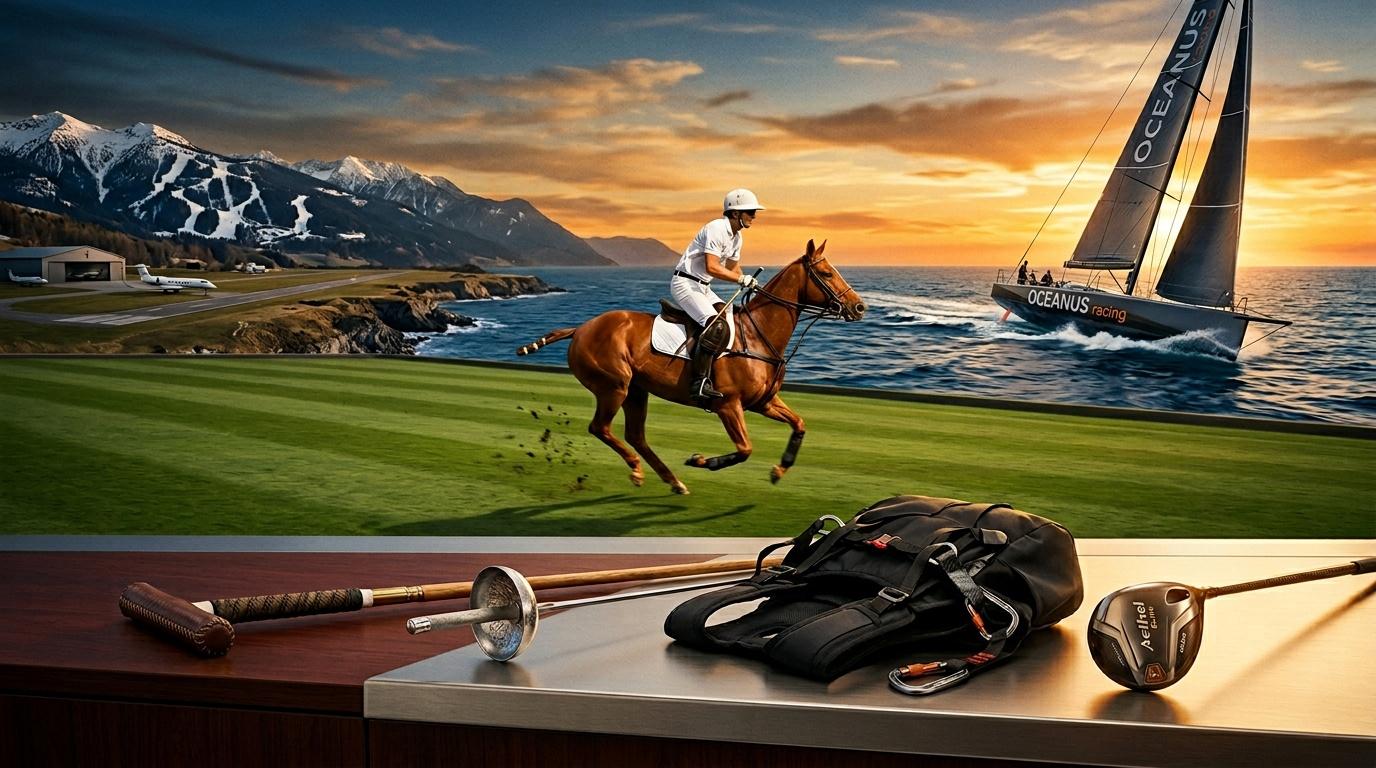
What separates a weekend hobby from a financial commitment that rivals a second mortgage ? For millions of families, the answer lies in which sport their child chooses — or inherits. The cost of competitive sports has surged dramatically over the past five years, climbing an average of 46% across all disciplines. In the United States, spending per child on athletics broke the $1,000 annual threshold for the first time in 2024. But that figure barely scratches the surface for families involved in the world’s priciest disciplines. From horsepower to horsemanship, here is a ranked breakdown of the nine most expensive sports on the planet.
Motor racing and sailing : when your equipment costs more than a house
Few sports demand deeper pockets than auto racing. At the summit of the sport, Formula 1 team budgets reached a staggering $165 million annual cap in 2024, with projections pushing that figure to $215 million in 2026. Even at the grassroots level, competing nationally in kart racing routinely exceeds $50,000 per year. Racing karts become obsolete quickly as young drivers level up, forcing constant reinvestment in faster, pricier machines. Factor in simulators, spare parts, travel logistics, and coaching fees, and the numbers spiral fast.
Elite sailing presents a similarly brutal financial barrier. The saltwater environment alone guarantees relentless wear on vessels, components, and rigging. Entry-level competitive sailing can run up to $5,000 annually, but mid-tier sailing boats frequently exceed $100,000. At the pinnacle, one America’s Cup campaign in 2013 was reportedly valued at $300 million — covering the boat, the team, and the competition itself. Docking fees, trailers, hull maintenance, and crew costs only add to the tab. Sailing is arguably the sport where the gap between casual participation and elite competition is widest.
| Sport | Entry-level annual cost | Elite annual cost |
|---|---|---|
| Auto racing (karting) | ~$10,000 | $50,000+ |
| Sailing | ~$5,000 | $300M (America’s Cup) |
| Polo | $40,000–$100,000 | $1M+ (horse alone) |
| Alpine skiing | ~$5,000 | $100,000+ (academy) |
| Equestrian | $50,000+ | $100,000+ per year |
| Ice hockey | ~$5,000 | $20,000 (youth travel) |
| Triathlon / Cycling | ~$3,000 | $20,000+ |
| Golf | ~$2,000 | Tens of thousands |
| Lacrosse | ~$4,000 | $10,000+ |
Horses, snow, and blades : the luxury tier of competitive sports
Polo and equestrian disciplines occupy their own financial stratosphere. Polo requires mastering horsemanship first — riding lessons alone can cost up to $200 per hour. Purchasing a competitive horse ranges from $40,000 to well over $1 million for a top-tier steed. Boarding, veterinary care, saddles, and feed create a continuous cash drain. Equestrian sports — encompassing show jumping, dressage, and riding competitions — mirror those costs. A purpose-bred competition horse, trailer, truck, and boarding school fees for elite junior riders make annual spending of $100,000 entirely routine. Both polo and equestrian demand not just money, but a team of professionals surrounding the animal year-round.
Alpine skiing carries its own premium. Elite skiers who chase year-round snow must travel between hemispheres as seasons shift, chasing winter from the Alps to the Andes. Lift passes, high-performance equipment, and private coaching accumulate rapidly. Ski academies for the most ambitious young athletes charge up to $100,000 per year in tuition alone, before a single flight is booked. Ice hockey shares the seasonal expense structure — ice time is priced at a premium everywhere, and youth travel teams frequently spend up to $20,000 per season. In regions where natural ice is rare, such as Florida, the costs climb even higher than in traditional hockey markets like Minnesota or Canada.
Gear-heavy sports driving families to the financial edge
Triathlon and cycling are deceptively costly for newcomers. High-end time trial bikes from brands like Canyon or Cervélo routinely fetch tens of thousands of dollars. A competitive trisuit approaches $500, top wetsuits match that figure, and aerodynamic helmets, carbon cycling shoes, and elite running footwear add hundreds more. Youth participation in triathlon is at record levels globally, yet many of those young athletes are already racing with professional-grade equipment and traveling internationally for events.
Golf presents a different trap — it appears affordable at the junior level only because adult golfers subsidize the ecosystem through exorbitant greens fees and private club memberships. A starter set of clubs costs $1,000 to $2,000, equipment turnover is relentless due to constant industry innovation, and premium golf balls like Pro V1s run $60 per dozen. The real cost reveals itself when travel kicks in — golf vacations to new courses become irresistible.
Lacrosse rounds out this list with a profile similar to ice hockey :
- Specialized protective equipment and sticks represent a significant upfront investment
- Youth competitive circuits are concentrated in the Mid-Atlantic region, requiring frequent weekend travel
- Hotel stays, tournament fees, and injury costs layer onto a base of roughly $4,000 per year
- Elite boarding school pathways push total annual spending well beyond that figure
Across every sport on this list, three forces consistently inflate costs : early specialization, year-round competition calendars, and the decline of government subsidies for youth athletics. Families entering any of these disciplines — whether on a horse, a bike, or a pair of skates — deserve a clear-eyed view of what that commitment truly costs over time.
