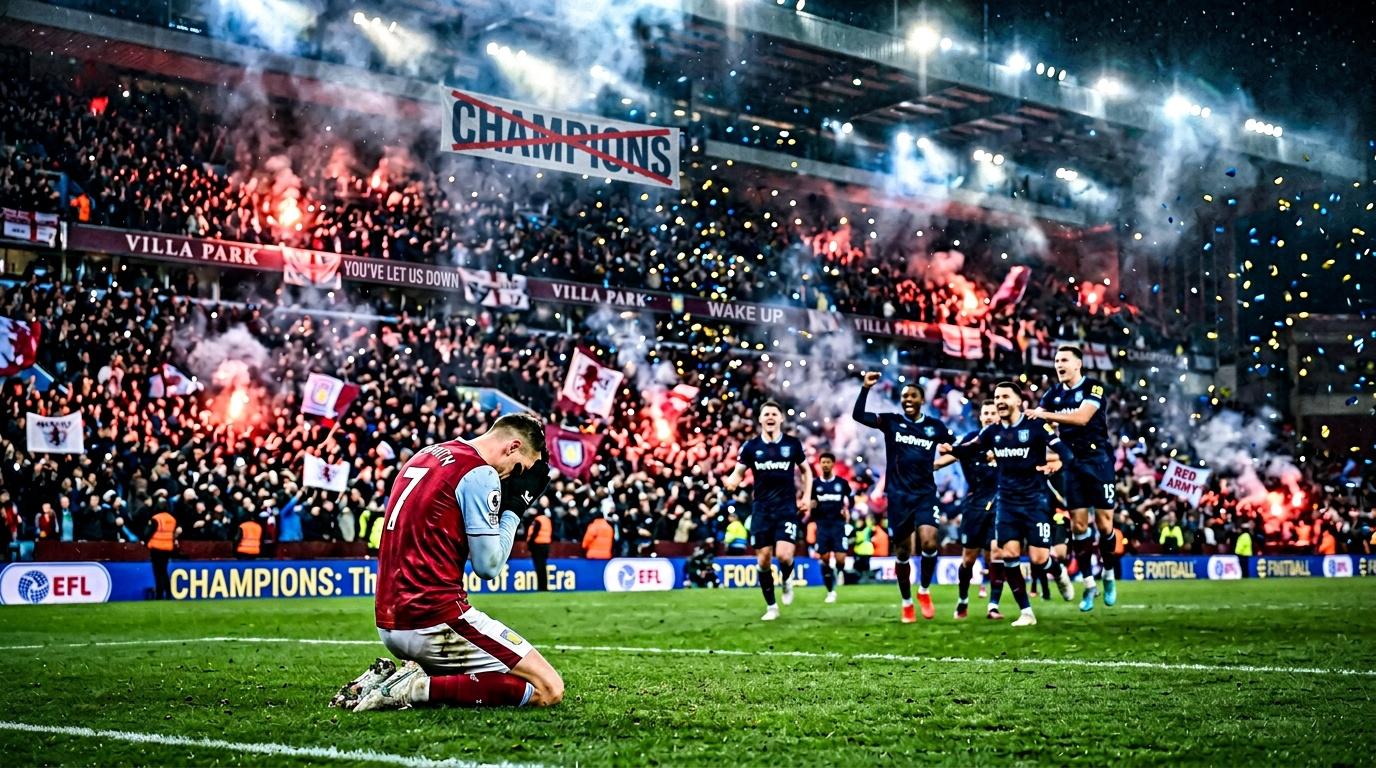
English clubs have long dominated domestic football, yet the Champions League last 16 keeps exposing their limits. Season after season, Premier League sides enter knockout rounds full of confidence, only to stumble against continental opposition. Understanding why requires looking at how English football itself has evolved — or perhaps regressed — in recent years.
A tactical shift that may be costing Premier League clubs in Europe
Something significant has changed in Premier League football this season. The once-fashionable emphasis on possession, precise passing, and patiently building through the thirds has given way to something altogether more direct. Set-pieces, physicality, and even the revival of the long throw have become central tools for many top-flight English sides.
The numbers tell a clear story. According to Opta, after 210 Premier League matches this campaign, the average number of passes per game dropped to 873.3 — the lowest recorded since 2012-13, when it stood at 868.7. That is not a minor statistical blip. It reflects a genuine philosophical shift across the division.
Goals from set-pieces paint an equally striking picture. Out of 587 goals scored at the same stage, 166 came from corners, free-kicks, or throw-ins — representing a remarkable 28.3% of all goals. Meanwhile, the use of long throws has surged dramatically, averaging 3.97 per game. That figure is more than double the average recorded over the previous five seasons. These are not coincidental trends. They reflect deliberate tactical choices made by Premier League managers.
Here are the key statistical shifts observed in the Premier League this season :
- Average passes per game : 873.3 (lowest since 2012-13)
- Goals from set-pieces (corners, free-kicks, throws) : 28.3% of total goals
- Long throws per game : 3.97 on average, more than double recent seasons
The question this raises is uncomfortable for English football. Do these trends represent a genuine regression in tactical sophistication ? Are Premier League clubs now favouring brute force and directness over the technical refinement that elite European competition demands ?
Physical recruitment and its impact on European nights
The link between this domestic tactical evolution and Premier League failures in the Champions League knockout rounds is not accidental. Recruitment strategies follow tactical philosophies. If a club values power and directness, it scouts and signs players built for exactly that.
As analyst Irfan noted, “with how physical English football is, teams have had to recruit powerful athletes to match up, which at times may be at the expense of high-end technical quality.” That trade-off becomes brutally visible against sides like Bayern Munich, Real Madrid, or Barcelona, where technical ability is non-negotiable at every position.
| Aspect | Premier League approach | Top European sides |
|---|---|---|
| Player profile | Powerful, athletic, direct | Technical, versatile, refined |
| Attacking variety | Limited, set-piece reliant | Multiple creative solutions |
| Defensive preparation | Less exposed to technical play | Regularly tested by elite technique |
When Premier League sides rely heavily on physical attributes and dead-ball situations, they develop fewer attacking solutions in open play. Against high-quality European defences, those limitations become glaring. A team that wins domestic games through set-pieces and transitions suddenly finds itself without answers when a technically superior opponent controls the tempo.
There is another layer to this problem. Because English clubs face fewer technically gifted opponents week-to-week domestically, their players are simply less practised at defending against intricate, high-quality build-up play. The exposure is irregular, and that lack of repetition matters at the elite level. When a side like Bayern or Atlético Madrid starts circulating the ball with precision and purpose, English defenders can look underprepared — not for lack of effort, but for lack of familiarity.
Why the gap with elite European clubs is harder to close than it looks
It would be reductive to suggest that top European clubs are simply more technical and nothing else. Bayern Munich, for instance, are themselves a physically imposing side. The difference lies in what they combine with that physicality. Their world-class players do not choose between power and technique — they develop both simultaneously, refining their attacking schemes week after week against quality opposition.
That continuous refinement is precisely what Premier League clubs currently struggle to replicate. When your domestic environment rewards directness and set-piece efficiency, there is less organic pressure on players to sharpen their technical game. The tactical habits formed over 38 league matches become deeply ingrained — and difficult to switch off in a two-legged European tie.
This does not mean English clubs cannot compete in the Champions League. They clearly can. But the pattern of last-16 exits suggests something structural rather than merely circumstantial. The stylistic shift happening inside the Premier League right now is creating a growing disconnect between domestic success and European readiness.
Bridging that gap will require more than individual quality. It will demand a collective reassessment of how Premier League football develops players, constructs squads, and prepares tactically for the specific demands of knockout European football. Until that happens, the trend of promising English sides falling short at this stage of the Champions League may well continue — season after season.
