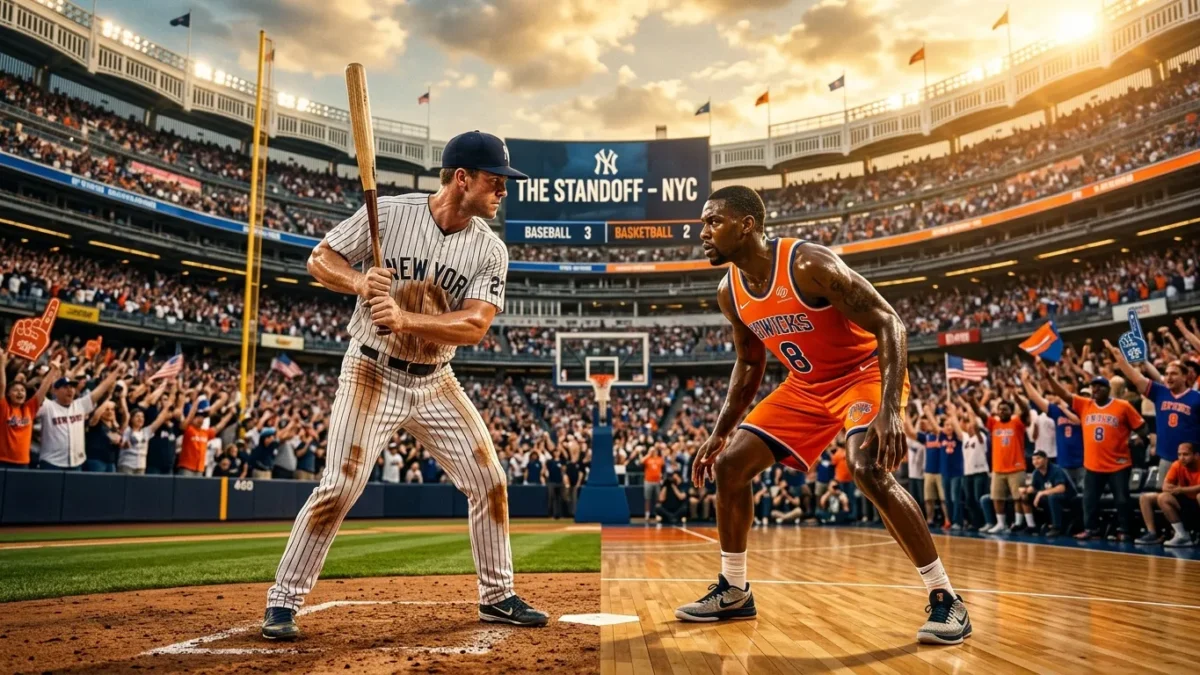
The 2026 World Baseball Classic final between Venezuela and the United States drew nearly 10.8 million viewers on Fox and Fox Deportes. That figure more than doubled the 2023 final’s audience. Philadelphia Phillies star Bryce Harper, whose late home run shaped the game into instant history, declared simply : “I thought baseball won.” Meanwhile, 21-year-old Boston Red Sox outfielder Roman Anthony added that “the game’s in a better place than it’s ever been.” These reactions capture something real : MLB’s momentum is undeniable, and a long-simmering debate has returned with new energy.
Revenue, franchise values and the money trail between MLB and NBA
When economists weigh in on sports league rankings, they lean hard on spending patterns. “People reveal what something’s worth to them by what they’re willing to pay,” said Victor Matheson, economics professor at Holy Cross. By that logic, both leagues look surprisingly similar — and surprisingly competitive.
In 2024, MLB posted $12.1 billion in total revenues, a record high. The NBA reported roughly $12.8 billion for the 2024–25 season, with projections reaching $14.3 billion this year. Columbia University sports management professor Scott Rosner noted his students are consistently surprised by how close these figures are. For years, baseball seemed headed toward irrelevance. Rule changes, international stars like Shohei Ohtani, and a sharper product reversed that decline.
Yet franchise valuations tell a different story. Here is a direct comparison :
| Metric | MLB | NBA |
|---|---|---|
| Average team value | $3.17 billion | $5.51 billion |
| Most valuable franchise | Yankees (~$9.4B) | Golden State Warriors ($11.33B) |
| Least valuable franchise | ~$1.45 billion | ~$4 billion |
| Recent notable sale | Orioles : $1.725B | Celtics : $6.1B |
Investors bet on the NBA’s long-term trajectory. Matheson explains this gap through two lenses : faster expected revenue growth in basketball, and the NBA’s salary cap providing cost certainty that MLB owners do not enjoy. That competitive balance concern also drives fans. A potential MLB work stoppage in 2027 looms large, with 77 percent of surveyed fans believing games will be missed — and 67 percent saying it would hurt their fandom. National media rights reinforce this divide. The NBA’s 11-year, $77-billion deal with Amazon, ESPN and NBC dwarfs MLB’s roughly $2 billion annual national package.
TV ratings, polling and who actually watches what
Viewership data creates a genuinely messy picture. Regular-season NBA games currently average 1.8 million viewers across ESPN/ABC, NBC and Amazon Prime Video — up 16 percent year-over-year. NBC games alone average 2.6 million. MLB’s Sunday Night Baseball on ESPN averaged 1.8 million viewers in 2025, with Fox games reaching 2.04 million. On standard metrics, basketball edges baseball during the regular season.
Championship events flip the script. The 2025 World Series Game 7 between the Dodgers and Blue Jays drew 25.98 million viewers. The Thunder-Pacers Game 7 in the NBA Finals pulled 16.61 million. The previous year’s World Series averaged 15.7 million — topping the 2025 NBA Finals’ 10.2 million average. Caveat : large-market teams and long series always inflate these numbers. David Carter of the Sports Business Group called these figures “interesting snapshots, but only snapshots.”
Polling data from SSRS’s Sports Poll service for 2025 gave baseball a clear edge in fan identification :
- MLB led in casual fans : 61% vs. 55% for the NBA
- MLB led in avid fans : 15% vs. 14%
- MLB led as favorite league : 9% vs. 7%
- The NBA only led MLB during baseball’s four offseason months
Chad Menefee, executive vice president at SSRS, stated plainly : “MLB is pretty clearly ahead of the NBA” on the monthly interest question. Gallup data over decades shows both leagues have grown their fanbases since 2001, with baseball fans rising from 46 to 54 percent of respondents, and basketball fans climbing from 36 to 44 percent. Both trail the NFL considerably — that hierarchy remains unchanged.
Demographics, social media and the cultural gap that still matters
Whatever ground baseball has recovered, the NBA holds a decisive cultural advantage online. The league has more than six times MLB’s Instagram followers, nearly four times the Twitter following, and triple the YouTube subscribers. Google Trends shows roughly twice as many annual searches for “NBA” as for “MLB.” Rosner described the gap as “night and day.” The NBA built this dominance through intentional global strategy over decades — not overnight.
Demographics amplify this edge. A 2024 Playfly Sports study found 56 percent of NBA fans are under 44, with 40 percent identifying as non-white. MLB’s figures : 51 percent under 44, and 33 percent non-white. Temple economics professor Michael Leeds noted baseball spent decades failing to attract younger and more diverse fans. The league has made recent gains, but the gap persists. Advertiser spending follows younger eyeballs, which is why media executives still prize basketball demographics more highly.
On the court, the NBA faces its own headaches. Load management, ballooning final scores, 3-pointer saturation and a gambling scandal have dented the league’s image. Baseball, meanwhile, has shed its reputation as slow and unwatchable. The pitch clock, shift restrictions and the upcoming Automated Ball-Strike challenge system have modernized the game effectively. Yet the threat of a labor stoppage in 2027 remains baseball’s single greatest risk. Aaron Judge and Ohtani are genuine megastars — but sustaining this momentum through a potential lockout will define whether MLB’s resurgence becomes permanent or just a promising chapter. The debate between America’s No. 2 leagues is no longer one-sided. It is, at last, a real contest.
