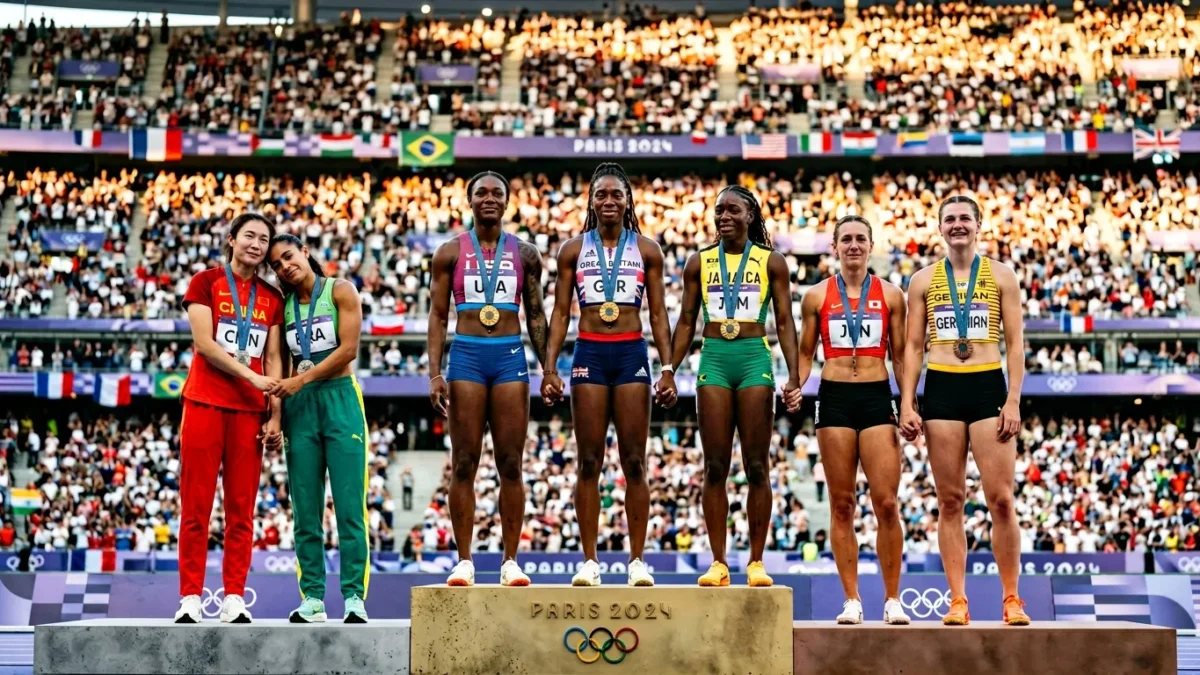
On March 26, 2026, the International Olympic Committee made a landmark decision. It updated its eligibility rules to bar biological males from competing in women’s sports at the Olympic Games. The announcement triggered immediate and passionate responses from athletes across generations. Many Olympians spoke directly to Fox News Digital, sharing strong support for this shift in policy. The reactions ranged from relief to long-overdue vindication, particularly among women who spent careers fighting for a level playing field.
A historic shift in Olympic eligibility rules
The IOC’s updated framework specifically prohibits born males from entering women’s competitive categories, regardless of gender transition. As five-time Olympic gold medalist swimmer Gary Hall Jr. clarified, this ruling does not ban transgender athletes from the Games altogether. “A born male after transition can still compete in men’s events,” Hall noted. The distinction matters : the policy targets biological sex, not identity.
Three-time Olympic gold medalist bobsled athlete Kaillie Humphries welcomed the change enthusiastically. She highlighted the return of sex testing as a key mechanism for fair competition. Humphries pointed out that such testing existed in earlier Olympic eras, and that its revival would protect the women’s category moving forward. She also noted that the LA28 Games would be an especially fitting venue to debut this protection, given President Donald Trump’s public advocacy on this issue.
Swimming legend Donna de Varona, a three-time Olympic gold medalist, credited IOC president Kirsty Coventry — herself an Olympic champion — for grounding the decision in scientific research. “Science and research is how this decision was based,” de Varona explained. She acknowledged that while sport should be inclusive broadly, the Olympic arena operates as a zero-sum game, where fairness demands clear biological distinctions.
| Athlete | Sport | Olympic medals | Position on IOC policy |
|---|---|---|---|
| Kaillie Humphries | Bobsled | 3× gold | Strongly in favor |
| Gary Hall Jr. | Swimming | 5× gold | Supportive, nuanced |
| Leah Amico | Softball | 3× gold | Fully supportive |
| Martina Navratilova | Tennis | Olympic participant | Supportive with nuance |
| Tyler Clary | Swimming | 1× gold | Strongly in favor |
Female athletes speak out on fairness and the women’s category
Many women athletes described the IOC decision as long overdue. Leah Amico, a three-time Olympic gold medalist in softball, stated that women had fought for decades simply to compete on the world’s greatest athletic stage. She argued that biological females deserve to face one another on equal terms. “Girls and women fought a long time to compete,” Amico said, adding that the IOC showed courage by taking this stand publicly.
Katie Uhlaender, a five-time Olympian in skeleton, framed the issue around clarity and consistency rather than politics. Female athletes had asked for transparent standards for years, she said. “Sport only works when rules are applied consistently,” Uhlaender argued. She thanked everyone involved in pushing this conversation forward, emphasizing that real progress requires addressing difficult subjects directly, not avoiding them.
Gymnast MyKayla Skinner, a silver medalist at Tokyo 2020, kept her reaction brief but telling : “The best news ! About time !” Cyclist Inga Thompson, a three-time Olympian, went further, warning that without such protections, women would eventually disappear from Olympic competition altogether. She predicted that unchecked inclusion of biological males would leave only two categories : a men’s division and a combined DSD/trans category. Thompson also called sex testing through a simple cheek swab a non-intrusive and effective solution.
- Nancy Hogshead (3× gold, swimming) called sport participation a human right and praised the IOC for affirming inclusion through sex-based categories.
- Brian Goodell (2× gold, swimming) argued that preserving the women’s category benefits both athletes and the broader Olympic Movement.
- Carrie Englert Zimmerman (gymnastics, Montreal 1976) said women’s sport exists precisely because biological differences matter, especially physical traits shaped by male puberty.
- Maciej Czyżowicz (gold, pentathlon, Barcelona 1992) noted that biological sex differences in speed and strength create inherent unfairness and even safety risks.
Voices of nuance and calls for continued vigilance
Not every Olympian offered unconditional praise. Giddeon Massie, a two-time U.S. Olympic cyclist, acknowledged the decision but refused to call it laudable given how long it took. He stressed that the real battleground remains at grassroots and recreational levels, where young girls still face unequal conditions. “Those must continue to be contested,” Massie said firmly.
Martina Navratilova, the tennis icon who represented the United States at Athens 2004, offered a carefully balanced statement. She affirmed that transgender and gender non-conforming individuals deserve the same human rights as all citizens and must be protected from discrimination. However, she drew a clear line : “In Olympic sports, sex matters, and women’s sex-based rights must take precedence over gender-based identities.” Navratilova connected this to decades of advocacy by gay, lesbian, and bisexual communities fighting for rights without compromising others.
Tyler Clary, gold medalist in swimming at London 2012, described the ruling as “a long-overdue return to common sense.” He credited the IOC for taking a clear and necessary stand at the elite level, where biological reality directly shapes competitive fairness. These diverse voices, from different sports and eras, collectively signal that the protection of women’s athletic categories has become a defining issue in modern Olympic governance — one that athletes themselves have been demanding for years.
