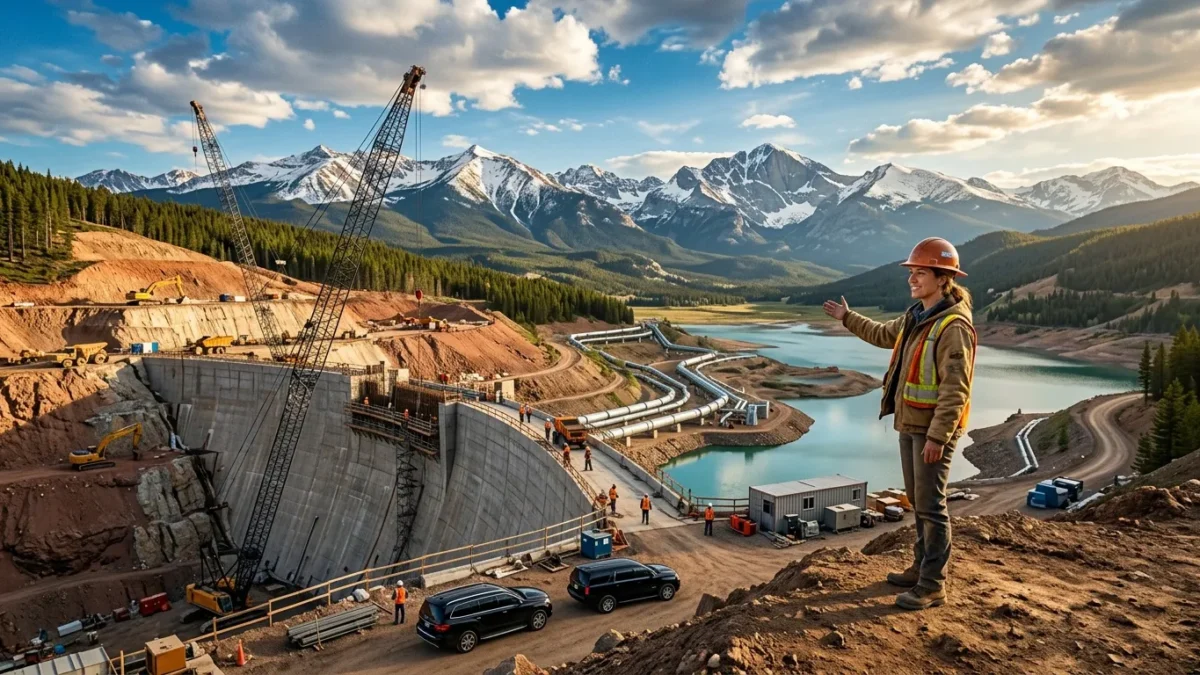
Colorado has long faced the challenge of managing its water resources sustainably. A surprising funding source — sports betting revenue — is now playing a pivotal role in bankrolling critical water infrastructure projects across the state. With January 2026 setting a new record for wagering activity, the financial windfall is translating directly into on-the-ground environmental work.
How Colorado’s record-breaking sports betting revenue funds water projects
January 2026 marked a historic milestone for Colorado’s gambling industry. Sports betting generated over $5 million in tax revenue in a single month, surpassing all previous records. This figure isn’t just a number — it represents a direct lifeline for water conservation efforts statewide. The Colorado Division of Gaming, led by Director Christopher Schroder, confirmed that these funds flow directly into water-related initiatives under a dedicated grant program.
Since sports wagering was legalized in Colorado in 2019, the cumulative proceeds earmarked for water projects have exceeded $104 million. That’s a remarkable total, especially considering how recently the legal betting market launched. The connection between recreational gambling and environmental stewardship may seem unexpected, but the state built this funding mechanism intentionally into its legislation.
The money feeds the Colorado Water Plan Grant Program, managed by the Colorado Conservation Board. This program invites local communities and districts to propose projects targeting water risk, watershed health, and long-term resilience. Last fiscal year alone, the program distributed $37 million in grants. Demand remains consistently high as communities across Colorado grapple with drought, flood cycles, and post-wildfire instability.
Here are some of the primary focus areas the grant program has supported :
- Agricultural water management and efficiency improvements
- Land use planning linked to watershed protection
- Erosion control and sediment stabilization near fire-affected zones
- Water storage and supply infrastructure
- Flood and drought resilience projects for vulnerable communities
Jeannine Shaw of the Colorado Conservation Board emphasized that the program targets fire-smart watershed management. She noted that in years where water scarcity and climate volatility dominate public attention, organizations are especially motivated to move quickly on implementation. The funding mechanism is proving both timely and impactful.
Jefferson County project shows sports betting dollars at work on the ground
One of the most tangible examples of this funding in action recently wrapped up in Jefferson County. The Lower North Fork Sediment Stabilization Project tackled a stretch of land still bearing the ecological scars of the 1996 Buffalo Creek Wildfire. Decades after that fire, the steep and rocky terrain continues to shed sediment into nearby waterways, threatening water quality downstream.
Margo Yousee of the Jefferson Conservation District described the ongoing consequences of that historical blaze. Following the fire, massive volumes of debris and sediment poured into local streams, degrading water quality for communities relying on those sources. The project directly addresses this legacy by deploying a combination of anti-erosion barriers, revegetation through seeding, and strategic tree planting.
The approach is both simple and effective. Physical barriers slow water flow, reducing the energy that carries sediment downstream. Vegetation stabilizes the soil over the longer term. Yousee made the broader case clearly : protecting the watershed higher in the hills ultimately delivers cleaner drinking water to everyone living downstream. It’s an investment in public health as much as in environmental restoration.
| Project element | Purpose | Benefit |
|---|---|---|
| Anti-erosion barriers | Slow water velocity along riverbanks | Reduces sediment displacement |
| Seeding and replanting | Stabilize exposed soil surfaces | Long-term erosion prevention |
| Tree planting | Anchor hillside terrain | Improved watershed filtration |
Yousee stressed that sports betting revenue was instrumental in getting this specific project off the ground. Without that dedicated funding stream, the project timeline would have been far less certain. The Jefferson Conservation District’s ability to plan and execute this work depended significantly on the predictability of these grants.
The Jefferson County site stands as a model for what coordinated, well-funded watershed restoration looks like in practice. It also illustrates the kind of long-tail environmental damage wildfires leave behind — damage that requires sustained investment over many years to reverse.
Sports betting and water resilience : a funding partnership built for Colorado’s future
As March Madness draws millions of wagers across the country, Colorado’s framework offers a compelling example of aligning recreational spending with public infrastructure priorities. The state has effectively turned sports enthusiasm into environmental capital, channeling a portion of gambling taxes toward one of its most pressing resource challenges.
Christopher Schroder expressed clear satisfaction with where the tax revenue flows. Seeing public funds go toward worthy, lasting causes reinforces the case for thoughtful revenue allocation from the start of any new market. Colorado’s model could serve as a blueprint for other states looking to connect emerging industries with critical infrastructure needs.
Shaw noted that water is increasingly front of mind for communities throughout the state. Climate patterns are intensifying, and the window for proactive investment is narrowing. Watershed projects that might have seemed optional a decade ago now feel urgent. The grant program’s high demand reflects this growing awareness among local governments, conservation districts, and agricultural operators.
The combination of record sports betting figures and clear environmental need creates a compelling alignment. Colorado’s approach demonstrates that sustainable water management doesn’t have to rely solely on federal appropriations or municipal budgets. Innovative funding mechanisms rooted in local economic activity can deliver meaningful results at the watershed level, one project at a time.
