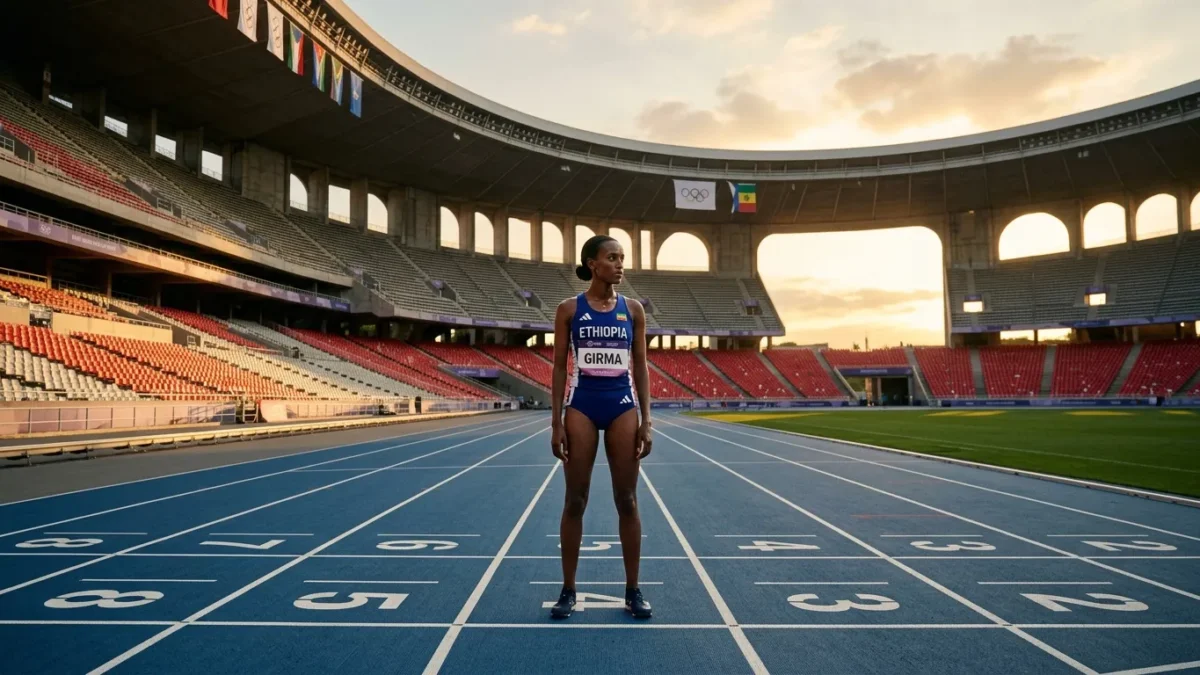
The International Olympic Committee’s biological female decision marks a turning point in elite sport governance. For the first time, the IOC has formally acknowledged that male sex confers a performance advantage regardless of testosterone suppression. This shift rewrites years of policy and raises urgent questions about inclusion, fairness, and the future of women’s competition.
What the IOC’s biological female policy actually says
The IOC grounded its new stance in a broad review covering ethical, legal, scientific, and medical developments, alongside direct feedback from sports stakeholders. The core finding is clear : male physiology provides a measurable competitive edge in events requiring strength, power, or endurance, no matter how long testosterone suppression has been applied.
To understand the scale of the advantage acknowledged by the IOC, consider the performance gaps identified in the review :
| Sport category | Estimated male performance advantage |
|---|---|
| Running and swimming events | 10–12% |
| Throwing and jumping disciplines | Around 20% |
| Explosive power sports (e.g. boxing) | Up to 100% |
These figures come from the IOC’s internal consensus, though the underlying scientific research has not been published. Critics argue this lack of transparency weakens the credibility of the decision, even if many sports scientists broadly agree with the conclusions. Advocates for tougher eligibility rules say the data has pointed in this direction for years, and that the IOC was simply catching up with what governing bodies had already started to implement.
The timing matters. Several major sports had already moved ahead of the IOC. World Swimming and World Cycling both introduced bans on transgender athletes competing in women’s categories. World Athletics tightened its testosterone rules following the 2016 Rio Olympics, where all three podium finishers in the women’s 800 metres were athletes with differences of sex development (DSD). By 2025, mandatory sex testing had been introduced at the elite level.
A series of controversies that pushed the IOC to act
The IOC’s policy shift did not emerge in a vacuum. A sequence of high-profile incidents built pressure on the organisation over several years. New Zealand weightlifter Laurel Hubbard became the first openly transgender woman to compete at an Olympics in Tokyo in 2021. The event generated global debate and accelerated calls for clearer eligibility criteria across all Olympic sports.
The tension reached a peak during the 2024 Paris Olympics women’s boxing competition. Two fighters, Imane Khelif and Lin Yu-ting, won gold medals despite having been disqualified from the previous year’s World Championships by the then-governing body, the IBA, for allegedly failing sex eligibility tests. The controversy engulfed the Games and drew intervention from well beyond the sports world.
- The United Nations’ special rapporteur on violence against women called for the reintroduction of sex screening for female athletes.
- A group of academics backed that position, arguing it was far preferable to targeted testing driven by suspicion or bias.
- Lin Yu-ting was subsequently cleared to compete in female competition by World Boxing.
- Imane Khelif’s eligibility remained a contested topic long after the Games ended.
These events placed the protection of the female category at the centre of the Olympic governance debate. Kirsty Coventry, who became IOC president after serving as a senior figure during the Paris controversy, had pledged during her election campaign to do more to safeguard women’s sport. Her predecessor’s handling of the boxing crisis had drawn sharp criticism, and Coventry’s commitment to reform was seen as a direct response to that failure.
Political pressure and what comes next for women’s sport
Beyond the world of sport, broader political forces shaped the context in which the IOC made its decision. US President Donald Trump signed an executive order prohibiting transgender women from competing in female sports categories. He also threatened to deny visas to transgender Olympic athletes seeking to compete at the upcoming Los Angeles Games. Coventry publicly denied that American political pressure influenced the IOC’s new policy.
Trump, however, publicly claimed credit for the change. Whether or not the US administration’s stance directly shaped the IOC’s internal deliberations, the timing was difficult to ignore. International sport bodies rarely operate in complete isolation from geopolitical realities, and the LA 2028 Games gave the US government a significant point of leverage.
The IOC’s move now sets a new benchmark for transgender and DSD athlete eligibility at the elite level. Individual federations will still be responsible for implementing specific rules within their own sports. The principle established — that testosterone suppression alone is insufficient to eliminate the performance advantages associated with male biology — will likely reshape eligibility frameworks across dozens of Olympic disciplines.
For female athletes who have long campaigned for stronger protections, the IOC’s recognition of male performance advantage is a significant moment. For transgender athletes, the implications are profound and, in many cases, mean exclusion from elite women’s competition. The debate over how to balance competitive fairness with inclusive participation will continue well beyond any single policy announcement. What is clear is that the IOC has now drawn a line, and the future of women’s sport at the highest level will be shaped by how that line holds.
