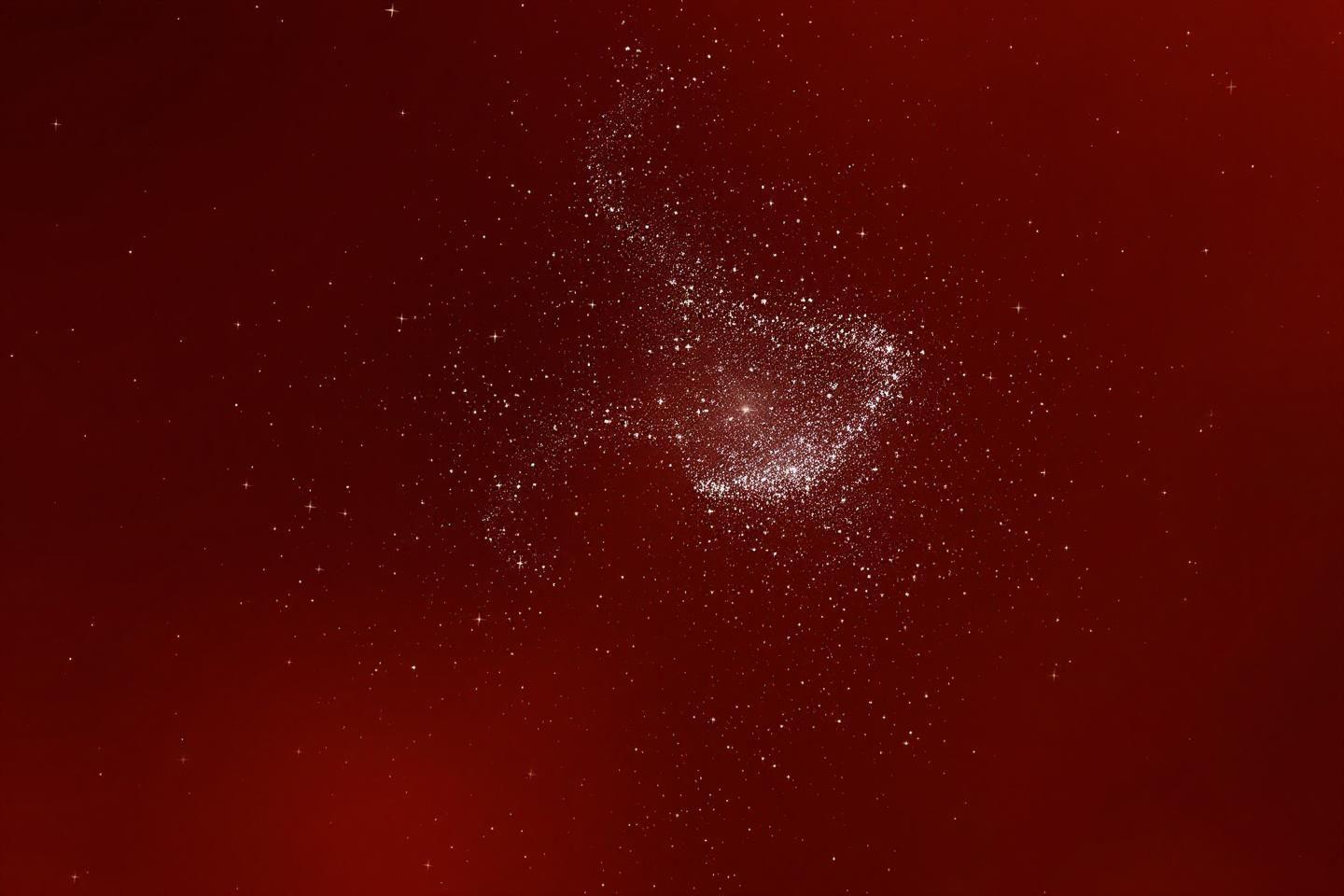
The recent discovery of interstellar comet 3I/ATLAS has sparked considerable interest among astronomers worldwide. This celestial visitor, which made its appearance in our Solar System on July 1, 2025, travels at remarkable speeds—nearly double the velocity of its predecessors, ‘Oumuamua and Comet Borisov. What sets this object apart isn’t just its speed or size, but rather its unusual polarimetric characteristics that challenge our understanding of cometary bodies. Scientists have identified an extreme negative polarization pattern that doesn’t fit into any known category of comets, raising fundamental questions about its composition and origin.
Understanding polarimetry in astronomical observations
Light behaves as a wave phenomenon, consisting of coupled oscillating electric and magnetic fields that remain perpendicular to each other and to the wave’s direction of travel. When astronomers measure polarization, they’re examining how these fields oscillate. Linear polarization occurs when the electric and magnetic fields oscillate along a single direction, while circular polarization involves fields rotating at a constant rate as the wave propagates through space.
The polarization level displayed by objects like 3I/ATLAS that scatter sunlight reveals critical information about their global shape and corpuscular composition. This measurement depends heavily on the phase angle—the angle formed between the Sun-comet axis and the comet-observer axis. Astronomers calculate the degree of linear polarization by measuring the difference between fluxes perpendicular and parallel to the scattering plane, normalized by their sum.
Polarization is deemed positive when the polarization direction orients perpendicular to the scattering plane formed by the Sun, comet, and observer. Conversely, it becomes negative when oriented parallel to this plane. This measurement technique proves highly sensitive to the solar phase angle, making it an invaluable tool for understanding cometary structure and composition without direct sampling.
The unprecedented characteristics of 3I/ATLAS
Research teams conducting polarimetric observations of 3I/ATLAS have uncovered truly exceptional findings. The comet exhibits an extremely deep and narrow negative polarization branch, with parameters that distinguish it from all previously observed comets. Specifically, measurements revealed Pmin values of −2.77 ± 0.11%, αmin of 6.41±1.27°, α0 of 17.05±0.12°, and h of 0.40±0.02% deg−1.
These values indicate that 3I/ATLAS doesn’t conform to either of the two standard cometary categories that astronomers typically use for classification :
- High polarization comets with characteristic scattering properties
- Low polarization comets displaying different optical behaviors
- The unique category occupied solely by Hale-Bopp and 2I/Borisov
The astronomical community has estimated the nucleus of 3I/ATLAS to measure approximately 5.6 kilometers in diameter, excluding its distinctive dusty coma. Its suspected anomalous mass exceeds 33 billion tons, making it substantially larger than previous interstellar visitors. The comet’s outgassing behavior, confirmed as it approached closer to the Sun, definitively established its cometary nature rather than asteroidal classification.
| Object | Polarization type | Category | Origin |
|---|---|---|---|
| ‘Oumuamua | Not measured | Unknown | Interstellar |
| 2I/Borisov | Unique pattern | With Hale-Bopp | Interstellar |
| 3I/ATLAS | Extreme negative | Unprecedented | Interstellar |
| Hale-Bopp | Unusually high | Outlier | Solar System |
Similarities with trans-Neptunian objects and Centaurs
Harvard astronomer Avi Loeb, while not directly involved in the research, provided context for understanding these observations. According to the findings, 3I/ATLAS shares characteristics with trans-Neptunian objects—minor planets and smaller bodies orbiting beyond Neptune—and Centaurs. The comet’s inversion angle resembles that of rare F-type asteroids and cometary nuclei, yet the depth of its negative polarization branch measures almost twice as large.
Extrapolation to very small phase angles suggests a steep polarization slope between phase angles 0–2°, reminiscent of certain small TNOs and Centaurs. While this finding remains tentative due to limited data at small phase angles, it aligns consistently with the red spectral slope observed in the object. Independent studies have also detected evidence of water-ice on the comet’s surface, further supporting this connection to outer Solar System bodies.
Imaging confirms that a diffuse coma has been present from the earliest observations of 3I/ATLAS. However, no strong polarimetric features have been spatially resolved to date. The comet’s distinctive green tinge and interesting chemistry, revealed through spectroscopy, add another layer of complexity to its characterization. Unfortunately, after potentially encountering a coronal mass ejection, the object has vanished from current observation capabilities and won’t return to view until later in 2025.
Implications for understanding interstellar bodies
These groundbreaking findings suggest that 3I/ATLAS may represent a distinct type of comet, substantially expanding the diversity of known interstellar bodies. The unprecedented polarimetric behavior challenges existing classification schemes and indicates that our understanding of cometary composition and structure requires revision. Researchers emphasize that further observations remain essential for confirming these initial findings and understanding the full implications.
The research paper, submitted to The Astrophysical Journal Letters, currently awaits peer review and has been posted to preprint server arXiv. Scientists worldwide anticipate additional observational opportunities when the comet becomes visible again later this year. These future observations will be crucial for validating the extreme negative polarization measurements and potentially resolving spatial features within the coma.
