








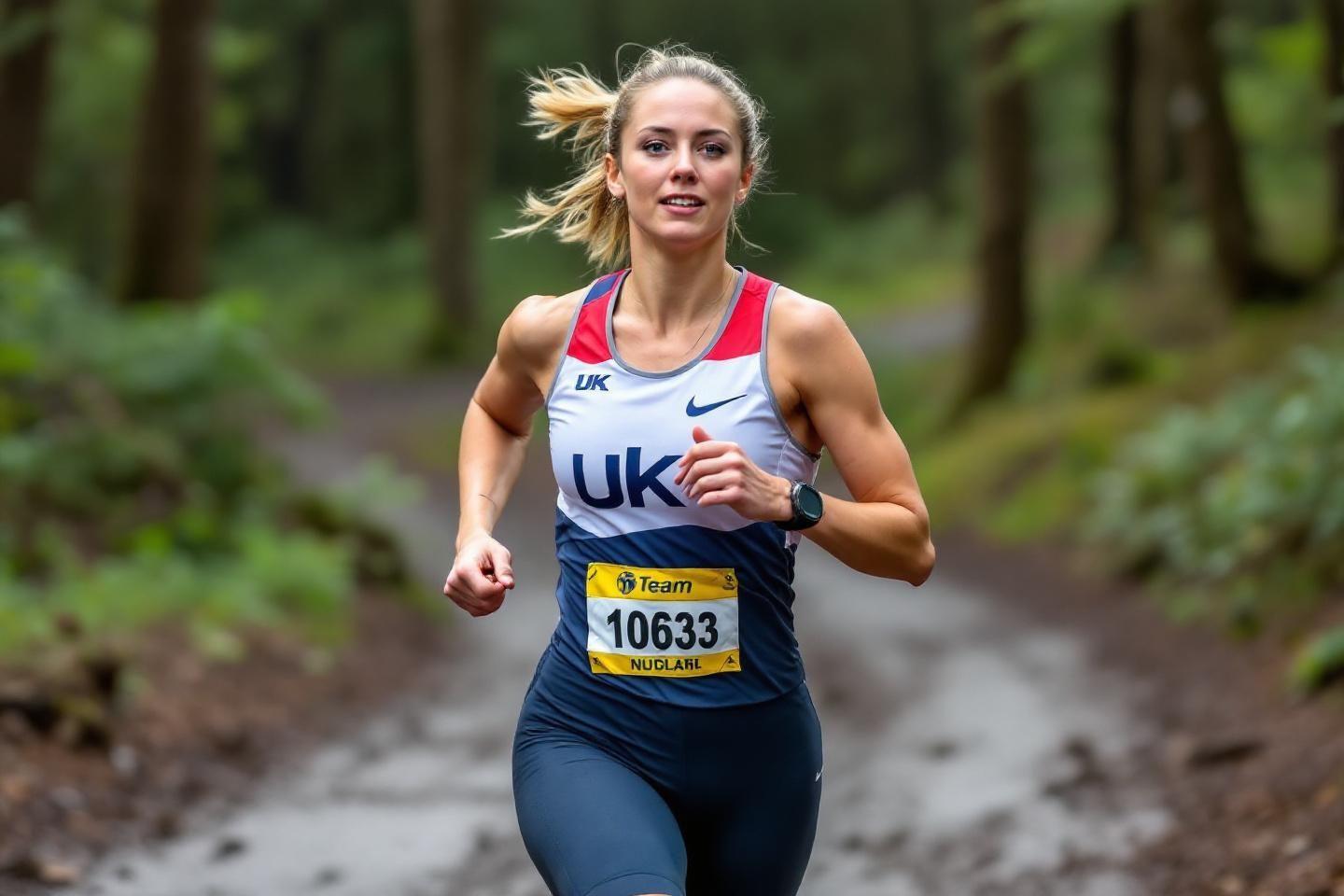
The spotlight shines brightly on Britain’s middle-distance sensation as the athletics world gathers in Tallahassee, Florida for one of the sport’s most demanding tests. The 23-year-old from Inverness has emerged as Britain’s strongest contender following her impressive displays on the European stage last month, where she secured individual and team silver medals. This weekend’s competition, broadcast live by the BBC from 14 :35 to 19 :00 GMT on Saturday, January 10, represents a crucial moment for British distance running.
From mud to medals : a runner’s transformation
The journey of this talented athlete illustrates the complex relationship between passion and professional necessity in modern athletics. Throughout her formative years, grassy hills and challenging terrain defined her competitive landscape. Until completing secondary school, she viewed herself exclusively as someone who thrived in harsh winter conditions rather than on synthetic tracks. However, winning the European Under-23 title two years ago triggered a strategic recalibration of her career trajectory.
The reality of professional athletics demanded adaptation. Financial support mechanisms and sponsorship opportunities remain concentrated around track performances, particularly Olympic disciplines. Despite her heart remaining firmly rooted in winter racing across natural terrain, expectations for summer performances meant diversifying her competitive focus. This strategic shift yielded remarkable results : a European 10,000m bronze medal in summer 2024 opened doors to Olympic and World Championship appearances, finally securing British Athletics funding.
Yet she continues honouring her first love. The December European championships demonstrated her ability to excel across multiple domains. Balancing these competing demands requires careful periodisation, ensuring peak performance windows align with both her preferred discipline and the commercially lucrative track season. This dual commitment mirrors the tension faced by many contemporary middle-distance athletes navigating an increasingly specialised sport. Similar dedication to breaking boundaries can be seen across athletics disciplines, as evidenced when Mondo Duplantis breaks pole vault world record again at 2025 World Championships, pushing human limits in his own spectacular fashion.
The declining prestige of winter racing
Understanding the current landscape requires examining how this once-prestigious discipline lost its lustre. Tim Hutchings, Britain’s last male medallist at these championships in 1989, recalls an era when European circuit races offered substantial financial rewards across Spain, France, Italy and Germany. The winter season represented a viable professional pathway rather than merely a stepping stone.
Several interconnected factors contributed to this decline. UK Sport’s National Lottery funding distribution, implemented in May 1997, prioritised Olympic and Paralympic disciplines. This created structural incentives favouring track and road performances over natural terrain competitions. The resulting resource allocation fundamentally altered career planning for aspiring professional runners.
| Era | Participant numbers | Championship frequency |
|---|---|---|
| Turn of century | 800+ competitors | Annual |
| Post-2011 | Approximately 500 | Biennial |
Additional challenges emerged from competitive dynamics. African runners have dominated podium positions for extended periods : no non-African athlete has reached the men’s podium in over twenty years, whilst women’s medals have remained similarly concentrated for twelve years. Many nations either skip these championships entirely or send reduced squads, preserving their leading athletes for spring road races or lucrative summer track opportunities.
Grassroots strength versus elite decline
Despite diminished elite prestige, domestic club-level participation remains remarkably robust. The English National Cross Country Championships consistently attracts over 5,000 competitors annually. Regional leagues across Surrey, Birmingham, Metropolitan and Chiltern areas routinely welcome more than 1,500 runners monthly, demonstrating enduring community engagement.
This disparity between grassroots enthusiasm and elite neglect creates a peculiar paradox. Whilst marathons, trail runs and park runs experience explosive growth among recreational runners, competitive winter racing struggles for mainstream recognition. Negative associations from school experiences likely contribute to public indifference, despite the discipline’s technical demands and physical rigour.
World Athletics standardised championship distances to 10km from 2019, attempting to establish consistency across varied courses. However, the fundamental challenge remains : without financial incentives or widespread media coverage, attracting top international talent proves difficult. The discipline is increasingly viewed outside Africa as merely developmental preparation for track careers, rather than a prestigious end in itself.
Olympic aspirations and future prospects
Potential revival pathways are emerging. Lord Coe, World Athletics president, has championed inclusion in the Winter Olympics, suggesting a “good chance” for the 2030 Games despite resistance from existing winter sports. Such inclusion would fundamentally transform funding structures and athlete priorities. Britain is reportedly developing bids to host multiple international championships, which could catalyse domestic interest. The last major event on British soil occurred in Edinburgh during 2008.
Eamonn Martin, English Cross Country Association secretary and British men’s team manager, identifies Britain’s historical strength in the discipline. Hosting major competitions combined with potential Olympic medal opportunities could prove transformative. Suddenly, funding pathways would expand, encouraging leading track athletes to maintain winter racing commitments.
The weekend’s competition features comprehensive British representation :
- Senior men’s squad : Jacob Cann, Joe Hudson, Rory Leonard, David Mullarkey, Matthew Ramsden and Richard Slade
- Senior women’s team : Phoebe Anderson, Jessica Gibbon, Lucy Jones, Megan Keith, Verity Ockenden and Poppy Tank
- Under-20 competitors across men’s and women’s categories
- Mixed relay representatives featuring emerging talent
This comprehensive selection reflects Britain’s commitment despite structural challenges. The leading Scottish athlete believes Olympic inclusion would generate exposure and encourage serious engagement from Britain’s best track performers. Describing natural terrain racing as the purist form of distance running, she envisions restored respect for a discipline currently treated as secondary. The potential exists for renaissance if strategic investments materialise and international visibility increases through major championship hosting and Olympic participation.