







Physical activity stands as one of the most powerful predictors of healthy aging, but mounting evidence suggests that certain athletic pursuits deliver exceptional longevity advantages beyond simple movement. While any exercise contributes to extended lifespan, specific sports activities combine physical exertion with mental engagement and social interaction in ways that maximize health benefits. Understanding which activities offer the greatest returns can help individuals make informed choices about their fitness routines as they navigate the aging process.
Why racket sports lead the longevity rankings
Research from Denmark revealed striking differences in lifespan extension across various athletic activities, with tennis players living nearly a decade longer than sedentary individuals. This finding surpassed outcomes for swimmers, soccer players, and other recreational athletes tracked in the comprehensive analysis. Complementary studies from Britain and the United States reinforced these observations, demonstrating that racket sports participants experienced reduced mortality risk during extended follow-up periods compared to those engaged in other forms of physical activity.
The unique advantages of tennis stem from its multidimensional demands on the body and mind. Emmanuel Stamatakis, an epidemiologist at the University of Sydney, notes that while these studies cannot definitively prove causation, the combination of physical, cognitive, and social elements creates an environment particularly conducive to healthy aging. The sport requires rapid directional changes that enhance balance and minimize fall risk, a critical consideration for older adults. Regular participation strengthens bone density, providing protection against fractures that commonly affect aging populations.
Mark Kovacs, a sports scientist with experience coaching elite tennis professionals, emphasizes the cognitive complexity inherent in racket sports. Players constantly process visual information, anticipate opponent movements, and execute split-second strategic decisions. This mental stimulation combined with social interaction addresses two fundamental pillars of longevity. Additionally, tennis incorporates interval training principles naturally, alternating between intense rallies and recovery periods that efficiently boost cardiovascular fitness without requiring specialized equipment or programming.
| Sport | Primary physical benefits | Key longevity factors |
|---|---|---|
| Tennis | Full-body conditioning, balance, bone density | Social engagement, cognitive demands, interval training |
| Swimming | Upper and lower body strength, cardiovascular health | Low-impact exercise, joint protection |
| Cycling | Lower body power, endurance | Sustained aerobic activity, outdoor exposure |
| Golf | Rotational power, fine motor control | Walking activity, social interaction, mental focus |
Comparing longevity benefits across different athletic pursuits
While racket sports demonstrate impressive results in longevity research, numerous other recreational activities show meaningful health advantages. Steven Moore, a metabolic epidemiologist at the National Cancer Institute, led research examining nearly 300,000 older Americans that revealed nuanced differences in mortality reduction. Cycling reduced death risk by three percent over a twelve-year period, swimming by five percent, and golf by seven percent when compared to those pursuing other activities.
Each sport offers distinct physical challenges that contribute differently to healthy aging. Swimming provides comprehensive upper-body conditioning alongside lower-body work, creating balanced muscular development. Golf involves gentler aerobic demands but requires rotational strength, equilibrium, and precise motor coordination. These varying physical requirements likely account for modest variations in longevity outcomes, though researchers caution against switching activities based solely on statistical differences.
Rochelle Eime, a professor of sport science at Federation University Australia, identifies an important practical advantage of tennis and similar activities : sustained participation throughout the lifespan. Many sports become impractical as bodies age, but tennis requires only one partner and imposes relatively modest physical stress. This accessibility factor enables continued participation into advanced age, compounding benefits over decades rather than forcing abandonment during middle age.
Essential principles for maximizing health span through movement
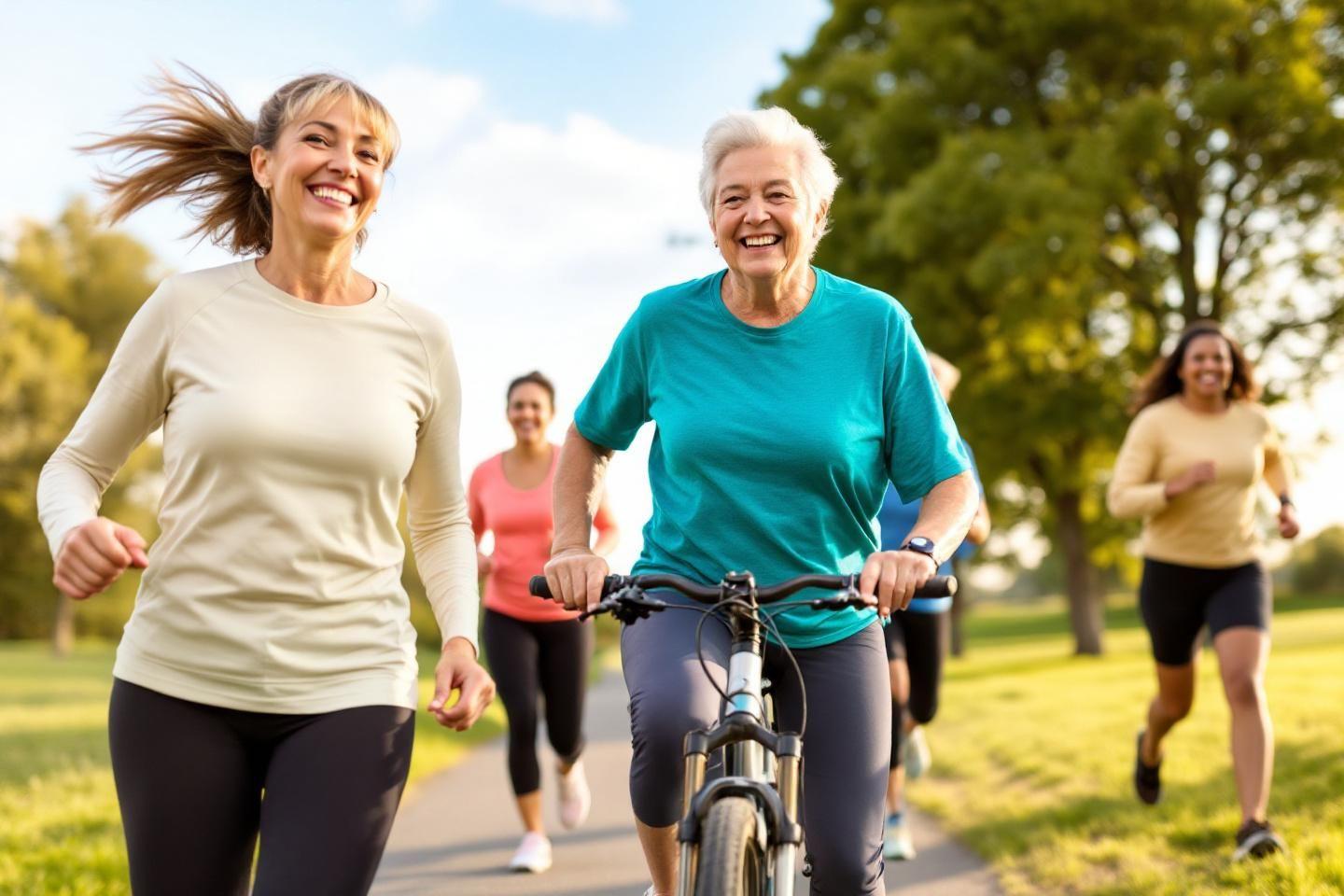
Beyond choosing specific activities, certain strategic approaches amplify the longevity benefits of any exercise program. Social connectedness has demonstrated consistent associations with improved health outcomes and extended lifespan across decades of research. Incorporating communal elements into physical activity through run clubs, group fitness classes, or recreational leagues provides both motivational support and accountability structures that sustain long-term participation. The psychological benefits of shared athletic experiences complement the physiological advantages of movement itself.
Continuous skill development and progressive challenge maintain cognitive engagement that characterizes effective longevity-promoting activities. While organized sports naturally incorporate these elements through competition and strategy, any exercise routine can adopt this mindset through deliberate modifications :
- Introduce environmental variety by exploring new routes, training locations, or equipment configurations
- Establish progressive goals with specific, measurable targets that create forward momentum
- Incorporate technical refinement by focusing on form improvements or efficiency gains
- Add complexity gradually through increased duration, intensity, or coordination requirements
Dr. I-Min Lee, an epidemiologist at Harvard T.H. Chan School of Public Health, highlights resistance training as particularly crucial for aging populations. Comprehensive analysis revealed that just sixty minutes of weekly strength work reduces mortality risk by twenty-five percent, while additional studies linked resistance training to enhanced mood and cognitive function. Building and maintaining muscle mass counteracts age-related sarcopenia, preserving independence and functional capacity for daily activities.
Implementing a comprehensive approach to exercise and aging
Optimal longevity outcomes emerge from combining multiple exercise modalities rather than relying exclusively on single activities. Research indicates that individuals who engage in both aerobic exercise and strength training experience the longest lifespans. Cardiovascular activities like running and cycling provide essential heart health benefits, but pairing them with upper-body resistance work ensures comprehensive physical development and muscular resilience.
Consistency represents perhaps the most critical factor in translating exercise benefits into extended healthspan. Physical activity advantages dissipate when routines lapse, making sustained participation essential as aging progresses. While tennis earns recognition as a lifetime sport due to its accessibility across age ranges, maintaining rigid devotion to any single activity proves unnecessary. Strategic variety keeps exercise engaging and adaptable to evolving physical capabilities, facilitating long-term adherence even as bodies transform.
The fundamental principle underlying all longevity-focused physical activity remains elegantly simple : movement matters more than specific methodology. Whether through structured sports participation, recreational activities, or deliberate exercise programming, increasing overall physical activity levels delivers measurable health improvements. Individual preferences, physical limitations, and lifestyle constraints should guide activity selection rather than narrow pursuit of statistically optimal choices. Finding sustainable, enjoyable movement practices that integrate seamlessly into daily routines ultimately produces superior long-term outcomes compared to theoretically perfect programs that prove unsustainable in practice.