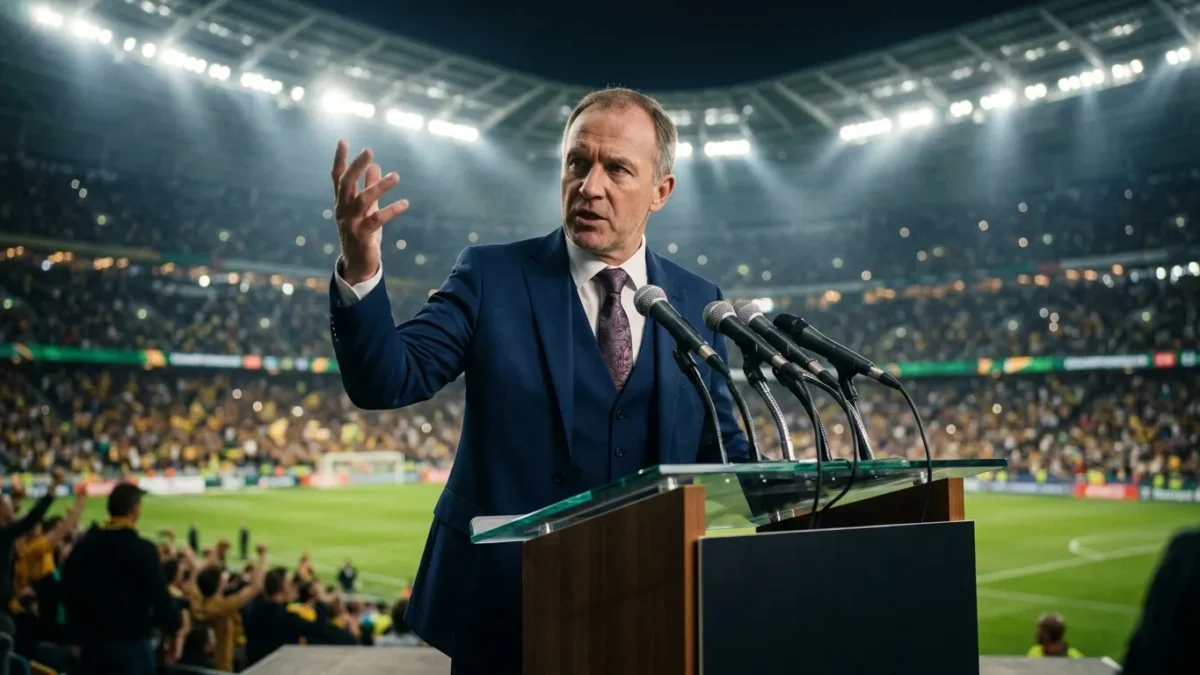
For the first time in 34 years, the UEFA Champions League final will not be broadcast free-to-air in the United Kingdom. That stark fact prompted Prime Minister Keir Starmer to take the unusual step of writing directly to TNT Sports executives, demanding they reverse their decision before the showpiece match on Saturday 31 May 2026.
Starmer steps in over Champions League final broadcast rights
The letter from Downing Street was blunt. Starmer urged TNT Sports to “strongly reconsider” its policy of restricting the Arsenal versus Paris Saint-Germain final to paying subscribers only. His message was clear : a match of this magnitude belongs to every football fan in the country, not just those willing to hand over their bank details.
The Prime Minister framed it as a question of principle, not partisanship. He acknowledged being an Arsenal supporter himself, but was equally forthright : “Whether Arsenal have made it or not, the final of this competition should remain free to watch.” That line matters. It signals this debate extends well beyond one club’s historic return to a European final for the first time in 20 years.
Starmer’s argument rested on a simple cultural point. He described the scene millions of Britons have experienced across generations — supporters of all clubs gathering in living rooms and pubs to watch the continent’s best players compete. Locking that behind a paywall, he argued, breaks something real and long-standing.
His letter also connected this issue to a broader agenda. He referenced his push for FIFA to improve ticket affordability ahead of the 2026 World Cup this summer. The message : putting supporters first is not a one-off gesture but a consistent political stance.
TNT Sports’ response and the £4.99 subscription argument
TNT Sports issued a measured but firm reply. The broadcaster pointed to the exceptional depth of English football this season — three Premier League clubs reaching European finals — as evidence of its commitment to the sport. It also highlighted what it considers a reasonable commercial offer.
| Final | Teams | Access |
|---|---|---|
| Champions League | Arsenal vs PSG | Subscription only (from £4.99/month) |
| Europa League | Aston Villa (winners) | Subscription only |
| Conference League | Crystal Palace vs Rayo Vallecano | Subscription only |
That £4.99 monthly figure is the headline number TNT Sports keeps returning to. For that price, subscribers access all three UEFA club finals plus the full HBO Max entertainment library. The broadcaster described this as “exceptional value” — a framing that not everyone finds convincing.
Frankly, the pricing argument misses the point. Whether £4.99 feels cheap or not is irrelevant when the tradition being broken is 34 years old. Every single Champions League final since the competition replaced the European Cup format in 1992 was available to UK viewers without a subscription. That’s not a minor footnote — it’s a generational expectation.
The Europa League final last week set the precedent. Fans wanting to watch Aston Villa lift the trophy needed a subscription. Now the same condition applies to Wednesday’s Conference League final between Crystal Palace and Rayo Vallecano. Three finals, zero free broadcasts. That’s a clean break from the past, dressed up as a bargain.
What this means for the future of free-to-air sport in the UK
This dispute is not just about one Saturday night in late May. It raises a sharper question : which sporting events should remain universally accessible, regardless of income or existing subscriptions ?
The UK has a longstanding framework for this. Ofcom maintains a list of “listed events” — sporting occasions considered so culturally significant that they must be offered to free-to-air broadcasters first. The list currently includes :
- The FIFA World Cup finals and semi-finals
- The UEFA European Championship finals and semi-finals
- The Grand National
- The Derby
- The FA Cup final
- Wimbledon finals
- The Olympic Games opening ceremony and key events
The UEFA Champions League final is not on that list. That legal gap is precisely why TNT Sports can restrict access without violating any regulation. Starmer’s letter carries moral weight, not legal force. TNT Sports has no obligation to comply — and so far, has shown no sign of doing so.
This is where the debate becomes genuinely important for sports policy. If one of the most-watched annual sporting events on British television can quietly disappear behind a paywall with no regulatory consequence, the listed events framework may be overdue for revision. Ofcom last reviewed the list in 2009. A lot has changed in broadcast media since then.
Consider that subscription streaming now accounts for a growing share of live sports viewing in the UK, with platforms like TNT Sports, Amazon Prime Video and Apple TV+ all holding major rights packages. The drift away from free access is structural, not accidental. Without updated rules, the direction of travel is obvious.
Starmer’s intervention — symbolic as it may be — does at least force a public conversation that would otherwise happen only in industry boardrooms. Whether TNT Sports reverses course before Saturday remains to be seen. But the pressure is now public, the history is clear, and the question of who gets to watch the biggest moments in football is no longer a matter of quiet commercial negotiation alone. Supporters deserve a seat at that table.
