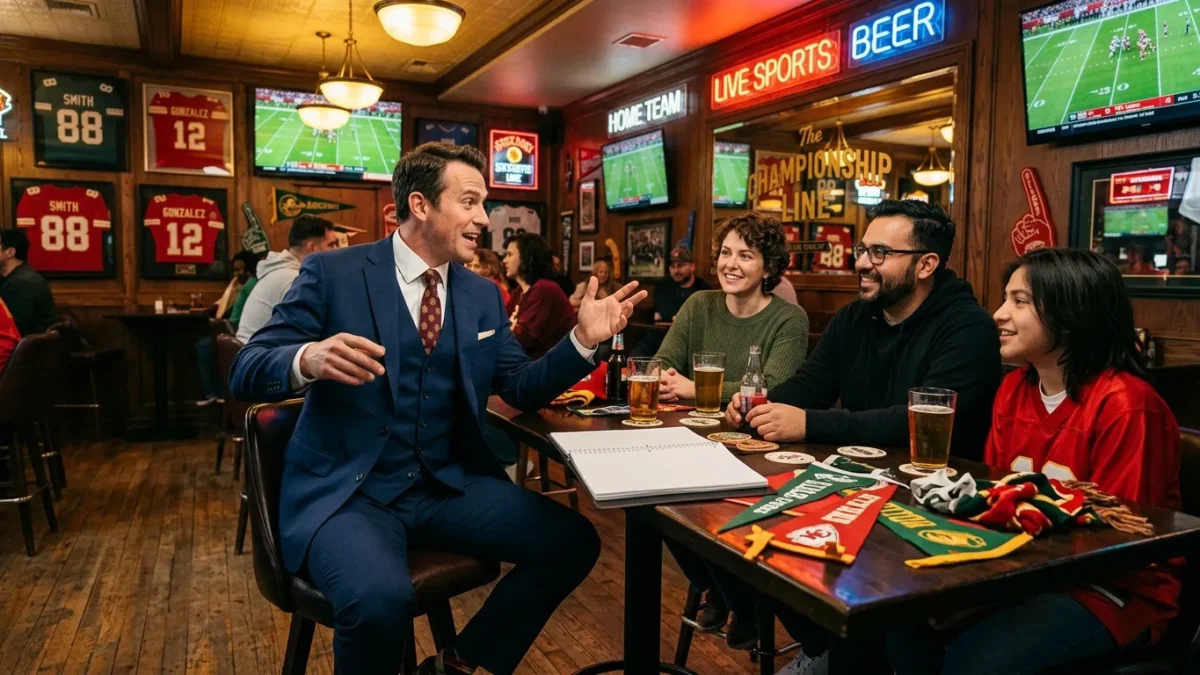
Here’s a striking number : on Polymarket prediction markets, Stephen A. Smith holds higher odds of winning the 2028 Democratic presidential primary than sitting senators like Cory Booker or Raphael Warnock. Not because Smith has any political platform worth mentioning — but because he talks sports loudly, constantly, and people listen. That single data point says everything about where Democratic politicians are failing.
Why Democrats keep dropping the ball on sports talk
The authenticity crisis in the Democratic Party isn’t new. For decades, male voters — particularly those who are politically disengaged — have viewed Democratic politicians as scripted, remote, and frankly unrelatable. The standard consultant response ? Book podcast appearances and shake hands with whatever edgy streamer is trending that week. That misses the point entirely.
The real opportunity is sports conversation. Not showing up at a stadium for a photo op. Actually having opinions — messy, irrational, defensible ones. Consider what the sports media landscape rewards : Skip Bayless and Stephen A. Smith have built empires not on being right, but on being loudly wrong in interesting ways. Controversy drives clicks. Disagreement generates attention. An entire genre of sports podcasts exists purely to produce outrageous clips for TikTok and YouTube. Democrats are ignoring this free real estate.
The 2024 campaign offered a painful illustration. Tim Walz, a former high school football coach, was introduced as “Coach Walz” — a ready-made sports identity. The campaign then wasted it completely. On October 27, his team posted that “AOC can run a mean pick 6” after a Twitch Madden stream. The problem ? A pick-six is an outcome, not a play you “run.” It went viral in sports group chats nationwide — for all the wrong reasons.
Walz’s appearance on The Rich Eisen Show was even more telling. Fifteen minutes of complimenting Michigan fans, Lambeau Field, and the Detroit Lions coach — every swing-state team carefully praised. The YouTube clip pulled just 50,000 views. By contrast, Trump’s appearance on Bussin’ With the Boys, released days earlier, hit nearly ten times that number. Inoffensive sports talk is invisible sports talk.
Hot takes Democrats should actually be making
The formula isn’t complicated, but it requires something Democratic politicians seem allergic to : taking an actually unpopular position and defending it. Below are the types of takes that would generate real traction — specific, counter-consensus, and ideally impossible to fact-check out of office.
| Politician | Sport / Team | Potential hot take | Political upside |
|---|---|---|---|
| Josh Shapiro (PA) | NFL / Eagles | Accuse the 2023 Super Bowl loss of being sabotaged by Chiefs-connected groundskeepers | Locks Pennsylvania voters, proves derangement is relatable |
| AOC (NY) | MLB / Yankees | Hammer Hal Steinbrenner for trading Juan Soto to save on the luxury tax | Builds crosstown credibility in Staten Island |
| James Talarico (TX) | College football | Call Arch Manning a nepo baby paid millions purely for his last name | Regular-guy credibility, calls into ESPN Austin |
Josh Shapiro already drew headlines complaining about the NFL’s proposed ban on the Eagles’ “tush push.” That’s instinct. He can go further. Zohran Mamdani, one of the rare Democrats who actually speaks fluent sports, trolled Ohio Republican Vivek Ramaswamy on X after the Knicks swept the Cleveland Cavaliers — sharp, timely, tribal. That’s the tone.
The class politics angle is particularly underexploited. Progressive Democrats have spent years trying to convince voters that billionaires are the enemy, with mixed results. Sports fans already hate billionaire owners — they just haven’t been handed the political framing. Why not connect the luxury tax dodge directly to the wealth gap argument ? The overlap between “outraged sports fan” and “economic populism target” is enormous.
The practical playbook : how to talk sports without embarrassing yourself
Before any Democrat steps onto a sports podcast, a few hard rules apply :
- Know the facts cold. New York Governor Kathy Hochul challenged Trump to name the Knicks’ “1993 championship team” — except the Knicks lost the 1994 Finals to the Houston Rockets and last won a title in 1973. Her office later claimed it was intentional bait. Nobody believed that.
- Take a side. Complimenting every team in a swing state is not a sports opinion. It’s a press release wearing a jersey.
- Be specific. Vague enthusiasm (“I love the Eagles !”) generates nothing. “The NFL’s new kickoff rules are ruining the game” — even Trump’s version of that — generates conversation.
- Embrace the irrational. Sports fandom is built on irrational loyalty and equally irrational hatred of rivals. Pretending otherwise reads as fake immediately.
- Pick fights, not friends. Ron DeSantis gets credit for arguing that the transfer portal and NIL payments are destroying college football. You can disagree with him — but he’s in the conversation.
There’s a deeper point here about political character. A politician willing to defend an unpopular sports take signals something — that they can hold a position under pressure, that they have actual opinions and not just focus-grouped responses. Sports talk is low-stakes enough that nobody loses an election over it. But done right, it builds the kind of gut-level trust that no policy paper ever will.
The sports world also offers something that policy debate rarely does : genuine emotional stakes with no real-world consequences for politicians. If elected, no congressman will ever be held accountable for claiming the Cowboys are a badly run franchise. That’s not a bug — it’s the entire point. Use the freedom. The voters Democrats need aren’t debating Medicare at the bar. They’re arguing about a roughing-the-passer call from three weeks ago. Meet them there — with conviction, with specifics, and without a communications team pre-approving every word.
