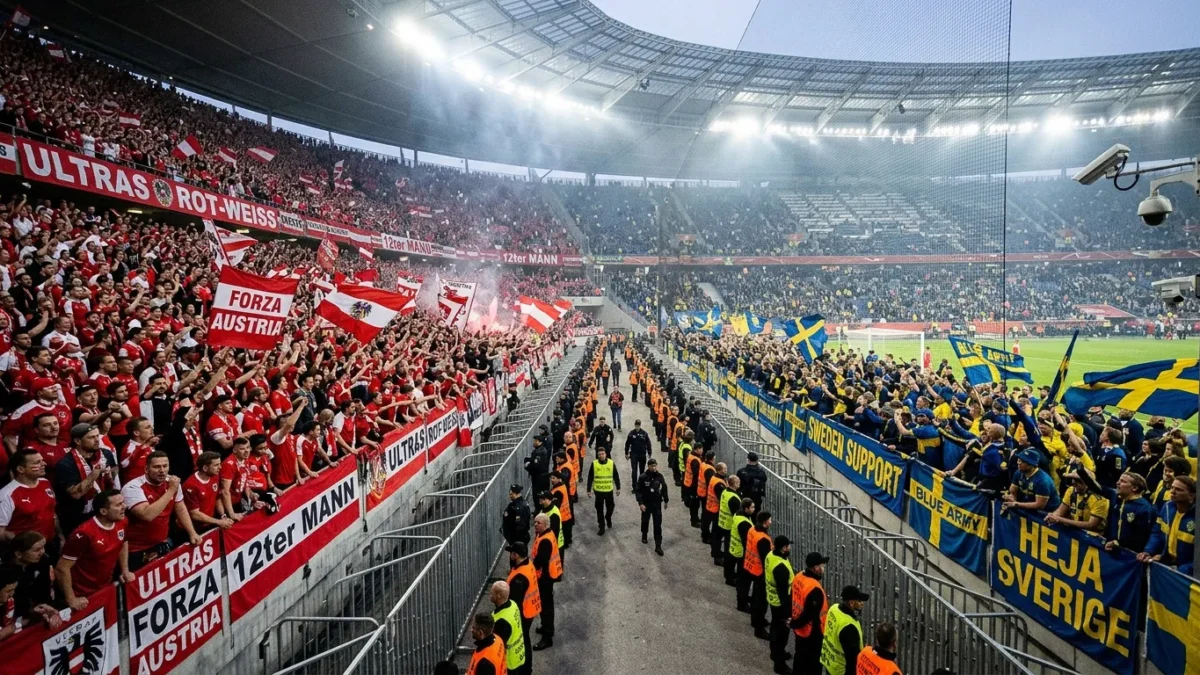
AT&T Stadium in Arlington hosted one of the early fixtures of the 2026 World Cup, and already, a supporters’ group is raising the alarm. Fan segregation at the tournament, or rather the absence of it, is becoming a serious talking point, and frankly, it deserves far more attention than it’s currently getting from FIFA.
A tournament without clear crowd management rules
Ronan Evain, executive director of Football Supporters Europe, has been direct about his concerns : the lack of fan segregation in World Cup 2026 stadiums creates real safety risks. His organisation represents millions of supporters across the continent, so when he speaks, it’s worth listening. The core problem isn’t a single incident, it’s a structural failure to define consistent rules across all host venues.
Consider what happened in Dallas. Stadium staff confiscated flags from fans, not political flags, not offensive banners, but regular supporter items that would have been perfectly acceptable at previous FIFA tournaments. Evain was blunt : “You were not really allowed to bring a flag in, or at least to show it, which is inconsistent with most FIFA rules and regulations.” His reading of the situation is that staff were applying NFL-style venue protocols rather than FIFA’s own code of conduct.
That’s a damning observation. The venues hosting World Cup 2026 matches are, in most cases, American football stadiums. Their default operating procedures are built around a completely different sporting culture, one where supporter expression looks nothing like a European football atmosphere. When ground staff default to their regular match-day habits, FIFA’s guidelines get lost in translation.
Here’s what FIFA’s official tournament guidance actually states on supporter items :
- Small flags, banners and posters made of fire-resistant material are permitted inside stadiums.
- Larger flags, banners or instruments must receive prior approval.
- Any item deemed political, offensive or discriminatory is prohibited.
On paper, that sounds workable. In practice, nobody seems to agree on what falls into which category. That’s not a minor administrative hiccup, it’s a fundamental breakdown in tournament organisation that directly affects tens of thousands of travelling supporters.
The flag controversy and inconsistent enforcement
The Dallas situation brought the issue into sharp focus, but Evain is careful to note it’s not universal. “At a lot of the stadiums it hasn’t been a problem”, he acknowledges, which actually makes things worse : if some venues apply FIFA rules correctly while others enforce NFL norms, supporters have no reliable baseline to plan around. You simply don’t know what you can bring until you’re standing at the turnstile.
One of the most striking aspects of this mess is the Iran flag ruling. On Monday 16 June 2026, FIFA won a court hearing in Los Angeles, establishing that the pre-revolutionary Iranian flag is classified as a political symbol and therefore banned from matches involving Iran. That’s a decision with genuine legal and geopolitical weight behind it. Yet at the same tournament, non-political supporter flags, regional banners, city flags, club colours, are being removed by staff operating on instinct rather than instruction.
The contrast is stark :
| Item type | FIFA guidance | Reported enforcement in Dallas |
|---|---|---|
| Small national flag | Permitted | Confiscated in some cases |
| Regional or club flag | Unclear | Often removed |
| Pre-revolutionary Iran flag | Banned (political) | Legally prohibited |
| Drums and instruments | Requires pre-approval | Variable |
Evain puts it plainly : “You should know the rules before leaving home, and that’s not the case.” For a tournament attracting supporters who have spent thousands of euros or dollars on travel and tickets, that’s simply unacceptable. AT&T Stadium will host England’s opening match against Croatia on Wednesday, one of the most high-profile fixtures of the group stage, and the rules governing what fans can bring still aren’t clear.
What needs to happen before more matches kick off
The England vs Croatia fixture on Wednesday offers FIFA a concrete opportunity to get this right. Both sets of supporters travel with strong fan cultures built around flags, songs and visual displays. If Dallas-style enforcement repeats itself at that level of fixture, the backlash will be significant and entirely deserved.
Frankly, FIFA’s code of conduct is too vague to function as operational guidance. Telling venue staff that “political, offensive or discriminatory” flags are banned without defining those terms gives local security teams enormous discretionary power, and they’re using it based on NFL muscle memory rather than football culture.
The fix isn’t complicated, but it requires urgency. FIFA should publish a clear, specific and visual guide, distributed to every host stadium’s operations team, that answers the exact questions Evain raises : Can you bring your city’s flag ? Your region’s colours ? Your club’s banner ? Right now, none of that is defined, and supporters are paying the price for an organisation that apparently failed to prepare its venues for the specific culture of international football fandom.
The broader question worth asking : if FIFA cannot enforce consistent supporter policies across 16 host cities, what does that say about its grip on the tournament as a whole ?
