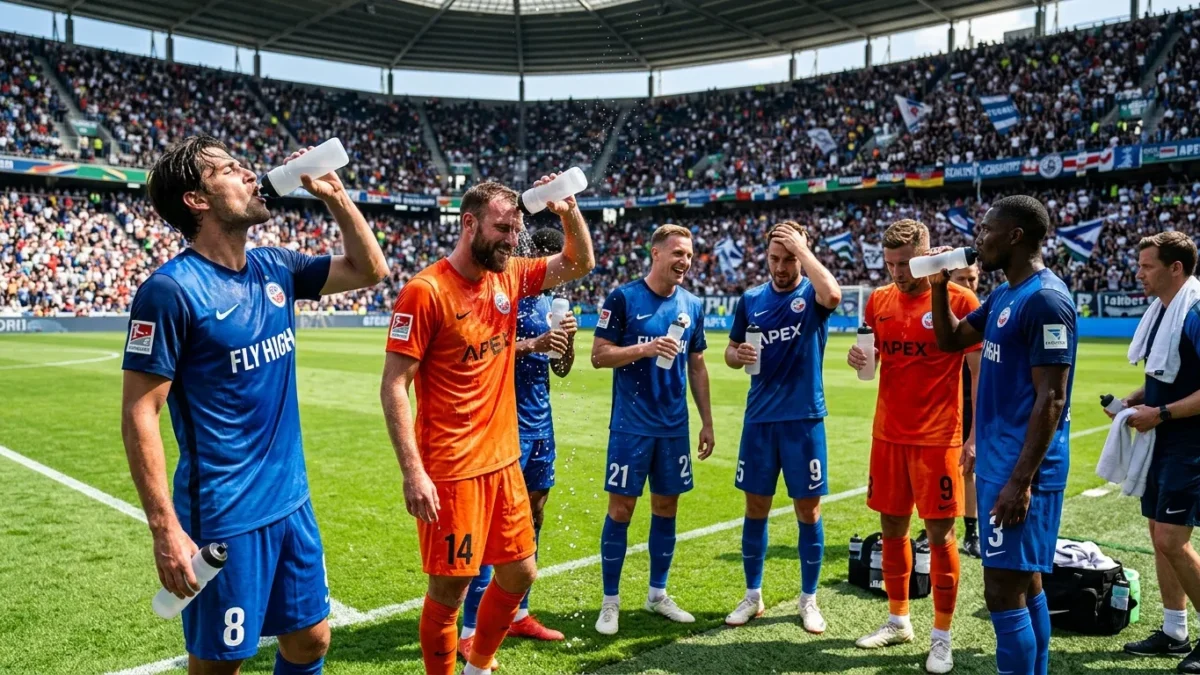
Boos echoing around packed stadiums during a football World Cup is nothing new. But at the 2026 edition, those jeers are increasingly directed not at a bad tackle or a missed penalty, but at a scheduled hydration break. The backlash is real, it is growing, and it raises a genuine question about what kind of tournament organisers want to deliver.
Fan frustration is reaching a tipping point
The pattern has repeated itself across multiple fixtures in the opening days of the competition. During Norway’s group stage match against Iraq in Boston, the crowd responded to the water break with audible boos, despite the temperature sitting at a perfectly reasonable 23°C. Hard to justify a stoppage for heat management at that level. Norway were still goalless when the whistle blew for the pause, but Iraq conceded just four minutes after play resumed and eventually lost 4-1. Coincidence ? Maybe. But it fuelled the frustration in the stands.
Two other games played on the same Monday told a similar story. Sweden’s 5-1 demolition of Tunisia was interrupted by loud jeering when the break came. Same thing during Spain’s goalless draw with Cape Verde, a game played inside Atlanta’s fully air-conditioned stadium. If the logic behind hydration breaks is heat protection, it is genuinely hard to explain why a climate-controlled venue needs one at all.
Then came England’s win against Croatia, followed shortly by the Ghana versus Panama fixture. The first hydration break in that match landed with a chorus of jeers from supporters who had clearly had enough.
| Match | Conditions | Fan reaction |
|---|---|---|
| Norway vs Iraq (Boston) | 23°C outdoors | Loud boos |
| Sweden vs Tunisia | Not specified | Loud boos |
| Spain vs Cape Verde (Atlanta) | Air-conditioned venue | Boos |
| Ghana vs Panama | Not specified | Jeers |
The numbers speak for themselves. At least four separate matches in the opening round saw fans vocally oppose the breaks. This is not isolated dissent. It reflects a deeper unease about what football is becoming on its biggest stage.
What supporters actually think about hydration pauses
Talk to fans inside these stadiums and you hear two very different camps. The louder one, frankly, is the one doing the booing.
One England supporter interviewed after the Croatia match was direct : “It is like the Americanisation of football here. It is turning the game into quarters and I don’t love it.” That framing landed with a lot of people. Football has always been defined by its two halves, its relentless rhythm, its refusal to pause for commercial convenience. Cutting each half in two with a mandatory stop effectively transforms a 90-minute game into four quarters, much closer to American football or basketball than the sport Europeans grew up with. That comparison stings.
But not every fan sees it that way. A more measured voice offered a different perspective, one worth taking seriously. “I think they are badly marketed,” he said. His argument : if the break were rebranded as something other than a hydration stop, the psychological response might shift entirely. Call it a “relief break” and suddenly it is about player welfare, not corporate scheduling. His conclusion was blunt but pragmatic : governing bodies get what they want, fans get a breather, and nobody misses a goal. Whether that trade-off is acceptable depends entirely on how you weigh sporting integrity against player safety.
- Fans who oppose the breaks cite the disruption of game rhythm and the fear of missing goals during stoppages
- Supporters in favour argue that player welfare justifies brief interruptions, especially in humid conditions
- Some suggest the issue lies more in branding and communication than in the breaks themselves
- A growing number draw comparisons to American sports formats, seeing the pauses as a cultural imposition
The rebranding argument is clever, but it sidesteps the real issue. Fans are not booing a name. They are booing a structural change to a sport they feel is being reshaped without their input.
Rethinking how football manages player welfare at major tournaments
Here is the uncomfortable truth : player welfare and fan experience are on a collision course at this World Cup, and neither side is entirely wrong. Heat and humidity in North American summer conditions are a genuine physiological risk. FIFA’s own medical guidelines allow for cooling breaks when the wet-bulb globe temperature reaches certain thresholds, and those rules exist for a reason. No one wants to see a player collapse from heatstroke on live television.
But the application has been inconsistent. A 23°C afternoon in Boston or a fully air-conditioned arena in Atlanta does not meet any reasonable definition of dangerous heat. When the rule is applied regardless of actual conditions, it stops looking like welfare management and starts looking like a fixed feature of the broadcast format, which is a very different thing.
The smarter path forward would be conditional, transparent triggers : publish the exact threshold that justifies a break, display it on stadium screens, and let fans understand the decision in real time. If the temperature hits 32°C with high humidity, nobody booes a water stop. They understand. The opacity is what fuels the resentment.
Football’s biggest tournament has always evolved. Substitutions, VAR, extra time : each change met resistance before becoming standard. Hydration breaks may follow the same arc, but only if the people running the sport communicate honestly about why they exist and when they are genuinely necessary. Right now, that conversation is overdue.
