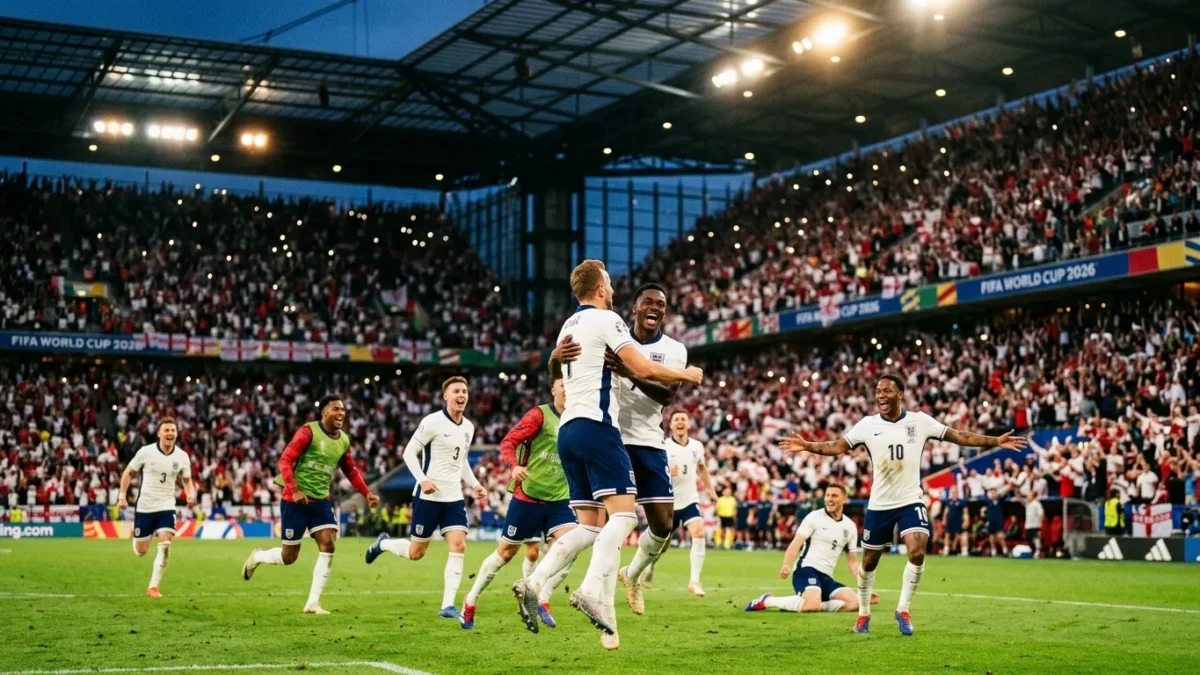
81 goals in 115 internationals. That single statistic tells you everything about Harry Kane, and it anchored one of the most chaotic, watchable, genuinely exciting England performances in years. Dallas Stadium delivered a six-goal thriller on June 18, with Thomas Tuchel’s England beating Croatia 4-2 in their World Cup 2026 Group L opener. The scoreline flatters nobody. This was messy, urgent, and at times brilliant football.
An attacking statement soaked in defensive anxiety
Kane set the tone before a ball was kicked. “Be free in the mind,” he told his teammates, urging them to embrace the pressure of the World Cup rather than shrink from it. They listened, perhaps a little too literally.
England led twice in the first half, yet Croatia clawed their way back on both occasions, exploiting a defence that looked alarmingly exposed at times. The selection of Ezri Konsa ahead of Marc Guehi sparked immediate debate. Frankly, Konsa did not make a convincing case for his place. Guehi, the Manchester City defender, will have been watching from the bench with quiet frustration.
Tuchel’s fury on the touchline was visible throughout the first 45 minutes. He barely disguised his displeasure as Croatia, led by the ever-dangerous Luka Modric, repeatedly found space. For all their attacking promise, England’s defensive frailty remains a legitimate concern heading into tougher fixtures.
Consider how the goals were distributed across both halves :
| Half | England goals | Croatia goals |
|---|---|---|
| First half | 2 (Kane x2) | 2 |
| Second half | 2 (Bellingham, Rashford) | 0 |
The numbers reveal the transformation. Whatever Tuchel said at half-time, it worked. England came out playing with a completely different tempo, pinning Croatia back under relentless pressure from the first minute of the second period.
Bellingham turns the game, Tuchel embraces Klopp
The moment that shifted everything arrived just after the restart. Jude Bellingham collected the ball in midfield, left Mario Pasalic trailing with a surging run, and beat Dominik Livakovic with composure and power. England 3-2 up. The stadium erupted.
Bellingham had been the engine throughout, producing exactly the kind of dynamic, physically dominant performance that separates him from most midfielders in this tournament. His goal was not just a goal. It was a signal. England had stopped reacting and started dictating.
Shortly after, cameras caught an image that said more than any post-match quote : Tuchel, overcome with relief and adrenaline, falling into the arms of Jurgen Klopp on the touchline. Klopp was working as a TV pundit. Two German coaches, two very different roles that evening, sharing a moment of pure footballing joy.
Kane’s contributions deserve their own examination. He equalled Gary Lineker’s England World Cup record of 10 goals, a landmark that received a roar of recognition around Dallas Stadium. His penalty taking was strange, an odd stuttering run-up that Livakovic saved, but the referee adjudged the keeper had left his line early. Kane did not miss the retake.
Tuchel’s bold substitutions and what they reveal about his philosophy
With England 3-2 ahead and 72 minutes on the clock, most coaches would have tightened things up. Not Tuchel. He made three attacking changes simultaneously :
- Morgan Rogers replaced Declan Rice, shifting the balance further forward
- Marcus Rashford came on for Anthony Gordon
- Bukayo Saka replaced Noni Madueke, who had been lively throughout after winning the early penalty
Wayne Rooney, punditising for the BBC, captured the mood perfectly : “I saw the three lads coming on and I said, ‘I absolutely love these subs’.” Paul Robinson echoed that view, calling the changes “brave and bold.” Joe Hart added that Tuchel essentially told his players they had the legs and the ability to finish Croatia off completely.
Rashford duly wrapped up the win late on, completing a 4-2 scoreline that all four substitutes played a direct role in creating. For the squad’s confidence, the impact from the bench matters as much as the result itself.
Tuchel has never hidden his ambition. “The second star on the shirt” has been his stated aim since taking the job. That is not the language of a cautious manager parking the bus. It is the exact opposite of what Gareth Southgate, for all his genuine achievements, was criticised for. Reaching the Euro 2024 final and a World Cup quarter-final in Qatar were remarkable results, but they came with football that rarely made the pulse race.
What England’s next test will actually reveal
The real measure of this England side will arrive faster than fans would like. Ghana await in Boston on Tuesday, and after that, Group L will demand more answers. Croatia, despite the defeat, remain a dangerous side with Modric capable of punishing any team that switches off.
The defensive questions will not disappear with one win, however entertaining. World-class strikers at this tournament will exploit the same gaps Croatia found, and Tuchel knows it. The Konsa-versus-Guehi debate will dominate the build-up to Tuesday’s game. Tuchel’s attacking instincts are already clear; his defensive decisions are where the pressure will land next.
Madueke’s performance showed that preserving Saka’s fitness by starting the Chelsea winger was a smart call. Rogers’ cameo demonstrated genuine depth in central midfield. The squad, at least in attacking positions, looks genuinely competitive and varied.
One game in, one win banked. The platform Tuchel needed exists. Now comes the harder work of building something sustainable on top of it, without sacrificing the entertainment that made Dallas such a memorable night.
