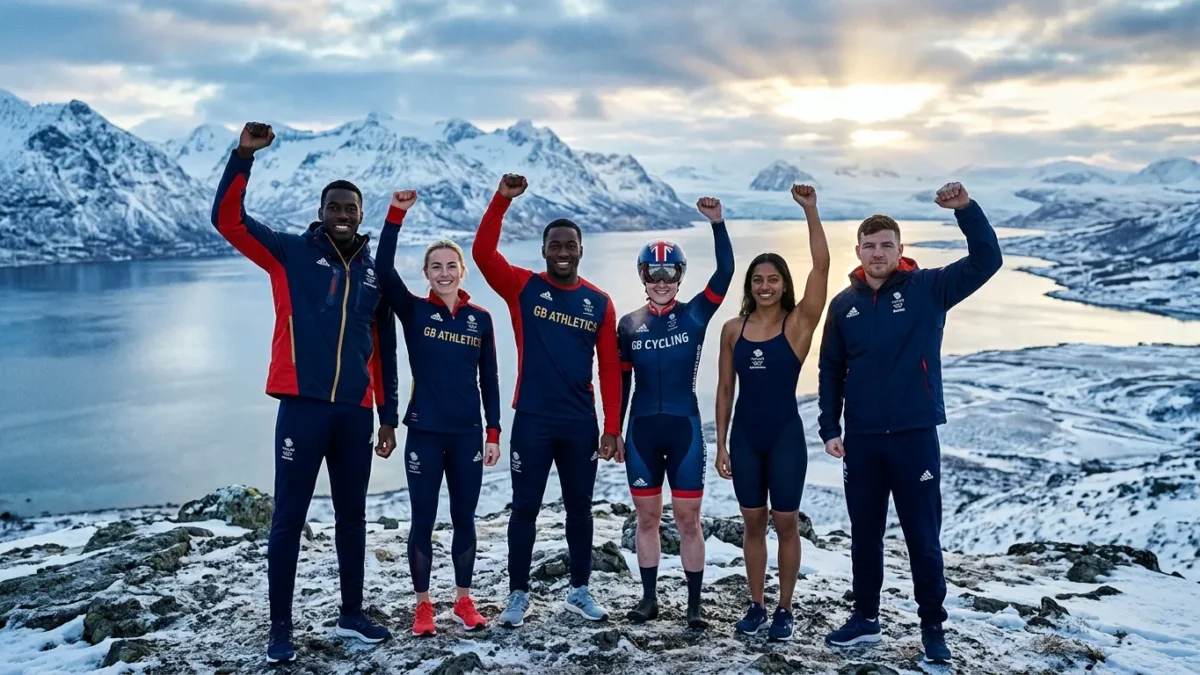
Over 50 current and former British Olympians and Paralympians have publicly backed a bid to host the Games in the north of England in 2040. That number carries real weight. These are athletes who have stood on Olympic podiums, worn the GB vest under global scrutiny, and understand precisely what it takes to deliver a world-class sporting event. Their collective endorsement is not a formality. It is a statement of intent.
Athletes rally behind a northern Games vision
The signatories include some of British sport’s most recognisable names. Beth Tweddle, the former gymnast and three-time Olympic medallist, has added her name alongside Sir Brendan Foster, the legendary middle-distance runner who built the Great North Run into one of the world’s most celebrated road races. Steve Cram and Allison Curbishley, both distinguished figures in British athletics, are also among those who have formally committed their support to what is now being called the Great North Games.
Their joint statement makes a clear argument : the north of England already possesses world-class venues capable of hosting an Olympic and Paralympic Games at the highest level. More crucially, they point to how the IOC and IPC’s multi-city model has fundamentally changed what a modern Games can look like. Spreading events across multiple host cities is now not only accepted, it is actively encouraged by the governing bodies.
“A distributed Games is more viable than ever before,” the athletes write. That framing matters. It dismantles the old assumption that only a single major metropolis with a ready-built Olympic Park can credibly host the Games. Under this model, cities like Manchester, Leeds, Newcastle, Sheffield and Liverpool could each host disciplines that suit their existing infrastructure.
| Athlete | Sport | Olympic/Paralympic status |
|---|---|---|
| Beth Tweddle | Gymnastics | 3× Olympic medallist |
| Sir Brendan Foster | Middle-distance running | Olympic medallist |
| Steve Cram | Athletics | Olympic silver medallist |
| Allison Curbishley | Athletics | Olympic competitor |
The athletes are emphatic that this would not be a regional event dressed up in national colours. A northern Olympics would be a Games for the entire United Kingdom, they argue, one built around shared purpose and national pride. That pitch, frankly, is more compelling than sceptics give it credit for.
Political momentum and the legacy argument
The athletes’ statement did not emerge in a vacuum. Back in February 2026, a coalition of northern political leaders formally urged the UK government to anchor any future Olympic bid in the north, describing the case as “compelling”. That political push has now found powerful reinforcement from the sporting community itself.
North East Mayor Kim McGuinness responded to the athletes’ endorsement with visible enthusiasm. “They understand better than anyone the power of the Olympic and Paralympic Games to inspire, unite and transform lives,” she said. Her point is hard to dispute. Athletes who have competed at Games level have a unique perspective on how hosting changes a country, a city, and a generation of young people watching at home.
The legacy argument is central to the entire pitch. Supporters of the northern bid consistently invoke London 2012 as the benchmark, pointing to the regeneration of East London and the spike in grassroots sports participation that followed. The ambition is to replicate that transformative effect across a region that, by multiple economic indicators, has historically received less public investment than the south-east.
Key reasons cited by supporters for backing a northern Olympic bid include :
- Existing world-class venues across multiple northern cities
- The IOC and IPC multi-city model reducing infrastructure costs
- Strong regional identity and community pride as a mobilising force
- The potential for long-term economic regeneration beyond the Games themselves
McGuinness was explicit about the scale of the opportunity : “A Great North Olympics would be a global showcase”, she said, one powered by genuine community participation rather than top-down spectacle. That distinction is worth taking seriously.
London’s objection and what it means for the bid’s future
Not everyone is aligned. London Mayor Sir Sadiq Khan has been openly critical of any Olympic bid that deliberately excludes the capital. His view is that leaving London out would represent “a missed opportunity”, a position that reflects both civic pride and a legitimate concern about concentrating global sporting attention away from the UK’s most internationally visible city.
Frankly, this tension is the most interesting political thread running through the entire debate. The northern bid’s supporters are not simply arguing for a different postcode. They are making a structural argument about where investment, attention and legacy are most needed. Whether a future UK Olympic bid can navigate that internal disagreement while presenting a coherent front to the IOC remains the core challenge.
What the athletes’ statement genuinely changes is the quality of the conversation. Sport has a way of cutting through political noise in a manner that parliamentary committees rarely manage. When Steve Cram and Beth Tweddle speak about what an Olympics in the north could mean for the next generation of British athletes, that lands differently than a policy document. The question now is whether the government will treat this groundswell of support as a signal, or simply as background noise ahead of a decision that remains, as of June 2026, firmly unresolved.
