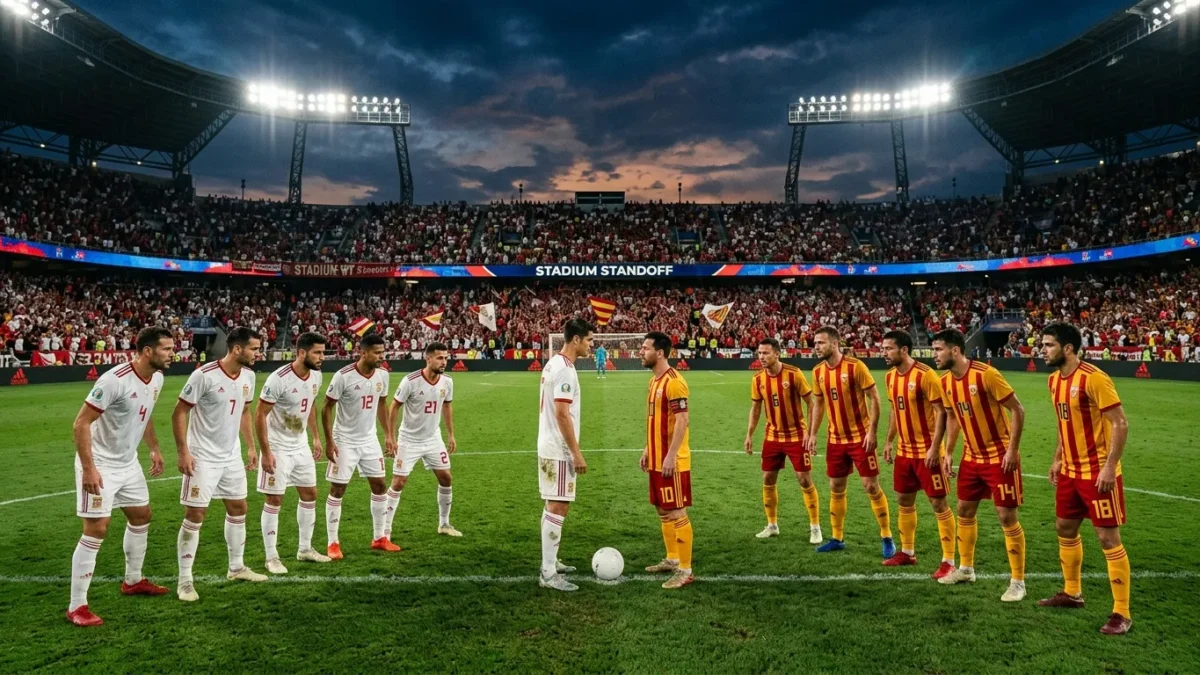
England’s World Cup campaign hit a wall on June 24, 2026. At Boston Stadium, Thomas Tuchel’s Three Lions were held to a frustrating 0-0 draw by Ghana, a side ranked 64th in the world. After the attacking fireworks against Croatia, this was a sharp dose of tournament reality.
A stalemate that exposed England’s limits
The contrast with the Croatia opener was stark. England had looked fluid, dangerous, almost unstoppable. Against Ghana, managed by Carlos Queiroz, they looked pedestrian, predictable, and at times genuinely uncomfortable. Ghana sat deep, defended with discipline, and were content to absorb pressure before hitting England on the counter. It worked.
The numbers tell the story bluntly. England controlled 78.8% of possession and completed 633 passes at 92.6% accuracy. Yet they managed only three shots on target across 90 minutes. That kind of sterile dominance achieves nothing at a World Cup. Ghana, with just 21.2% of the ball, registered 39 clearances and forced three goalkeeper saves. They did not need the ball to be dangerous.
The most alarming moment came late. Ezri Konsa challenged Prince Kwabena Adu inside the area, bringing him down without touching the ball. Referee Saíd Martínez waved play on, a decision that left Ghana furious and England relieved. Frankly, it looked like a penalty. England were lucky to leave Boston Stadium with a point rather than nothing.
Here is a quick summary of the key match stats that defined the game :
- Shots on target : England 3, Ghana 1
- xG : England 1.285, Ghana 0.286
- Fouls committed : England 14, Ghana 24
- Total clearances : England 6, Ghana 39
- Hit woodwork : England 1, Ghana 0
Gordon fading, Saka saving the blushes
Anthony Gordon started again, and again struggled to justify Tuchel’s faith. The Barcelona forward was quiet, hesitant, and offered little threat down the left. His average fan rating of 4.78 out of 10 reflects exactly how ineffective he was. With Marcus Rashford pushing for a starting berth, Gordon’s grip on that position is loosening fast.
Tuchel made changes in search of the breakthrough. Bukayo Saka came on, his minutes carefully managed due to a persistent Achilles issue, replacing the disappointing Gordon. The Arsenal winger immediately looked like a different class. He drew a fine diving save from Ghana goalkeeper Benjamin Asare, the best chance England created all match. Had that gone in, the story would be very different.
| Player | Rating |
|---|---|
| Declan Rice | 6.41 |
| Eberechi Eze (Anderson) | 6.20 |
| Jude Bellingham | 6.17 |
| Bukayo Saka | 6.14 |
| Anthony Gordon | 4.78 |
Noni Madueke was arguably England’s brightest performer on the night. He looked lively, direct, willing to take his man on. If Saka proves fit enough to start against Panama, Tuchel could well shift Madueke to the left, pushing Gordon out entirely. Jude Bellingham was replaced by Morgan Rogers as Tuchel shuffled his options desperately. Rogers offered energy but not enough quality to unlock a resolute defensive block.
Substitute Nico O’Reilly came closest to winning it. His header rattled the woodwork with England pushing late, hands on head in disbelief. Marc Guehi added to the late drama when his header was smuggled off the line. Two near-misses in the closing minutes, both carved from set pieces, summed up England’s evening perfectly : plenty of effort, not quite enough execution.
Group L picture and what comes next for England
Despite the draw, England remain at the top of Group L with four points. Ghana also sit on four points, so the final round of fixtures will be decisive. The goalless draw keeps qualification for the last 32 firmly in England’s hands, but it is far from guaranteed.
Declan Rice, voted player of the match with a rating of 6.41, stayed positive after the final whistle. His energy and discipline in midfield were the one consistent bright spot throughout a match that otherwise lacked rhythm or invention. England completed 57 minutes of football before mustering a single shot on target. That statistic alone demands attention from Tuchel before Saturday.
England face Panama on Saturday at 22 :00 BST in New Jersey. Win that game, and they advance to the knockout rounds. At the same time, Ghana travel to Philadelphia to take on Croatia. A Ghana victory or draw against Croatia combined with a Panama upset would complicate England’s path significantly. Tuchel cannot afford another display this passive.
The Ghana draw is not a disaster. It is, however, a warning. Sitting back and waiting for creativity to appear is not a strategy that survives deep into a World Cup. If Gordon starts against Panama and produces the same invisible performance, the pressure to drop him will become overwhelming. Saka’s fitness is the real variable Tuchel must manage carefully between now and kick-off in New Jersey.
Tuchel’s tactical choices under the microscope
The formation, a 4-2-3-1, gave England structure but little spontaneity. Ghana’s 4-1-4-1 under Queiroz was specifically designed to compress the space England needed to operate in. England’s xG from open play was just 0.948, surprisingly low for a team that dominated possession so completely. Most of their threat came from wide areas and set pieces, which generated an xG of 0.337.
Tuchel threw on Saka and Rogers when the game was still scoreless, then watched O’Reilly and Guehi go agonisingly close. The tactical read was right, but the timing was too late. Twenty minutes of pressure is not enough when the first 70 were this tepid.
Ghana’s Thomas Partey had a quiet game by his standards, rated 4.59 by fans, but the collective defensive effort from the Black Stars was genuinely impressive. Their 77.3% tackle success rate against a side with this much possession is a remarkable number. Do not write Ghana off in Philadelphia.
