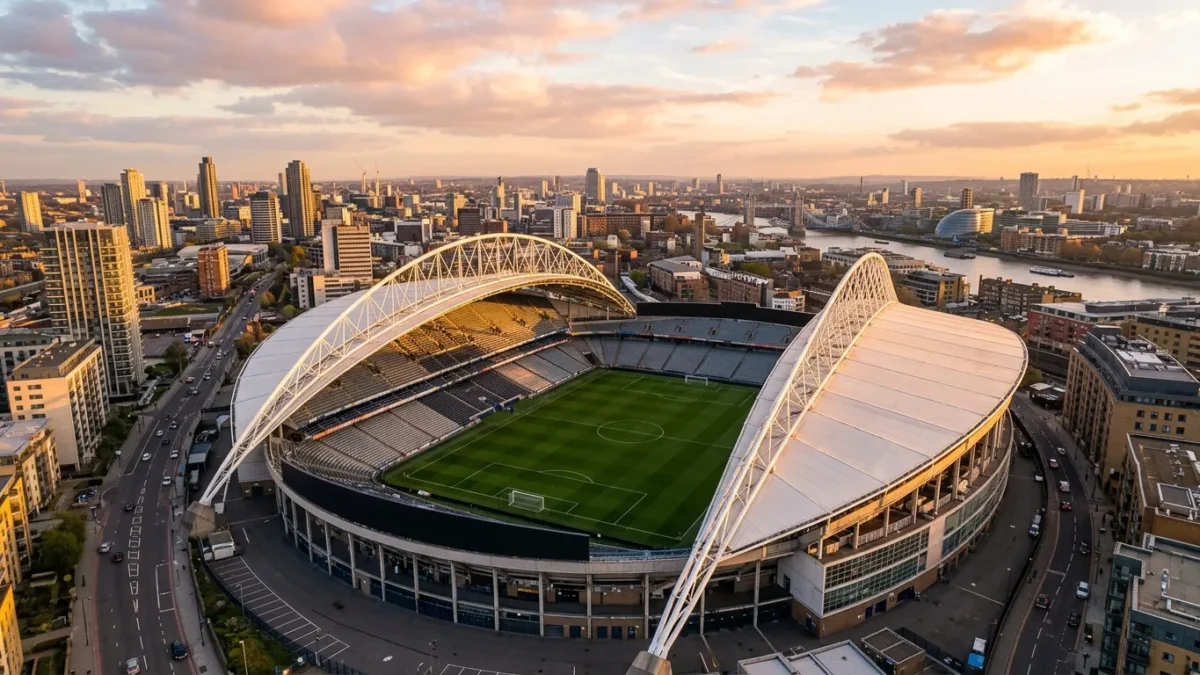
Sixteen cities, three countries, and dozens of matches played so far : the 2026 World Cup has already delivered some extraordinary football moments. But beyond the goals and the drama on the pitch, the stadiums themselves have become talking points. BBC Sport reporters and commentators have been touring venues across Mexico, the United States and Canada, and their verdicts are sharp, honest, and occasionally surprising.
Seattle and Dallas : the two stadiums that steal the show
Ask multiple BBC voices independently, and two names keep coming up. Lumen Field in Seattle draws an almost unanimous reaction : jaw-dropping noise, a stunning skyline backdrop, and a design that feels purpose-built for intensity. Vicki Sparks, BBC commentator, put it plainly : the stadium took her breath away the moment she walked in. That is not hyperbole. Lumen Field has earned a place in the Guinness Book of World Records twice for its recorded noise levels, a direct result of its horseshoe-shaped design that traps sound inside the bowl.
Standing in the north stand gives you a view like no other. The seating area juts upward like the bow of a ship, and the open sky on either side frames the Seattle skyline perfectly. Even the concourses are worth exploring : rows of jerseys celebrate artists who performed there, from Taylor Swift to Ed Sheeran, alongside the Seattle Seahawks Wall of Legends. Six World Cup matches are being hosted here, and every single one benefits from that atmosphere.
Dallas Stadium, meanwhile, wins on a completely different set of qualities. Where Seattle is raw and loud, Dallas is polished and immersive. The roof stays closed, the air conditioning keeps temperatures controlled, and the sheer scale of the interior hits you the second you step inside. Kelly Somers, BBC presenter, described feeling physically small beneath those towering stands. The wide concourses allow fans to move without bottleneck chaos, and the giant central screens above the pitch are genuinely useful for anyone seated high up. Atmosphere still builds effectively despite the sealed environment, partly because the roof traps the noise in.
Here is a quick comparison of these two leading venues :
| Stadium | City | Key strength | Matches hosted |
|---|---|---|---|
| Lumen Field | Seattle | Noise, skyline views, atmosphere | 6 |
| AT&T Stadium | Dallas | Air con, screens, comfort | 6+ |
| Azteca Stadium | Mexico City | History, passion, iconic setting | Opening game |
| MetLife Stadium | New York/New Jersey | Wow factor, sheer scale | Final (19 July) |
The Azteca, Kansas City and Atlanta : history, barbecue, and bold architecture
Azteca Stadium in Mexico City hosted the opening match between Mexico and South Africa, and for any football historian, stepping inside is something close to a pilgrimage. The ground where Diego Maradona redefined possibility for Argentina in 1986, and where Carlos Alberto scored what many still consider the greatest goal in World Cup final history in 1970, carries a weight that modern arenas simply cannot replicate. One BBC reporter noted that the pitch still has that same shimmering quality visible on old television footage. Add a crowd of passionate Mexican supporters, cascades of sombreros in the stands, and you have a setting that arguably deserves the final, not just the opener.
Kansas City’s Arrowhead Stadium delivered a different kind of magic. The city has a legendary tailgating culture, rated among the very best in the United States, built around world-class barbecue and genuine fan community spirit. Inside the open-air bowl, views stretch across the city and the atmosphere matches anything on offer elsewhere. The venue also provided the backdrop for one of the tournament’s defining moments so far : Lionel Messi scoring a hat-trick against Algeria in Argentina’s 3-0 opening win. The sun setting over the stadium while Messi extended his already extraordinary legacy made for the kind of scene football produces once in a generation.
Atlanta’s Mercedes-Benz Stadium, rebranded for this tournament, stands apart visually. Its angular glass-and-steel exterior is striking from outside, while the interior offers a layout unlike anything else on the World Cup circuit : disjointed stands, escalators and walkways positioned behind one of the goals, and a circular television screen suspended from the roof. Ian Dennis, BBC Radio 5 Live’s senior football reporter, rates it as the best overall fan experience among the venues he visited, though he admits the near touchline was invisible from his media position.
- Best atmosphere for pure noise : Seattle (Lumen Field)
- Best historical weight : Mexico City (Azteca Stadium)
- Best fan experience overall : Atlanta (Mercedes-Benz Stadium)
- Best comfort and facilities : Dallas (AT&T Stadium)
- Best wow factor on entry : New York/New Jersey (MetLife Stadium)
Boston’s Gillette Stadium, home of the New England Patriots, rounds out the picture with decent sightlines and a contained atmosphere, though Pat Nevin, former Scotland winger and BBC Radio 5 Live summariser, pointed out that signage outside is genuinely poor and transport from the city takes far longer than expected. Philadelphia earns credit for its tailgating culture and the electric energy generated by Haiti supporters during Brazil’s 3-0 win there, proof that crowd identity shapes a stadium as much as its architecture does.
What makes a World Cup venue truly unforgettable
Across all these reports, one pattern emerges clearly : the stadiums that leave the strongest mark combine physical design with cultural context. A closed roof and air conditioning matter in Dallas heat, but Messi scoring at sunset in Kansas City matters more to memory. The MetLife Stadium generated over five million views on social media when Ian Dennis posted his first reaction, yet many Americans consider it an underwhelming venue day-to-day. Perception depends entirely on the moment you arrive and what happens next.
If you are planning to attend any remaining matches, prioritise Seattle if noise and atmosphere top your list, and Dallas if comfort and visual spectacle are the priority. The final on 19 July at New York New Jersey Stadium will be the ultimate test : can a venue that divides opinion domestically rise to the biggest single sporting occasion on the planet ?
