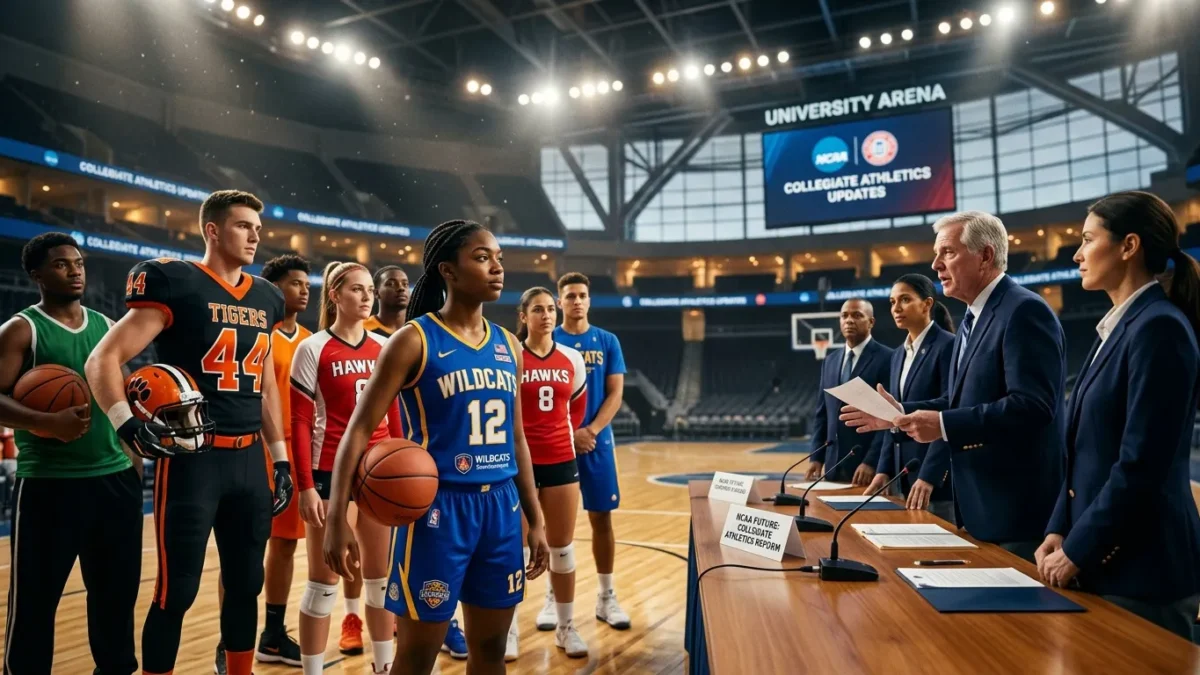
The NCAA eligibility reform debate just got a lot more concrete. The association has spent at least $16 million on eligibility-related legal battles in a single year — and frankly, that number alone explains why sweeping rule changes are now on the table. A proposal circulating among top conference and school administrators would fundamentally reshape how college athlete eligibility works, replacing a system riddled with inconsistencies with a cleaner, age-based framework.
A new age-based eligibility clock : what the NCAA is actually proposing
The core of the proposal is straightforward, which is refreshing given how convoluted the current system has become. Under the new framework, athletes would receive five full years of eligibility, starting from whichever comes first : their 19th birthday or their high school graduation date. That’s it. No redshirts, no waiver requests, no exceptions — outside of a narrow set of circumstances.
Those limited exceptions cover athletes on maternity leave, military service, or religious missions. Beyond that, the clock starts ticking and doesn’t stop. The NCAA Division I Cabinet is scheduled to review the proposal at its upcoming meeting, with implementation potentially as early as fall 2026 — though a phased rollout is expected to protect current athletes operating under existing rules.
One genuinely open question : will players who just completed their fourth season of eligibility get a fifth year if they fall within the new five-year window ? That detail hasn’t been resolved yet, and it matters enormously for athletes making decisions right now.
Here’s a quick comparison of the old and proposed systems :
| Feature | Current rules | Proposed rules |
|---|---|---|
| Playing seasons granted | 4 seasons over 5 years | 5 years from age 19 or HS graduation |
| Redshirt option | Yes | No (with rare exceptions) |
| Waiver requests | Yes (~1,450/year) | Eliminated |
| Medical hardship exceptions | Yes | No |
The proposal predates President Donald Trump’s executive order issued in early April 2026, but it directly aligns with one of its key directives : establishing a five-year eligibility standard for college athletes. That political alignment gives the proposal significant momentum — though it also raises questions about how much independence the NCAA retains in shaping its own rules.
Lawsuits, inconsistent rulings and the $16 million problem
The legal chaos driving this reform is hard to overstate. Last academic year, the NCAA processed 1,450 waiver requests for extended eligibility and approved roughly two-thirds of them. Of the approximately 500 denied, more than 70 athletes filed lawsuits. That’s a litigation rate that would alarm any organization.
NCAA president Charlie Baker made his frustration plain back in January at the NCAA convention : “I don’t like it when what judge ends up in front of and what state they’re in determines whether somebody gets to play another year. That’s not fair.” Hard to argue with that. The system has effectively handed eligibility decisions to federal and local judges with no uniform standard, creating wildly inconsistent outcomes.
Two cases from early 2026 illustrate the absurdity perfectly :
- A Mississippi judge granted extended eligibility to Ole Miss quarterback Trinidad Chambliss in February.
- Less than a month later, a Tennessee judge denied the same type of request for Vols quarterback Joey Aguilar.
Same situation, two different outcomes, separated by a state line. That’s not a system — that’s a lottery. Some athletes have pushed for a ninth year of college eligibility through the courts. A ninth year. The wave of litigation has genuinely distorted competitive equity across college athletics.
Despite winning more than half of eligibility lawsuits where a judge has issued a preliminary ruling, the NCAA still faces several cases expected to go to trial. Each one costs millions. The $16 million spent in legal fees over one year isn’t a statistic to bury — it’s the clearest possible argument for structural change.
Money, roster spots and what this means for college athletes going forward
There’s a financial reality underneath all of this that doesn’t get enough attention. College athletics now operates in an environment where schools directly compensate players, and that compensation has grown dramatically. Top power conference quarterbacks in the most recent transfer cycle sought annual deals exceeding $4 million — with some reportedly closer to $6 million per year.
Compare that to the NFL’s rookie salary structure : a player needs to land in the top half of the first round to earn anywhere near that figure in year one of their professional career. So staying in college, with a lucrative NIL deal or direct school payment, is financially rational for many athletes. That incentive structure is what’s driving the surge in eligibility extension requests.
The downstream effect lands on younger players. Every extended roster spot occupied by a veteran athlete is one fewer opportunity for a high school recruit, a junior college prospect, or a transfer just starting their career. The House settlement’s strict roster limits make this tension even sharper — spots are genuinely finite now.
For coaches and athletic directors navigating roster construction, the proposed age-based clock would bring predictability they currently lack. Knowing exactly when an athlete’s eligibility window opens and closes changes how you recruit, how you plan depth charts, and how you allocate compensation budgets. The reform won’t eliminate every headache — but replacing a waiver-and-lawsuit system with a clean calendar standard is, frankly, long overdue. Watch how the Division I Cabinet meeting unfolds next week; the language that emerges from that room will shape college sports for the next decade.
