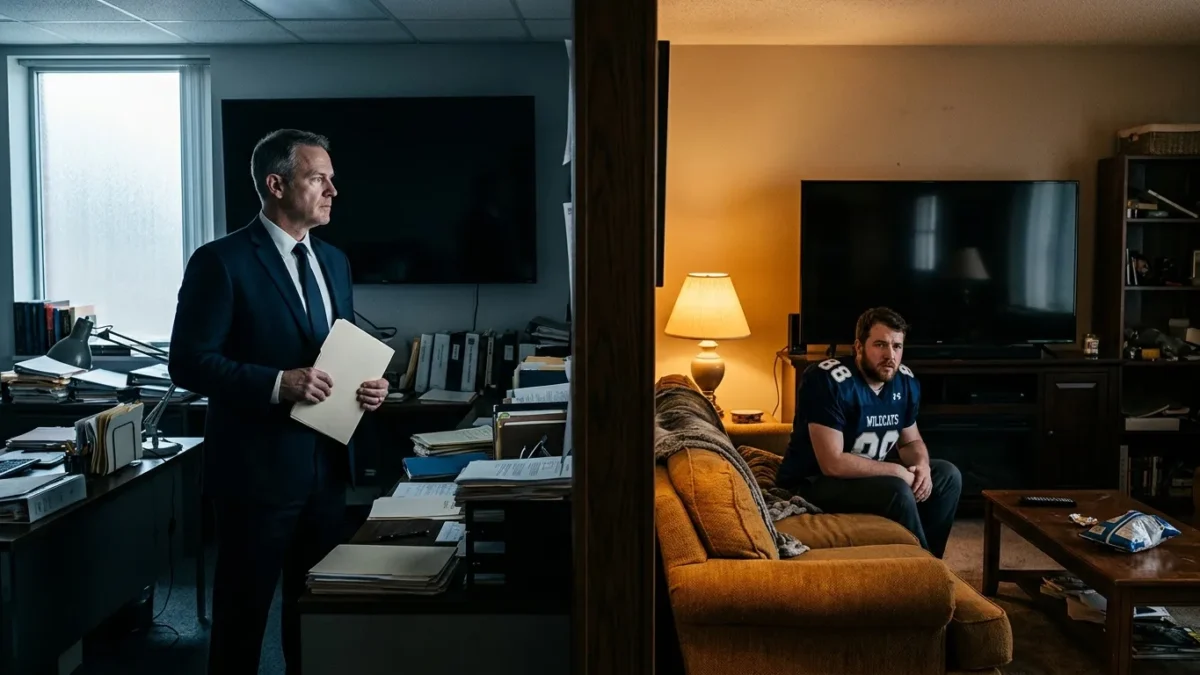
Nearly $1,000 per season just to watch football. That’s the staggering figure Republican Senator Mike Lee put forward in February 2026, estimating what fans needed to spend on cable and streaming subscriptions to catch every single NFL game. That number alone explains why the Department of Justice is now reportedly turning its attention to America’s most powerful sports league.
The DOJ antitrust probe : what we know so far
According to the Wall Street Journal, the Justice Department has opened an investigation into whether the NFL is deploying anticompetitive tactics that harm consumers. The full scope of the inquiry remains unclear — neither the DOJ nor the NFL agreed to comment when contacted by the WSJ. What we do know is that the probe likely centers on the league’s media rights strategy, specifically its ability to let individual teams negotiate their own broadcasting packages.
The NFL did break its silence through a statement released Thursday, insisting it operates the most fan and broadcaster-friendly media distribution model in professional sports. Frankly, that claim deserves scrutiny. When fans need a fistful of subscriptions just to follow their team through a regular season, “fan-friendly” starts to sound like a marketing line.
Congress has been vocal on this front for months. Senator Mike Lee, who chairs the Senate Judiciary Subcommittee on Antitrust, Competition Policy and Consumer Rights, has made the fragmented viewing experience a political issue. His $1,000 estimate isn’t a vague complaint — it reflects the real cost of piecing together NFL coverage across platforms like Netflix, Prime Video, and traditional broadcast networks.
From the Sports Broadcasting Act to streaming fragmentation
Context matters here. Back in 1961, Congress passed the Sports Broadcasting Act, a statute that granted the NFL and its teams specific antitrust protections. The logic was straightforward at the time : allowing leagues to bundle and sell media rights collectively made sense when nearly every game landed on free-to-air television. One screen, one subscription — or rather, no subscription at all.
That world no longer exists. Today, NFL games are scattered across a fragmented media landscape :
- Traditional broadcast networks (CBS, NBC, Fox, ABC/ESPN)
- Prime Video (Thursday Night Football)
- Netflix (Christmas Day games and select matchups)
- NFL+ streaming platform for mobile viewing
- Peacock (exclusive playoff games)
Each platform requires its own subscription. A fan who wants complete coverage has no single, affordable option. The 1961 legislation was never designed for this reality, and the DOJ investigation may signal that regulators are finally catching up to six decades of broadcasting evolution.
Media rights negotiations and the DOJ’s timing
Timing is everything here. The NFL’s current media rights agreements technically lock the league in until after the 2029 season. However, industry analyst John Ourand of Puck has reported that all parties — the NFL and its broadcast and streaming partners — may choose to renegotiate ahead of schedule, potentially within the next few months. The goal would be to secure deals extending well into the 2030s, rather than waiting for the current contracts to expire at decade’s end.
| Partner | Type | Games covered |
|---|---|---|
| CBS / NBC / Fox | Broadcast TV | Sunday games, Super Bowl rotation |
| ESPN / ABC | Cable / Broadcast | Monday Night Football |
| Prime Video | Streaming | Thursday Night Football |
| Netflix | Streaming | Christmas Day games |
| Peacock | Streaming | Exclusive playoff games |
The NFL plans to negotiate with each partner individually, according to Ourand. That approach — bilateral deals rather than a unified package — is precisely the kind of practice that could attract antitrust scrutiny. If the DOJ moves before new contracts are signed, it could reshape the entire negotiating framework before billions of dollars change hands.
Sports Media Watch has noted that the league’s next round of deals could be finalized as early as late 2026. The Justice Department may be positioning itself to influence those terms, either by setting conditions or by challenging specific arrangements that limit consumer access.
What this investigation could mean for how you watch football
This isn’t just a legal story — it’s a consumer story. The core question the DOJ seems to be asking is whether antitrust protections granted in 1961 should still shield a league that now monetizes access to its games across five or more paid platforms. That’s a legitimate question, and the answer has real consequences.
If the investigation leads to meaningful regulatory action, the most optimistic outcome for fans would be some form of affordable bundled access — a single package covering all NFL games at a reasonable price. The most likely short-term impact, however, is simply uncertainty : broadcasters and streamers may hesitate to finalize new deals while a federal investigation looms over the table.
For the NFL, the stakes go beyond one season. A genuine antitrust challenge could force the league to rethink how it structures media rights from the ground up — not just for the next contract cycle, but permanently. The league’s leverage in negotiations has always rested on its antitrust exemptions. If those protections erode, the entire business model shifts.
Watch this space. The next few months of negotiations will tell us a great deal about how seriously the DOJ intends to push — and whether Congress is prepared to modernize a 65-year-old law written for a world that no longer exists.
