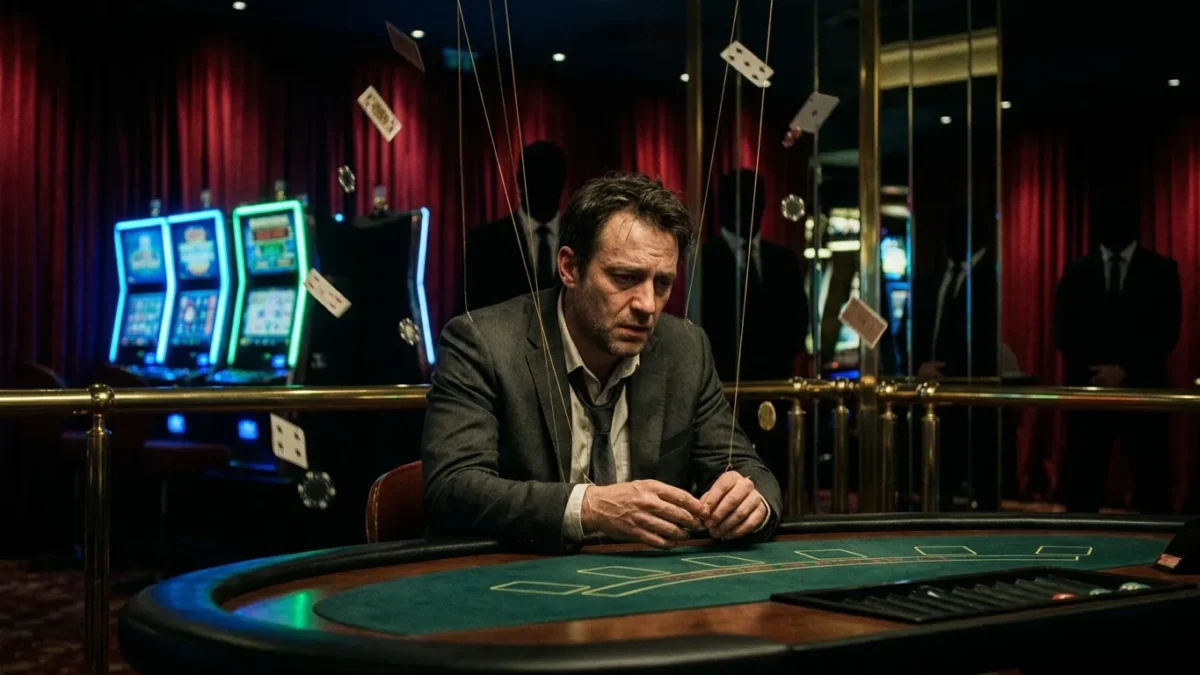
Roughly 1.4 million UK adults are estimated to have a gambling problem. Not a casual habit. A problem — with real financial damage, broken relationships, and a mental health toll that rarely makes it into the headlines. That figure, reported just two years ago, didn’t emerge from nowhere. It was engineered.
Sports betting is not entertainment — it’s a mechanism
Let’s be blunt : the framing of sports gambling as innocent fun is one of the most effective marketing operations of the past two decades. The betting industry doesn’t sell you a product. It sells you a lifestyle. Logos larger than club badges on Premier League shirts. Celebrities like Peter Crouch grinning through Paddy Power campaigns. Jermaine Jenas playing table football in some idyllic communal setting, apparently because someone placed an accumulator. The message is always the same : bet, and you belong.
This is lifestyle engineering at its most calculated. The imagery — face-painted fans, euphoric pub crowds, spontaneous hugs — tells you that gambling is the social glue of sport fandom. It isn’t. It’s a substitute for it. If you genuinely need a financial stake to care about a match outcome, you don’t love sport. You love the dopamine spike of a correct guess.
Consider what happened when one writer — a seasoned sports observer — decided to test whether disciplined, low-risk betting could actually yield consistent returns. The plan was methodical : start with £10, target £1,000 through only high-probability bets, and never let excitement override analysis. A strong second-favourite horse. A City win with a specific assist. Southampton holding against Arsenal. Ten pounds became £120 in five days. By conventional logic, the system was working.
Except it wasn’t. Because the moment the numbers climbed, the emotional architecture shifted. Suddenly £120 felt insufficient. The wins produced not satisfaction but hunger — why hadn’t I bet more ? The psychology flipped without warning, and within days a four-way Champions League semi-final accumulator dissolved the entire project. Diego Simeone, who had never previously won at the Camp Nou, chose that particular night to do exactly that.
How betting exploits your brain’s reward system
Addiction doesn’t require weakness. It requires exposure to something your brain is structurally wired to pursue. Gambling targets three of the most powerful neurological drives simultaneously :
- The need to solve problems — sport analysis feels like skill, and betting monetises that feeling
- The dopamine reward of winning — even near-misses trigger partial dopamine release, which sustains the cycle
- Social belonging — advertising systematically links betting to community, friendship and shared excitement
Smartphones delivered the final blow. Before mobile apps, betting required physical effort — a trip to the shop, a deliberate act. Now, moreish defeat is one tap away, available at 2am on a Tuesday, inside the same device you use to check your bank balance. The friction that once slowed impulse has been eliminated by design.
| Betting trigger | Psychological mechanism | Industry tool used |
|---|---|---|
| First win euphoria | Dopamine spike creates memory anchor | Welcome bonuses, free bets |
| Near-miss effect | Brain interprets loss as almost-win | In-play markets, live odds shifts |
| Loss chasing | Sunk cost fallacy drives escalation | Stake multipliers, booster deals |
| Identity investment | Sport knowledge inflates confidence | Acca promotions, expert tips |
The industry also has a failsafe that rarely gets discussed : if you actually win consistently, they ban your account. Successful professional gamblers frequently resort to losing deliberately under assumed names just to maintain access. The market is not designed for you to profit. It is designed to keep you engaged until you don’t.
Premier League clubs, shirt sponsors and the cost of self-regulation
When the Premier League announced a voluntary ban on gambling companies as front-of-shirt sponsors — effective next season — nine clubs reportedly struggled to find replacement deals at comparable rates. One club executive described the situation with barely concealed panic : “Nearly everyone is losing money.”
Frankly, this is the least sympathetic complaint in professional sport right now. The world’s wealthiest football clubs, operating in an economy where even the weakest side can shed £335 million in a single season, are lamenting a £4 million shortfall caused by being asked to stop profiting from an industry that demonstrably harms their own supporters. The people who buy the shirts. The people who fund the wages.
There is no such thing as money that enters football through gambling. There is only money extracted from the pockets of supporters, repackaged as sponsorship revenue and redirected upward. Every triple-accumulator deal, every mid-game stake booster, every DeathBet.com promotion visible on a broadcast — it all flows one way.
The voluntary agreement to remove betting logos from shirts is, remarkably, an act of partial self-awareness from an industry not known for it. It won’t fix the structural problem. Perimeter boards, broadcast graphics, and app notifications will continue doing the work that shirt fronts used to do.
What you should actually take away from all of this
Stop thinking about gambling as a discipline problem. The system is not neutral — it is built to disorient you, to convert sporting knowledge into false confidence, and to transform one winning bet into an appetite that one winning bet can never satisfy.
The most honest thing said about sports betting is this : even your own wrongness gets recruited into the logic. You write that Harry Kane might win the Ballon d’Or. He scores a crucial Champions League goal. Your incorrect prediction almost validates a different bet — because the narrative pull is that strong, that seductive. Voodoo thinking isn’t a flaw in the gambler. It’s a feature the industry relies on.
If you’re going to engage with sport, engage with the sport itself. The uncertainty, the variance, the moments that no accumulator could have predicted — that’s where the actual pleasure lives. Placing a financial stake doesn’t enhance the experience. It replaces it with anxiety dressed up as excitement.
