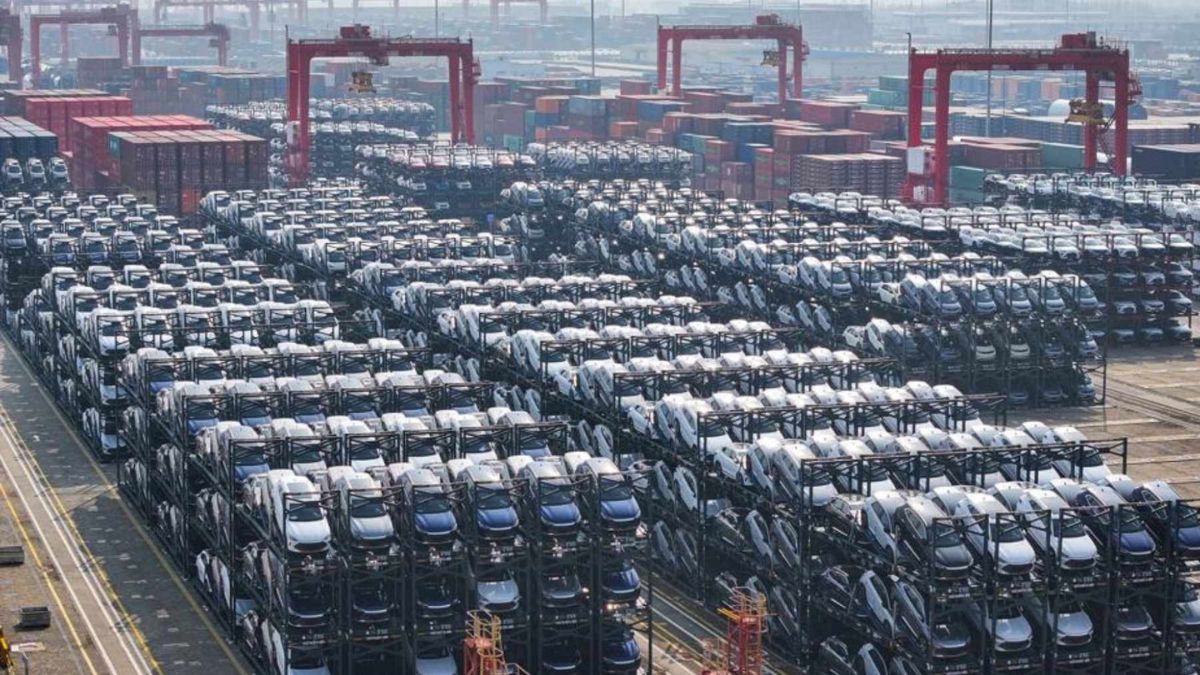
Over 11 million electric vehicles sold in a single country, in a single year. That figure alone should reshape how we think about global oil markets — and about who actually needs whose barrels.
China’s electric vehicle boom is rewriting energy demand
The numbers from 2025 are striking. According to UK research firm Rho Motion, global EV sales reached approximately 18.5 million units that year. China accounted for more than 11 million of those — well over half the planet’s new electric cars. This isn’t a niche shift happening in wealthy neighborhoods. From Beijing’s ring roads to mid-size provincial cities, electric vehicles have become the default choice, not the premium one.
By 2024, China’s EV sales were expanding at roughly 40% year on year, even as adoption slowed in several Western markets. Chinese climate analyst Li Shuo describes this trajectory as “decisive” — a structural transformation, not a trend that reverses when subsidies shrink or commodity prices swing. The combustion engine, in China’s transport sector at least, is losing ground fast.
Think about what that means in barrel terms. Every battery-powered car that replaces a petrol vehicle cuts a measurable slice of daily oil consumption. Multiply that across millions of new registrations annually, and Chinese analysts now argue that oil demand in the country’s transport sector has already peaked. Aviation and petrochemicals still consume fossil fuels, but road transport — historically a massive driver of crude imports — is on a downward curve.
Here’s a simple comparison of how China’s EV market stacks up globally in 2025 :
| Region | EV sales (2025 estimate) | Share of global sales |
|---|---|---|
| China | 11+ million | >59% |
| Europe | ~3.5 million | ~19% |
| United States | ~1.8 million | ~10% |
| Rest of world | ~2.2 million | ~12% |
Those proportions make clear that the electric transition isn’t evenly distributed. China is carrying the bulk of that shift almost single-handedly, which has profound implications for every country that has historically relied on Beijing as a crude oil customer.
Venezuela’s shrinking slice of the Chinese market
Here’s where geopolitics gets complicated. For years, Venezuela counted on China as one of its primary oil buyers. Rystad Energy estimates that 400,000 to 500,000 barrels per day of Venezuelan crude currently flow toward Chinese refineries. That sounds significant — until you place it against China’s total import volumes and realize it represents a relatively thin margin.
The asymmetry matters enormously. Venezuela depends on China far more than China depends on Venezuelan barrels. If US pressure disrupted those flows tomorrow, Rystad’s energy analysts suggest Chinese refiners would simply pivot toward other discounted suppliers — Iran and Russia chief among them. Venezuela would feel the loss acutely. China would barely register it.
Now layer the long-term trend on top of that. As electric mobility expands and China’s overall oil demand plateaus — then declines — Venezuelan heavy crude becomes progressively less strategic for Beijing. The US political strategy of treating Venezuela’s oil reserves as a geopolitical prize assumes that the world’s biggest buyer will keep wanting those barrels. That assumption deserves serious scrutiny.
From oil grids to clean grids : China’s broader energy pivot
Electric vehicles are only one piece of a much larger transformation underway. Data from Global Energy Monitor show that China currently has approximately 510 gigawatts of large-scale solar and wind capacity under construction — on top of over 1,400 gigawatts already operating. That single figure represents roughly three-quarters of all such capacity being built anywhere on the planet right now.
Beijing’s stated target is to reach around 3,600 gigawatts of installed wind and solar by the mid-2030s, which would be approximately six times the country’s 2020 clean power capacity. Add expanding nuclear infrastructure and significant investment in fusion research, and a clear direction emerges. Some analysts now use the term “electrostate” to describe where China is heading — a country that powers economic growth through domestically generated electricity rather than imported hydrocarbons.
The contrast with Washington’s current posture is sharp. The Trump administration’s Venezuela strategy involves :
- US military operations to influence control over Venezuelan crude exports
- Pushing to manage the country’s oil flows on Washington’s terms
- Deepening strategic reliance on heavy fossil fuel reserves
- Positioning carbon-intensive barrels as a geopolitical lever
Li Shuo frames this bluntly as a “petrostate approach” — one that runs counter to global energy momentum and signals a continued willingness to deploy military force over fossil fuel access. For households already paying higher electricity bills during summer heat events, or bracing for another damaging hurricane season, that approach carries tangible costs.
China’s trajectory won’t solve the climate crisis on its own. Coal still dominates its electricity mix in absolute terms, and industrial emissions remain substantial. But the direction is unambiguous : fewer barrels from road transport, more watts from wind and sun. Venezuela’s oil occupies a shrinking corner of that picture. Any strategy built on the assumption that today’s demand volumes will hold into the 2030s is working from an outdated map — and the gap between that map and reality is growing wider every quarter.
