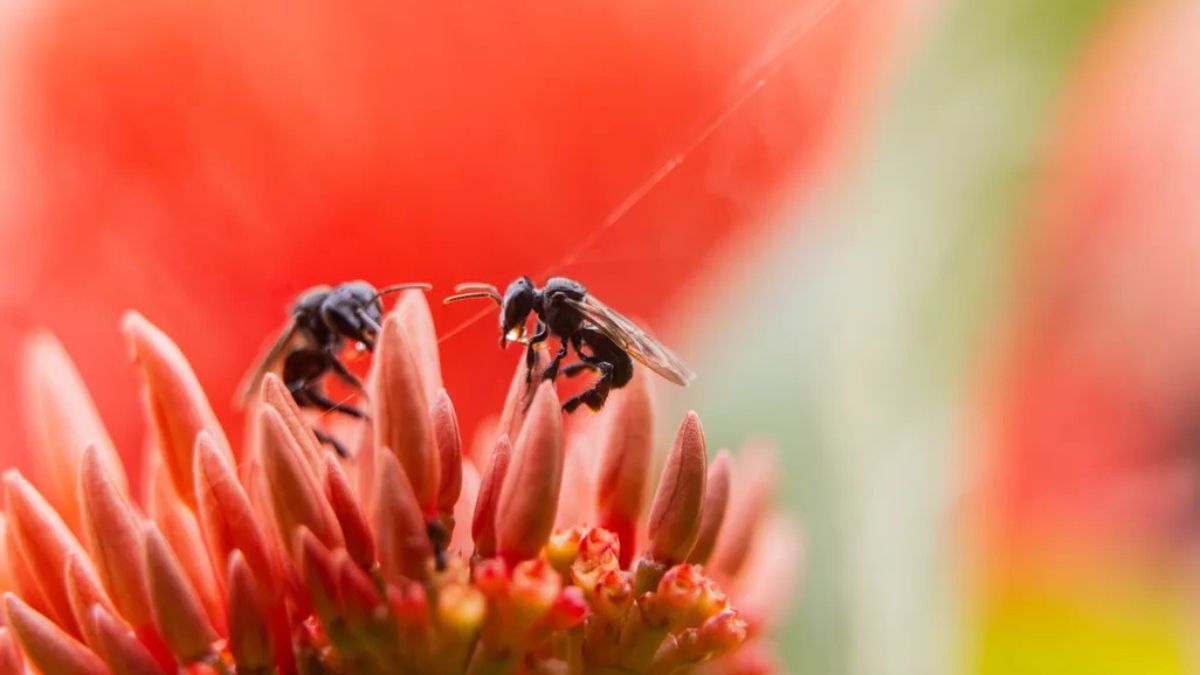
Peru just rewrote legal history. In two municipalities of the Peruvian Amazon — Satipo and Nauta — local ordinances now grant native stingless bees the status of legal subjects, giving them the right to exist, to thrive, and to be defended in court. No insect species had ever received this kind of formal legal recognition anywhere on Earth before. This is not a symbolic gesture. It carries real enforcement power.
When insects become rights-bearing subjects under the law
The legal framework here is more substantial than it sounds. The Satipo and Nauta ordinances build directly on a 2024 reform passed by the Congress of the Republic of Peru, which formally brought stingless bees under state protection as part of the country’s biological heritage. What the municipal ordinances added is striking : they function almost like a bill of rights for pollinators, listing specific entitlements that courts must now consider.
Those rights include maintaining healthy populations, living in a habitat free from chemical contamination, benefiting from ecologically stable climate conditions, and completing natural reproductive cycles undisturbed. Critically, any corporation, government agency or individual that harms bee colonies can now face legal action on behalf of the bees themselves — not just on behalf of affected farmers or Indigenous communities.
Earth Law Center legal expert Constanza Prieto described the result publicly as “a turning point in our relationship with nature,” one that makes stingless bees visible as rights-bearing subjects rather than silent ecological service providers. That framing matters enormously. It shifts the legal burden : destruction of habitat is no longer just an economic loss for humans; it becomes a violation of a recognized right.
Here is a snapshot of what these rights specifically cover :
- Right to exist and maintain stable, healthy populations
- Right to a clean, intact habitat with natural vegetation
- Right to regenerate natural biological cycles without interference
- Right to legal representation when threatened by industrial or agricultural projects
- Right to protection from invasive species competition, particularly Africanized honeybees
The science and ancestral knowledge behind this breakthrough
This legal shift did not originate in a law school seminar. It started in the field, during the pandemic. Chemical biologist Rosa Vásquez Espinoza and her team at Amazon Research Internacional were approached by Indigenous families who had been using stingless bee honey medicinally throughout the worst months of the health crisis. Lab analysis revealed hundreds of bioactive molecules — antibacterial, anti-inflammatory, antioxidant, and showing potential anti-cancer properties. The science confirmed what generations of local healers had always known.
Peru is home to at least 175 documented species of native stingless bees, a figure scientists openly acknowledge is likely an undercount given how poorly surveyed parts of the Amazon remain. Roughly half of the approximately 500 known stingless bee species worldwide are found across the Amazon basin. These insects pollinate around 80% of tropical plant species, including cacao, coffee, avocados, and countless wild fruits that anchor both local diets and global food chains.
| Indicator | Figure |
|---|---|
| Native stingless bee species recorded in Peru | At least 175 |
| Known stingless bee species worldwide | ~500 |
| Tropical plant species pollinated by stingless bees | ~80% |
| Year Peru’s national stingless bee protection law passed | 2024 |
For the Asháninka and Kukama-Kukamiria peoples, stingless bees are not livestock or pollination tools — they appear in songs, ceremonies, and oral traditions passed across generations. Asháninka leader Apu Cesar Ramos stated clearly that within the stingless bee lives traditional knowledge handed down from grandparents, inseparable from the rainforest itself. Researchers and Indigenous elders mapped colonies together across vast stretches of forest, documenting traditional meliponiculture practices and tracking the direct correlation between old-growth tree loss and declining bee populations.
Deforestation, pesticides, and a race against disappearance
The urgency driving these ordinances is visible on the ground. Elders who once walked thirty minutes to locate a hive now report walking for hours without finding one. Across the Amazon, stingless bee colonies face simultaneous pressure from land conversion for cattle ranching and industrial crops, heavy pesticide and herbicide application, climate disruption, and aggressive competition from Africanized honeybees that can invade and take over nest sites.
The ordinances respond to this directly. Satipo and Nauta are now legally required to implement concrete conservation measures : reforestation of degraded zones, strict regulation of agrochemicals near known habitats, restoration of native flora corridors, climate adaptation planning, and continuous scientific monitoring. Communities gain a legal instrument to challenge road projects, new plantations, or any infrastructure that threatens known colonies — without needing to prove human financial harm first.
The international response has been fast. A petition organized by global advocacy group Avaaz rapidly gathered hundreds of thousands of signatures calling on Peru to extend these protections nationwide. Legal observers and conservation organizations in other countries are already studying the Satipo-Nauta model for application to their own native pollinators. The Amazon itself stores tens of billions of tons of carbon — protecting its pollinators is inseparable from protecting that carbon stock.
What other governments should take from this legal experiment
Frankly, the most actionable lesson here is procedural, not philosophical. Peru did not wait for a sweeping federal environmental reform. Two municipalities acted within existing legal frameworks and created enforceable rights at a local level, grounded in both peer-reviewed science and Indigenous territorial knowledge. That combination is reproducible.
Any government with documented native pollinator populations facing habitat loss could adapt this model. The morning coffee, the chocolate bar, the avocado — all depend on pollinators that almost never make legal headlines. Giving legal standing to insect species does not automatically save ecosystems, but it fundamentally changes who bears the burden of proof when a forest is cleared or a field is sprayed. The question other lawmakers should now be asking themselves is not whether insects deserve rights in theory, but what their own native pollinators are losing while the legal system stays silent.
