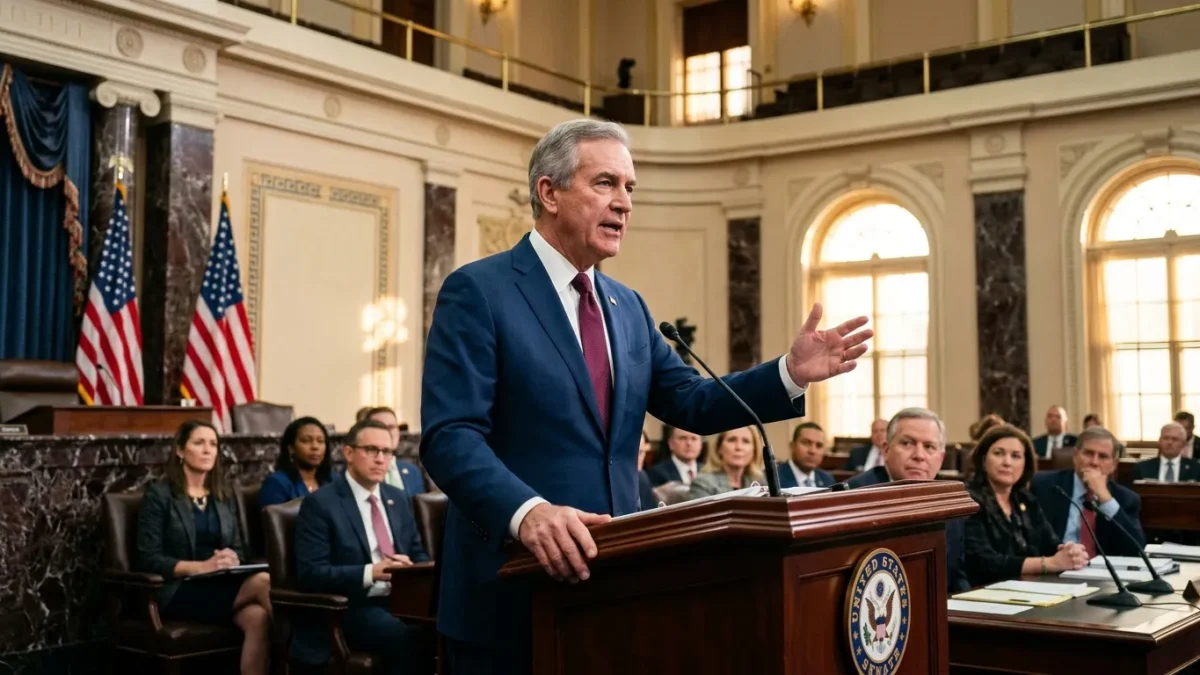
Watching a playoff game shouldn’t require a financial strategy. Yet in January 2026, thousands of Wisconsin residents faced exactly that situation when the Green Bay Packers hosted the Chicago Bears in a Saturday postseason matchup — exclusively on Amazon Prime Video. Senator Tammy Baldwin, Democrat from Wisconsin, didn’t mince words about it : “Families were forced to pay Jeff Bezos just to watch the game.” That moment crystallized a frustration that millions of American sports fans share. Now, Baldwin is turning that frustration into legislation.
The “For the Fans” Act : what Baldwin’s bill actually does
Senator Baldwin plans to introduce the “For the Fans” Act, a piece of legislation targeting what she describes as the broken relationship between sports leagues, media companies, and the fans who ultimately foot the bill. The core premise is straightforward : if a professional team plays a nationally televised game, every fan in that team’s state should be able to watch it for free — no extra subscription required.
Under the bill, all nationally televised games involving a pro team from a given state would be available statewide, either through over-the-air broadcasting or a free, ad-supported streaming platform, on a consistent channel or service. The streamer producing the broadcast could still sell advertising, keep its production, and profit — fans in the home state just wouldn’t pay a separate fee to access it.
The bill targets seven major leagues directly :
- NFL
- MLB
- NBA
- NHL
- WNBA
- MLS
- NWSL
Baldwin framed it plainly in her interview with The Athletic : “We just want to have some basic ground rules to bring down costs for fans.” Leagues and teams would continue generating revenue through advertising and media rights deals — the bill doesn’t dismantle those structures. It simply prohibits them from locking out home-state fans behind a paywall.
The legislation also directly addresses the frustration that comes with out-of-market subscription services. Anyone paying for NFL Sunday Ticket, NBA League Pass, or MLB.TV — services marketed as “complete” access — currently faces national blackouts whenever a game airs exclusively on a platform like Peacock or ESPN+. Baldwin’s bill would end that contradiction entirely. A League Pass subscriber, for example, would no longer need to separately subscribe to Amazon Prime or Peacock to watch their team play.
Blackouts, streaming chaos, and the real cost for fans
The cable television decline is real. Since 2015, the U.S. has lost roughly 25 million pay-TV subscribers, pushing leagues toward exclusive streaming deals that partially replace that lost revenue. The NFL’s deal with Amazon for Thursday Night Football is the clearest example — it’s lucrative, it reflects where audiences are heading, but it also created new barriers for fans who don’t subscribe to Prime.
| Service | Primary audience | Current blackout issue |
|---|---|---|
| NFL Sunday Ticket | Out-of-market NFL fans | Games on Amazon, Peacock blacked out |
| NBA League Pass | Out-of-market NBA fans | Games on ESPN+, Peacock unavailable |
| MLB.TV | Out-of-market baseball fans | Apple TV+ exclusives blacked out |
Baldwin’s Wisconsin example from January 2026 isn’t a fringe case — it’s the norm in many markets. The Bears-Packers playoff game was technically available free in Green Bay and Milwaukee under existing NFL rules. But Wisconsin has five other media markets that received no such protection. For those fans, Amazon Prime was the only option, regardless of whether they already subscribed to NFL Sunday Ticket.
“It’s extremely frustrating to not know how or where to watch the games we love,” Baldwin said. That’s not hyperbole — it’s a structural problem baked into how media rights are currently negotiated, with no baseline obligation to actual fans.
Redefining “local” and the Sports Broadcasting Act of 1961
One of the more nuanced parts of the bill deals with geography. Local fandom doesn’t stop at a state line. The Boston Red Sox have devoted followers across all of New England, not just Massachusetts. The New York Yankees draw from New York, New Jersey, and Connecticut. The Carolina Hurricanes and Charlotte Hornets have genuine fan bases stretching into South Carolina. The bill would have the Federal Communications Commission (FCC) define the realistic parameters of each team’s “local” market, based on where fans actually live rather than where arbitrary administrative borders fall.
Baldwin also addressed the 65-year-old Sports Broadcasting Act of 1961, which grants the NFL specific antitrust exemptions around its collective media rights negotiations. Critics — particularly in college football circles — have questioned whether that law still serves its intended purpose. Baldwin’s position is clear and unambiguous : “I want to see the status quo remain.”
Her reasoning is market-based. For smaller-market teams like the Green Bay Packers — a publicly owned franchise in a city of roughly 107,000 people — having the NFL negotiate media rights collectively means those teams access the same massive deals as the Dallas Cowboys or the Los Angeles Rams. Strip that away, and smaller markets suffer. The Sports Broadcasting Act of 1961 exists precisely to protect that competitive balance, and Baldwin sees no reason to dismantle a mechanism that still works.
What the bill ultimately proposes is a recalibration of power — not between leagues and networks, but between those entities and the fans who pay for everything. Franchises profit. Streamers profit. The fan, meanwhile, juggles four subscriptions and still misses half the games. The “For the Fans” Act would make that arrangement legally untenable — and frankly, it’s past time someone introduced the bill to force that conversation.
