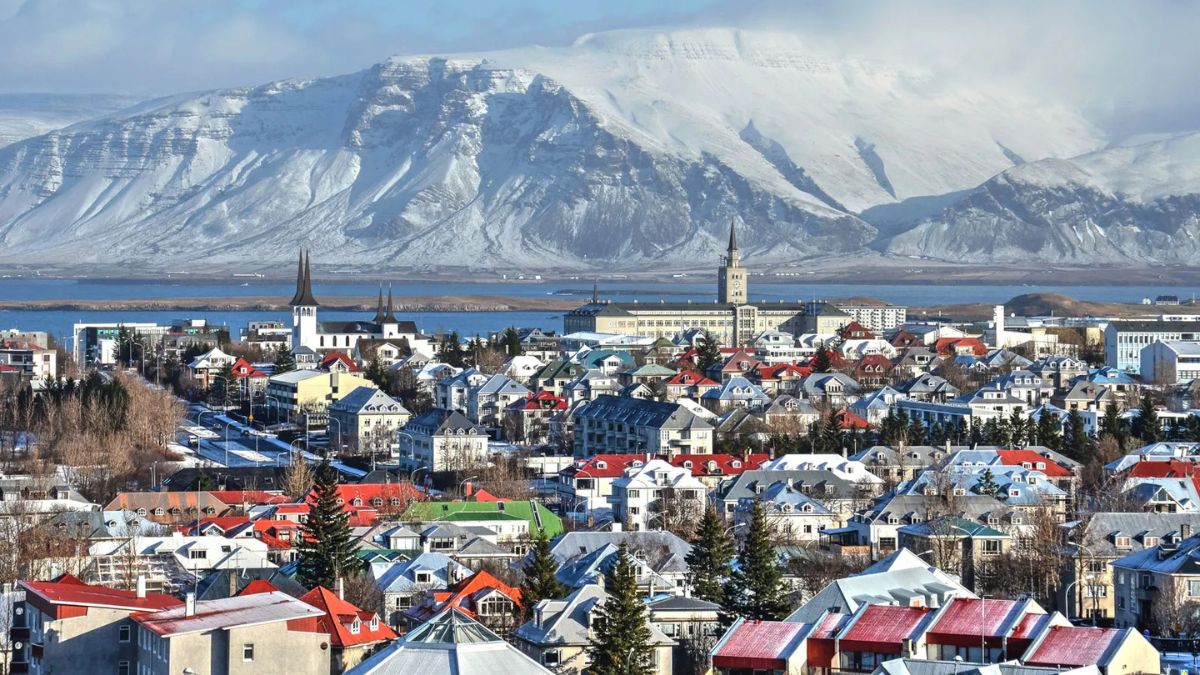
Back in 2015, when Iceland quietly launched a pilot program reducing working hours for roughly 2,500 public sector employees, few outside the country paid attention. Critics predicted chaos : falling productivity, rising costs, overwhelmed public services. Four years later, by 2019, nearly 90% of Iceland’s workforce had shifted to a 36-hour week — without any cut in pay. What Generation Z had been saying all along, often dismissed as naive idealism, turned out to be spot on.
From pilot program to national standard : how Iceland pulled it off
The numbers are straightforward, and they’re hard to argue with. Iceland moved from a standard 40-hour workweek to 36 hours, spread over four days, while keeping salaries identical. That’s not a compression of the same workload into longer daily shifts — which is what Belgium attempted, famously cramming 40 hours into four exhausting days. Iceland actually reduced the total weekly commitment. That distinction matters enormously for real work-life balance, not just a reshuffled calendar.
Productivity didn’t collapse. In several sectors, it actually improved. Teachers, healthcare workers, office staff — the results held across very different working environments. María Hjálmtýsdóttir, a teacher and activist who lived through the transition, put it bluntly : “The reduction of the workweek has been a huge success in Iceland. For 90% of us, the 36-hour workweek means less stress, more job satisfaction, and more time to enjoy life.”
What made this scalable wasn’t just political will. Iceland had already built one of the world’s most reliable digital infrastructures, with high-speed internet reaching even remote rural communities. Cloud collaboration, distributed team management, and task automation weren’t theoretical concepts — they were already embedded in daily workflows. When hours shrank, the tools to maintain output were already in place.
Here’s what the transition actually looked like in practice, across different areas of working life :
- Daily working hours stayed the same — only the fifth day was removed from the schedule.
- Remote work capabilities were expanded to support flexible arrangements.
- Routine administrative tasks were increasingly automated to protect productive time.
- Team communication shifted toward outcome-based accountability rather than time-based presence.
This structural approach — rather than simply telling employees to “work smarter” — is precisely why the Icelandic model succeeded where vague flexibility initiatives elsewhere have stalled.
What actually changed for workers and families — six years of real data
Beyond productivity metrics, the societal shifts are arguably more significant. With an extra day freed from professional obligations, domestic dynamics in Iceland shifted noticeably. Men took on more childcare and household responsibilities, narrowing a gap that decades of policy debates had failed to close. Gender equality at home moved in ways that workplace legislation alone had never managed to achieve.
| Area of impact | Observed outcomes since 2019 |
|---|---|
| Mental health | Lower burnout rates, reduced chronic stress, improved general wellbeing |
| Family dynamics | More balanced childcare responsibilities, stronger family connections |
| Community life | Greater participation in civic activities and local social initiatives |
| Environmental footprint | Fewer daily commutes, reduced energy consumption in office buildings |
These aren’t soft, feel-good anecdotes. Reduced commuting alone cuts both individual stress and carbon emissions simultaneously — a rare double win. Office energy consumption dropped across sectors where the fifth day eliminated entire building operations. The environmental benefits were a genuine bonus that few analysts had factored into their initial forecasts.
Generation Z had predicted many of these outcomes, sometimes years before the data confirmed them. Their argument was never that working less was inherently good — it was that working smarter within a human-centered framework would benefit everyone. Businesses, families, communities. The Icelandic experiment validated that logic with hard evidence rather than optimism.
A model the world is now copying — and what it means going forward
Iceland didn’t stay an isolated case for long. Germany, Portugal, Spain, and the United Kingdom have all launched their own pilot programs testing reduced workweeks in various forms. None have yet reached Iceland’s scale or speed of adoption, but the direction is clear. The four-day week has shifted from fringe idea to serious policy option in multiple OECD countries within half a decade.
Frankly, what’s striking is how thoroughly Generation Z read the situation correctly. They argued that technology would enable flexible, results-driven work models. They argued that quality of output matters more than hours logged. They argued that sustainable employment requires room for life outside the office. All three claims have been validated by Iceland’s six-year track record.
The more interesting question now isn’t whether the four-day workweek works — the evidence is settled. The real debate is about implementation speed. Companies and governments that wait for perfect conditions before acting will simply lose ground to those who adapt first. Iceland didn’t wait for a consensus. It ran the experiment, measured the results honestly, and scaled what worked.
If your organization is evaluating a similar transition, the Icelandic experience offers one actionable lesson above all others : invest in digital infrastructure before cutting hours, not after. The tools need to be in place first. Without that foundation, reducing the workweek just means doing the same amount of work in less time — which is exhausting rather than liberating. Get the infrastructure right, and the rest follows.
