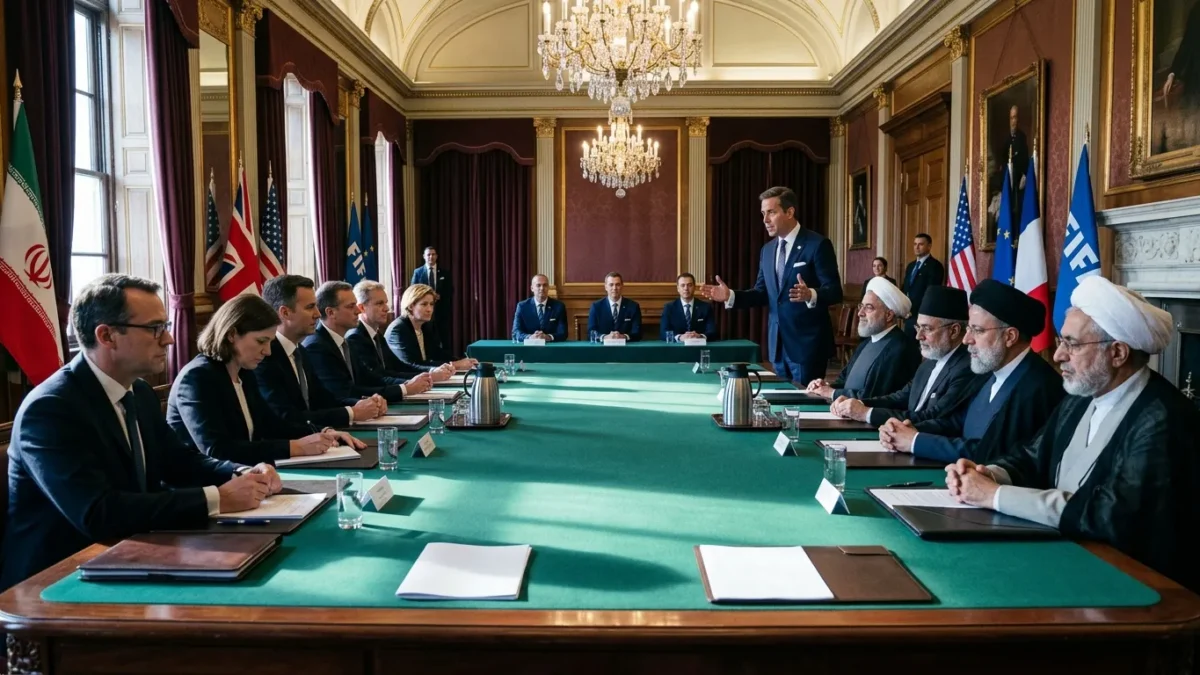
FIFA’s position is clear : Iran will be at the 2026 World Cup. No swap, no negotiation, no political detour. Yet the suggestion made by a Trump administration envoy to replace Iran with Italy has sparked a debate that cuts straight through the intersection of football governance and geopolitics.
A diplomatic proposal that FIFA quickly sidelined
Paolo Zampolli, the US special envoy appointed by Donald Trump, didn’t keep his idea quiet. He told the Financial Times directly : “I confirm I have suggested to Trump and Infantino that Italy replace Iran at the World Cup.” His reasoning ? Personal and emotional — “I’m an Italian native and it would be a dream to see the Azzurri at a US-hosted tournament.” He also added that four World Cup titles give Italy the pedigree to justify inclusion.
Charming as the sentiment may be, FIFA didn’t bite. Rather than issuing a formal rebuttal, the governing body pointed journalists toward a statement already made by FIFA president Gianni Infantino the previous week. His words were unambiguous : “The Iranian team is coming, for sure.” That’s not a diplomatic hedge. That’s a door being closed.
According to the Financial Times, Zampolli’s proposal also carried a secondary political motive : smoothing tensions between Washington and Rome after Italian Prime Minister Giorgia Meloni publicly criticised Trump over his remarks about Pope Leo XIV. So the World Cup slot was, in part, being floated as a geopolitical goodwill gesture. That framing alone tells you a lot about the unusual pressures swirling around this tournament.
Iran’s participation has been under scrutiny for weeks, given the ongoing conflict involving the US and Israel. But uncertainty isn’t exclusion — and FIFA has so far treated those as two very different things.
Italy’s qualification failure and FIFA’s rulebook on replacements
Here’s the uncomfortable truth for Italian fans : the Azzurri have no one to blame but themselves. This will be their third consecutive World Cup absence — a staggering fall for a nation that won the tournament in 1934, 1938, 1982 and 2006. The most recent miss came last month, following a qualification play-off defeat against Bosnia and Herzegovina. Not exactly the kind of result that screams “we deserve a wildcard berth.”
So what would actually happen if Iran were excluded ? FIFA’s regulations do grant the governing body significant power in that scenario. Article 6 of the World Cup rules states :
- FIFA holds “sole discretion” over decisions when a team withdraws or gets excluded.
- The body may decide to replace the affected association with another.
- No automatic right of succession exists for any nation — including the highest-ranked reserve.
That word “may” is doing a lot of heavy lifting. FIFA could invite another team, yes. But it could equally restructure the group, reduce the draw, or find another solution entirely. Assuming Italy would be the automatic beneficiary is a leap that the regulations simply don’t support.
| Team | Group stage opponents | Match dates | Venue |
|---|---|---|---|
| Iran | New Zealand | 15 June 2026 | Los Angeles |
| Iran | Belgium | 21 June 2026 | Los Angeles |
| Iran | Egypt | 26 June 2026 | Seattle |
Iran’s schedule is set, their travel plans presumably in motion. Three group games across two American cities — Los Angeles on June 15 and 21, then Seattle on June 26. Dismantling that fixture list would create logistical chaos for broadcasters, sponsors and the other three nations in that group.
What this episode reveals about the 2026 World Cup’s political atmosphere
The tournament kicks off on 11 June 2026, shared across three nations : the United States, Canada and Mexico. Hosting a 48-team event across North America was always going to attract political noise. But a sitting administration’s envoy lobbying to swap a qualified nation for an unqualified one — that’s a new level of interference, even by the turbulent standards of modern international sport.
Frankly, this proposal should never have been made publicly. Whether Zampolli genuinely believed it had legs or was testing the waters on behalf of wider political agendas, floating it to the press put FIFA in an awkward spot. The governing body had to respond without appearing either to cave to US political pressure or to antagonise a White House that is co-hosting the very tournament in question.
Infantino’s pre-emptive statement — “The Iranian team is coming, for sure” — was well-timed. It neutralised the suggestion before it could gather momentum, while avoiding a direct confrontation with the Trump administration. FIFA has enough credibility battles to fight without adding a diplomatic row to the list.
What this episode also highlights is the fragility of sport’s supposed neutrality. Football’s world governing body insists on keeping politics off the pitch, yet the pitch itself is now being used as a bargaining chip in US-Italy diplomatic relations. That tension isn’t going away. As the tournament draws closer, expect more friction between football’s institutional logic and the raw political interests of the countries staging the event. Staying alert to those dynamics is not optional for anyone following the 2026 World Cup seriously.
