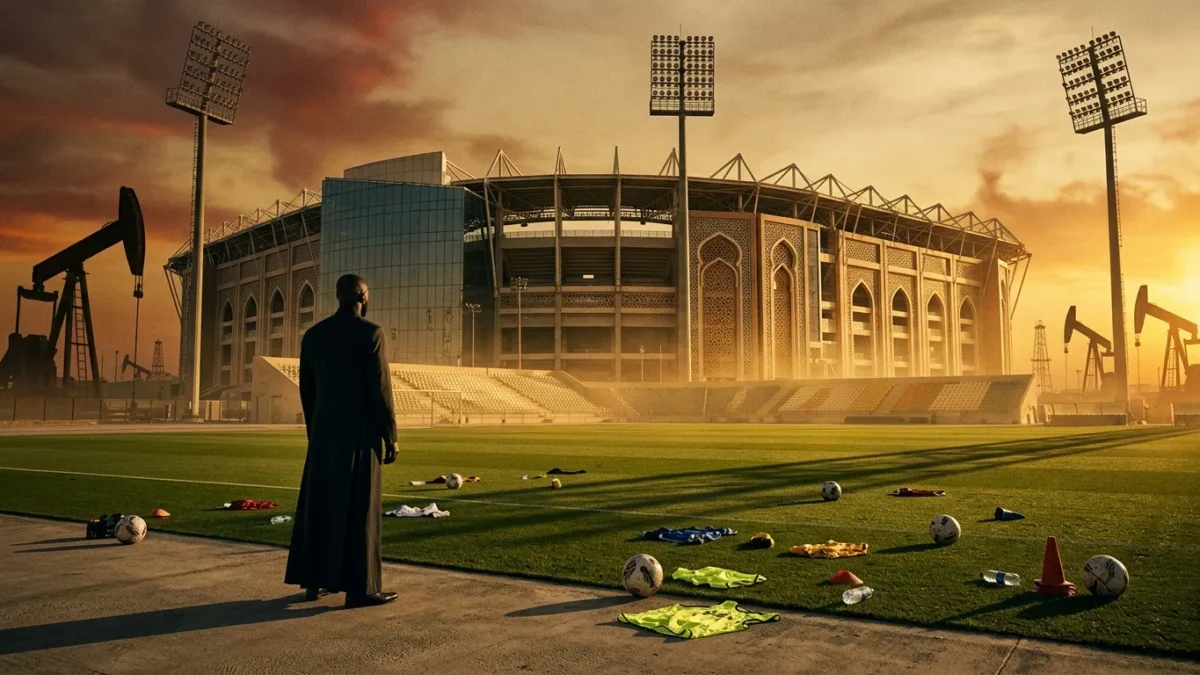
Gulf states have poured hundreds of billions of dollars into global sport over the past two decades. Saudi Arabia, Qatar, and the UAE didn’t just sponsor events — they bought clubs, hosted championships, and reshaped what money means in professional athletics. But April 2026 finds that trajectory facing serious friction. Geopolitical turbulence, war in multiple regions, and growing scrutiny from Western governments are forcing a real question : has the era of unchecked Gulf sports expansion already peaked ?
How Gulf investment rewrote the rules of sports finance
The numbers are staggering. Qatar spent an estimated $220 billion preparing for the 2022 FIFA World Cup — infrastructure, stadiums, hospitality, the works. Saudi Arabia’s Public Investment Fund acquired Newcastle United in 2021 for £305 million, then launched LIV Golf with a reported $2 billion initial commitment. Abu Dhabi’s ownership of Manchester City through City Football Group has generated a global network of 13 clubs across four continents. This isn’t philanthropy. It’s geopolitical leverage dressed in football jerseys.
For Gulf states, sport serves as soft power infrastructure. Hosting a Formula 1 Grand Prix or a heavyweight boxing world title bout shifts perception, attracts tourism, and builds diplomatic goodwill. Saudi Arabia’s Vision 2030 explicitly lists sports and entertainment as pillars of economic diversification. The strategy has worked — at least until recently.
Here’s what made Gulf sports investment so disruptive compared to previous waves of foreign ownership :
- State-backed capital with no pressure for short-term returns
- Direct links between club ownership and national foreign policy goals
- Willingness to absorb losses to secure marquee signings and global visibility
- Ability to create entirely new competitions (LIV Golf, Saudi Pro League) rather than just buying into existing ones
That last point matters enormously. Creating new leagues signals ambition that goes far beyond passive investment. It’s a direct challenge to established sports governance bodies — and it has generated real institutional pushback from FIFA, the PGA Tour, and UEFA alike.
War, instability, and the geopolitical risks reshaping Gulf sport deals
The geopolitical context has shifted sharply. Ongoing conflicts in the Middle East, strained US-Saudi relations around certain policy flashpoints, and fresh concerns about sportswashing are creating headwinds that didn’t exist five years ago. Western governments and sports federations are under pressure from civil society groups to scrutinize ownership structures more carefully. The scrutiny isn’t abstract — it translates into delayed approvals, renegotiated broadcast deals, and athlete backlash.
Samantha Johnson, reporting for Al Jazeera in April 2026, framed the issue directly : Gulf investment transformed global sport, but rising geopolitical tensions may signal the end of that rapid expansion phase. That’s not a minor observation. It suggests the model itself — state capital funneled into sports as diplomatic currency — faces structural limits.
| Country | Key sports asset | Estimated investment | Current geopolitical pressure |
|---|---|---|---|
| Saudi Arabia | LIV Golf, Newcastle United, Saudi Pro League | $6+ billion | High — regional conflict exposure, US political scrutiny |
| Qatar | Paris Saint-Germain, World Cup legacy | $220+ billion | Moderate — post-World Cup repositioning |
| UAE | Manchester City, Abu Dhabi Grand Prix | $4+ billion | Low-moderate — strong diplomatic diversification |
The table above reflects a clear pattern : the higher the geopolitical exposure, the more vulnerable the sports investment strategy becomes. Saudi Arabia, which has placed the largest bets, also carries the most risk. A prolonged regional conflict or a deterioration in US-Saudi ties could freeze key deals or trigger regulatory blocks on future acquisitions.
Frankly, the idea that Gulf states could keep expanding sports portfolios indefinitely — regardless of what was happening diplomatically — was always optimistic. Sport doesn’t exist in a vacuum. When governments impose sanctions or restrict financial flows, clubs and federations feel the consequences fast.
Rethinking the future of money in sport beyond Gulf dominance
The more interesting question isn’t whether Gulf investment slows — it probably will, in some sectors. The real question is what replaces or complements it. Private equity’s entry into sports ownership has accelerated since 2022, with firms like CVC Capital Partners acquiring stakes in rugby, La Liga broadcasting rights, and MotoGP. This represents a fundamentally different capital structure : profit-driven, exit-oriented, and largely indifferent to geopolitics.
For athletes, clubs, and governing bodies, this shift creates a new negotiating landscape. State-backed money came with political strings but unlimited patience. Private equity money comes with financial discipline but a five-to-seven-year exit horizon. Neither model is neutral, and sports organizations are only beginning to understand the trade-offs.
There’s also a broader rethinking happening around what sports money is actually for. Should leagues prioritize global expansion, or reinvest in grassroots development ? Should federations accept Gulf hosting bids when human rights concerns remain unresolved ? These aren’t rhetorical questions anymore — sponsors, broadcasters, and athletes are demanding real answers, and the commercial consequences of getting it wrong are mounting.
One practical takeaway for anyone watching this space : follow the insurance and reinsurance market. When Lloyd’s of London and similar institutions start pricing geopolitical risk into sports event cancellation policies at higher premiums, that’s a leading indicator of where confidence in Gulf-hosted events actually stands. That signal is more reliable than any press release from a sports federation.
