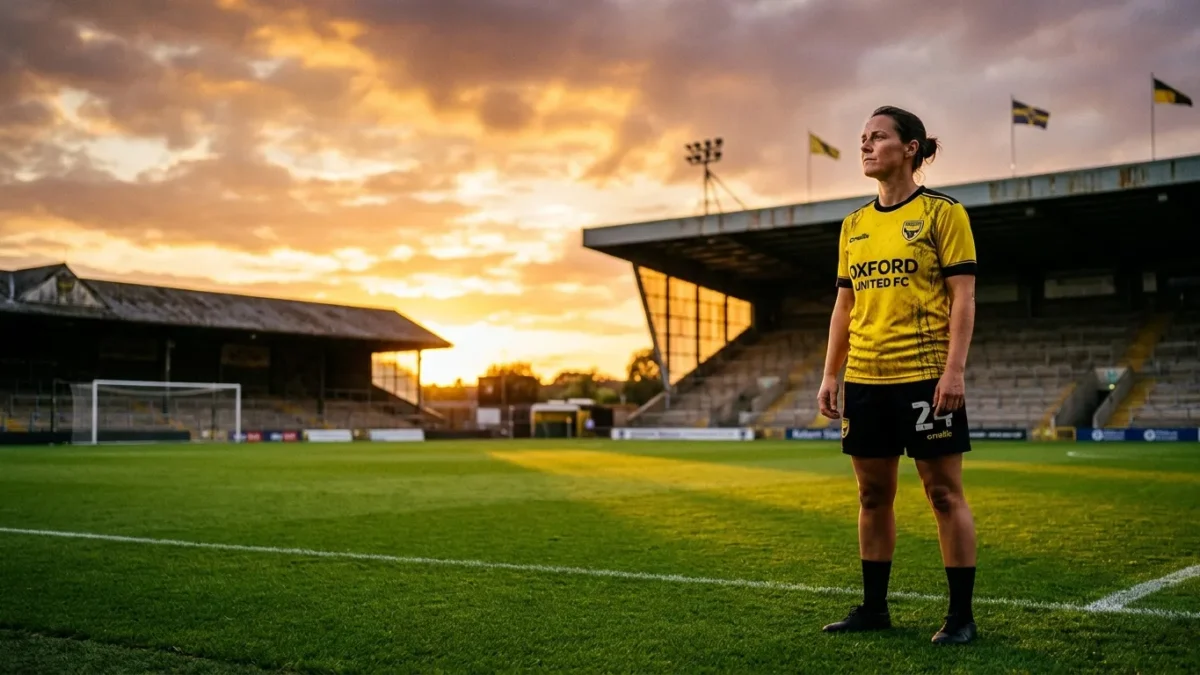
Oxford United’s relegation from the Championship was confirmed on April 25, 2026 — not on the pitch, but on another ground entirely. Charlton Athletic’s win over Hull City mathematically ended the U’s two-season spell in the second tier before Matt Bloomfield’s side even kicked a ball against Sheffield Wednesday. That context makes what followed all the more striking.
A 4-1 win that couldn’t hide the wider pain
Oxford produced their best attacking performance of the season in that final home fixture, beating Sheffield Wednesday 4-1. For Bloomfield, it was only his sixth victory since taking the manager’s job in January 2026. Six wins. In a relegation battle, that statistic tells its own story — and the Oxford head coach isn’t hiding from it.
“Complete mix of emotions,” he admitted to BBC Radio Oxford straight after the final whistle. That phrase sums up an afternoon that swung between genuine pride and sharp disappointment, sometimes within the same breath. The supporters played their part too, giving the squad a warm reception at the end of the match despite the circumstances.
| Match | Result | Competition |
|---|---|---|
| Oxford United vs Sheffield Wednesday | 4–1 (Oxford win) | Championship, April 25 2026 |
| Charlton Athletic vs Hull City | Charlton win | Championship, April 25 2026 |
That send-off from the terraces clearly moved Bloomfield. Fan loyalty during a relegation season is never guaranteed — plenty of clubs have seen supporters turn against their team long before the drop is confirmed. Oxford’s fans chose a different path. The manager noticed, and he said so publicly.
Bloomfield prend stock of his own performance
Here’s where Bloomfield separates himself from the managers who point fingers elsewhere. He was direct about personal accountability. “You look at yourself all the time,” he said. “If you want to get better at anything, you have to be self-critical.” That’s not a line from a press conference template — it reads like something he genuinely believes.
Taking over a club deep in a Championship relegation scrap is one of the hardest assignments in English football management. The job came with little runway. Still, only six wins from roughly 16 matches in charge is a return that Bloomfield himself wouldn’t defend. The honest self-assessment matters here, because it shapes how he approaches the rebuild.
His key reflections can be broken down clearly :
- Acknowledge the disappointment without deflecting blame onto external factors
- Recognise what the supporters gave the club throughout the season
- Commit to analysing every decision made during the campaign
- Treat setbacks as data, not just defeats
That mindset is exactly what Oxford need from their manager heading into League One. Self-diagnosis after a relegation is far more productive than spinning a narrative about bad luck or fixture congestion.
Oxford United et la League One : une opportunité déguisée
Frankly, League One could be the reset Oxford need. The club spent two years in the Championship — a level where the financial gap between promoted sides and established second-tier clubs is brutal. Oxford’s squad budget was always going to be tested against sides like Leeds United or Sunderland. Dropping back down doesn’t erase what the club achieved by getting there in the first place.
Bloomfield made no attempt to soften the blow with hollow reassurances. But he was equally clear : “I’m really excited for the future.” That’s not spin. The squad that just put four goals past Sheffield Wednesday has real quality. The experience of competing — and struggling — at Championship level will count for something when the third tier begins next season.
According to EFL data, clubs that are relegated from the Championship and spend one or two seasons in League One before bouncing back often return with stronger squad depth and a clearer tactical identity. Oxford will hope to follow that pattern rather than the alternative — drifting.
The question now is whether Bloomfield gets the time and resources to do it. Manager continuity after relegation is statistically rare in English football. Most clubs panic, sack the coach and start again — often making things worse. Oxford’s board face a genuine decision here, and the manager’s honest post-match interview suggested he’s not planning to walk away.
What the next chapter genuinely requires from this club
The gap between where Oxford are and where they want to be isn’t insurmountable. But it demands sharp decisions this summer. Squad retention, targeted recruitment for League One, and a clear playing identity — these are the three non-negotiables heading into pre-season.
Bloomfield’s self-critical tone is a good foundation. Managers who refuse to examine their own decisions rarely improve. The 4-1 win against Wednesday, while it arrived too late to matter in the table, offers a blueprint : attacking intent, collective work rate, and a crowd behind the team. That combination, applied consistently across a 46-game League One season, is what promotion campaigns are built on.
Oxford United’s supporters showed up on a day when many fans wouldn’t have bothered. That connection between the stands and the dugout is worth more than most pre-season signings. Bloomfield acknowledged it. Now the job is to build something worthy of it — starting from League One, with eyes fixed firmly on the Championship return.
