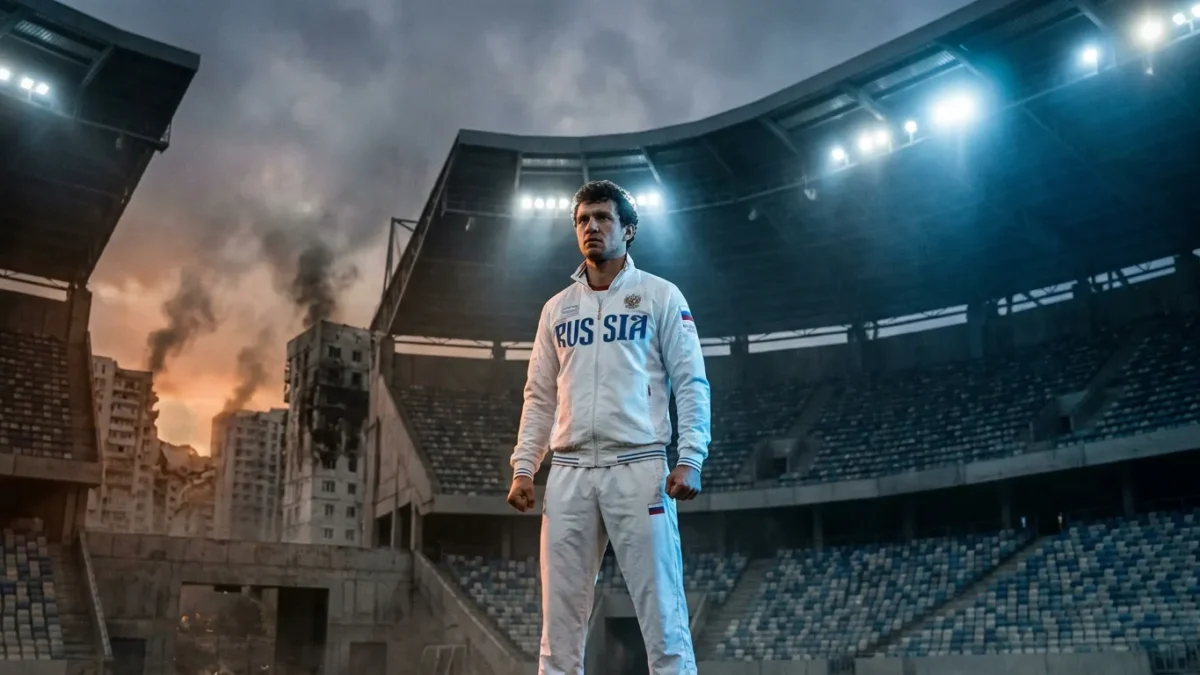
The geopolitical fault lines running through international sport have rarely been this exposed. Russia’s gradual return to global athletic competition — under various conditions and neutral banners — has triggered a wave of fury in Ukraine, where the war launched in February 2022 has claimed tens of thousands of lives. The debate isn’t just about athletics. It’s about what sport signals to the world when bombs are still falling.
Russia’s return to sport : a calculated move with real consequences
Since 2022, most major international sporting bodies suspended or banned Russian and Belarusian athletes following Moscow’s full-scale invasion of Ukraine. But the situation has been shifting. The International Olympic Committee opened the door to neutral participation for Russian athletes at Paris 2024 — under strict conditions, with no flag, no anthem, and only athletes who hadn’t actively supported the war effort allowed to compete. Around 15 Russian athletes competed under the AIN (Individual Neutral Athletes) banner at Paris 2024.
That number is small, but the symbolism is enormous. For Ukraine, even one Russian athlete on the podium feels like a betrayal. The Ukrainian Olympic Committee made its position crystal clear : no Russian or Belarusian athletes should be allowed to compete in any international event while the war continues. Several Ukrainian athletes went further, threatening boycotts.
This tension isn’t abstract. Imagine training for four years, surviving an invasion, watching your training facilities get bombed — then standing next to a competitor from the country that did it, competing as if everything were normal. That’s the lived reality Ukrainian athletes describe.
| Event | Russian participation | Ukraine’s response |
|---|---|---|
| Paris 2024 Olympics | ~15 neutral athletes (AIN) | Strong protest, partial participation |
| 2024 World Athletics Championships | Limited neutral entries | Formal objection by Ukrainian federation |
| Various tennis ATP/WTA events | Allowed as individuals | Calls for full ban, some boycott threats |
The IOC’s framework, designed to thread a diplomatic needle, has satisfied almost no one. Ukraine sees it as legitimizing Russia. Many Russian sports officials see it as humiliating. The compromise pleased neither side, which might be the clearest sign that the moral stakes here go well beyond sport.
Ukraine’s fury : more than symbolic protest
Ukrainian President Volodymyr Zelensky has been unambiguous. He personally called on international federations to maintain full exclusions, arguing that allowing Russian athletes to compete sends a dangerous message — that aggression carries no lasting cost. His government formally lobbied the IOC and FIFA, with limited success.
The anger runs deeper than politics. Since February 2022, Ukraine has lost sports infrastructure worth hundreds of millions of euros. Stadiums have been shelled. Sporting academies destroyed. At least 400 Ukrainian athletes and coaches were killed in the conflict as of late 2024, according to the Ukrainian Olympic Committee. Against this backdrop, calls for Russia’s sporting isolation aren’t diplomatic posturing — they’re raw grief turned into policy.
What makes Ukraine’s position harder to dismiss is its consistency. Unlike some geopolitical disputes where sporting bodies can claim neutrality, Russia’s invasion is unambiguously classified as an act of aggression by the UN General Assembly — a fact 141 countries voted to affirm in March 2022. Ukraine’s argument is simply that this classification should carry institutional consequences.
- Ukrainian athletes competing abroad face psychological pressure few Western competitors can imagine
- Several Ukrainian sports federations have lobbied directly at IOC sessions in Lausanne
- The Ukrainian government has threatened to withdraw from events that allow Russian participation without restrictions
- Ukrainian civil society groups have launched campaigns targeting sponsors of international federations seen as too lenient
None of this has produced a total ban. Sport’s governing bodies, from the IOC to FIFA, are caught between legal obligations, commercial pressures, and genuine disagreement about whether collective punishment of athletes is just.
The geopolitical backdrop reshaping every decision
Russia’s sports comeback doesn’t exist in a vacuum. It’s unfolding alongside a broader geopolitical turbulence that makes clear, principled international responses harder to sustain. The United States, historically a strong voice for democratic norms on the world stage, is navigating its own chaotic foreign policy moment — with the Trump administration in 2026 simultaneously feuding with Pope Leo XIV over Iran policy, threatening Tehran’s civilian infrastructure publicly, and generating international alarm with increasingly aggressive rhetoric.
Pope Leo XIV, elected in 2025, has repeatedly warned against military escalation in the Middle East. Donald Trump publicly attacked the pontiff, calling him “weak on crime and terrible for foreign policy” — an extraordinary exchange that underscored just how fractured Western unity has become. Tucker Carlson, in a rare break from Trump alignment, called the U.S. president’s Easter Sunday social media post — which featured Trump depicted as a Christ-like figure — “vile on every level.”
This internal Western discord matters for Ukraine. A unified, values-driven West was the foundation of Ukraine’s diplomatic leverage. When that unity frays — when Washington feuds with the Vatican, threatens Iran’s power plants, and retreats from multilateral norms — the institutional pressure on bodies like the IOC to hold firm on Russia weakens too.
The hard truth is that Russia’s sporting rehabilitation is accelerating precisely when Western coherence is at its most fragile. Ukraine’s anger is legitimate. But anger alone won’t hold the line. What Ukraine needs — and what remains dangerously uncertain — is sustained, coordinated international resolve that doesn’t bend under the weight of geopolitical fatigue or commercial incentives. That resolve, right now, looks thinner than it should.
