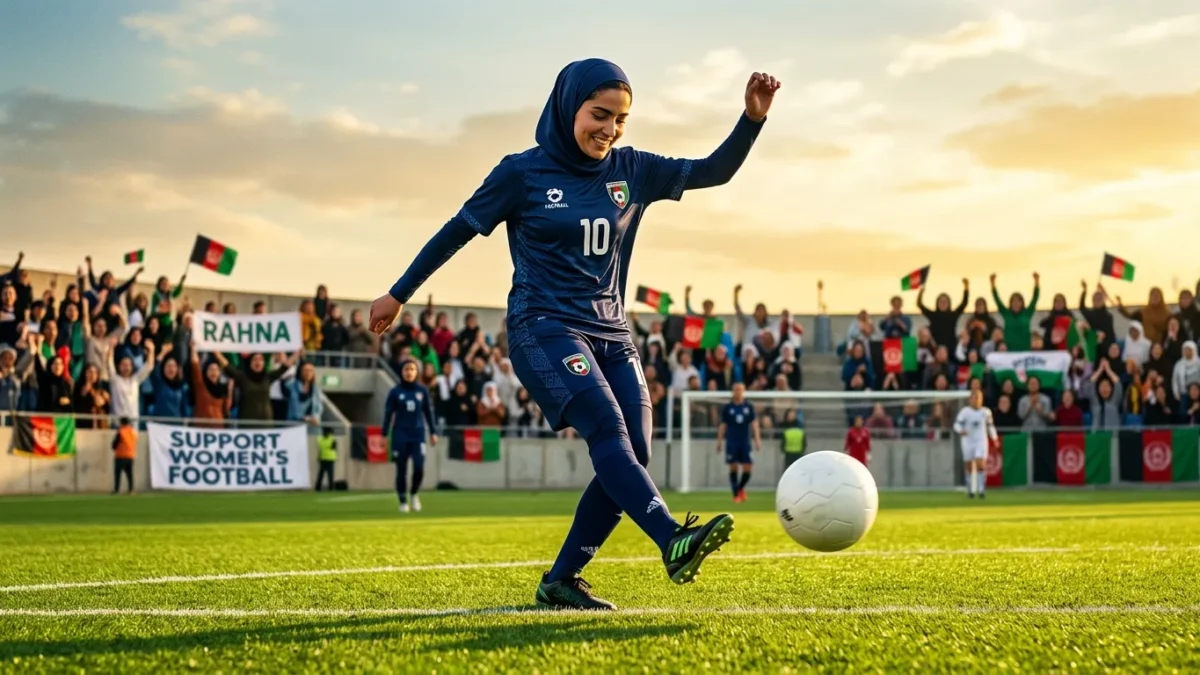
Forty-one years after Afghanistan’s first women’s football match, the team is on the verge of a genuine comeback. FIFA’s landmark rule change, announced in late April 2026, officially allows Afghan women to compete in international football again — not as a refugee side, but as a fully recognised national team. For the hundreds of Afghan female players scattered across Europe, Australia, the United States and the Middle East, this is more than a sporting development. It’s a political statement.
What FIFA’s rule change actually means for Afghan women’s football
The core shift here is recognition. Afghan women footballers can now represent their country in official FIFA competitions, with all the formal standing that implies — rankings, match records, eligibility for qualification cycles. This is fundamentally different from their previous status as a sanctioned refugee collective.
The groundwork was laid in May 2025, when FIFA greenlit Afghan Women United — a pilot refugee team — for a one-year trial period. That project came after years of persistent lobbying by displaced Afghan players who refused to let their football identities disappear along with everything else. The pilot gave the squad structure, contracts and visibility. Three matches were played during the 2025 FIFA United Women’s Series, including a first-ever win against Libya in November 2025. That result mattered far beyond the scoreline.
Now, the pilot graduates into something permanent. FIFA president Gianni Infantino framed the decision explicitly : “We are proud of the beautiful journey initiated by Afghan Women United and, with this initiative, we aim to enable them, as well as other FIFA member associations that may not be able to register a national or representative team for a FIFA competition, to make the next step.” The wording matters — FIFA is signalling that Afghanistan isn’t a unique exception. Other displaced football communities could follow the same path.
There are currently more than 80 Afghan female footballers living outside Afghanistan, including a significant number of the 25 players who held contracts before the Taliban seized power in August 2021. Many trained for years under difficult conditions and then fled. Their careers should have been over. They weren’t.
Timeline and upcoming competition milestones
The schedule is already taking shape. Here’s where things stand as of April 2026 :
| Event | Location | Timing |
|---|---|---|
| Regional selection camp | England | Spring 2026 |
| Regional selection camp | Australia | Spring 2026 |
| Training camp | New Zealand | June 2026 |
| Expected return to action | TBC | June 2026 |
The team will not be eligible to enter qualifying for the 2027 Women’s World Cup — the timeline simply doesn’t allow it. But the 2028 Olympic qualification cycle is firmly in scope. That’s a realistic, meaningful target, not a symbolic gesture. Qualifying for the 2028 Olympics would represent one of the most extraordinary stories in the history of international women’s sport.
FIFA is hosting the selection camps directly, which signals genuine institutional investment rather than passive support. Bringing players together from diaspora communities across multiple continents requires logistical commitment — and FIFA appears to be providing it.
The human reality behind the competitive return
Khalida Popal has been the central figure in keeping Afghan women’s football alive since 2021. The former captain and longtime activist spoke plainly about what this moment means — and what it doesn’t erase.
“Our team has always been known as an activist team,” she told Reuters. “But this opportunity, with the right support from FIFA, will be the time for us to also show some skills and develop the youth talent in the diaspora.” That last point is crucial. The competitive return isn’t just about the current generation. It’s about building something for Afghan girls growing up in exile — giving them a footballing identity to connect with.
Popal was also clear-eyed about the situation inside Afghanistan itself. Women and girls there cannot play football. They cannot attend matches. Under Taliban rule, sport for women is essentially banned. That reality doesn’t disappear because a national team is now officially recognised by FIFA.
- Afghan women inside Afghanistan cannot currently participate in the team
- The diaspora squad serves partly as a symbolic lifeline for those left behind
- Popal described the platform as a way to “send out hope messages” to women in Afghanistan
- The team aims to demonstrate that Afghan women have not been forgotten
“I know it’s going to be tough because Afghan women inside Afghanistan will struggle to be part of that,” Popal acknowledged. The tension is real and uncomfortable. A national team that cannot include most of its nation raises questions that go well beyond football governance. But Popal’s position is that visibility itself has value — that competing, winning and being seen matters to women who have been rendered invisible by their own government.
What this precedent could mean for other displaced football communities
Read Infantino’s statement again carefully. He specifically mentioned “other FIFA member associations that may not be able to register a national or representative team.” Afghanistan is the test case, but the framework being built here could apply elsewhere. Think about what that means structurally : FIFA is developing a mechanism for stateless or displaced football communities to maintain international standing even when their home country’s governing structures have collapsed or been captured by hostile forces.
This is genuinely new territory. No equivalent model existed in women’s football before the Afghan Women United pilot in 2025. If the Afghan team performs credibly — in selection camps, in competitive qualifiers — it strengthens the argument for extending similar pathways to other communities. The sporting and political implications extend well beyond Kabul. For any player forced into exile by conflict or repression, this Afghan story is worth watching very closely.
