At least 13 major college football coaches are already set to earn $10 million or more next season. That single figure tells you everything about why Washington is finally stepping in. The White House committee on college sports reform is now circulating a preliminary draft of proposals that could reshape American collegiate athletics more fundamentally than any previous federal initiative.
What the White House committee is actually proposing
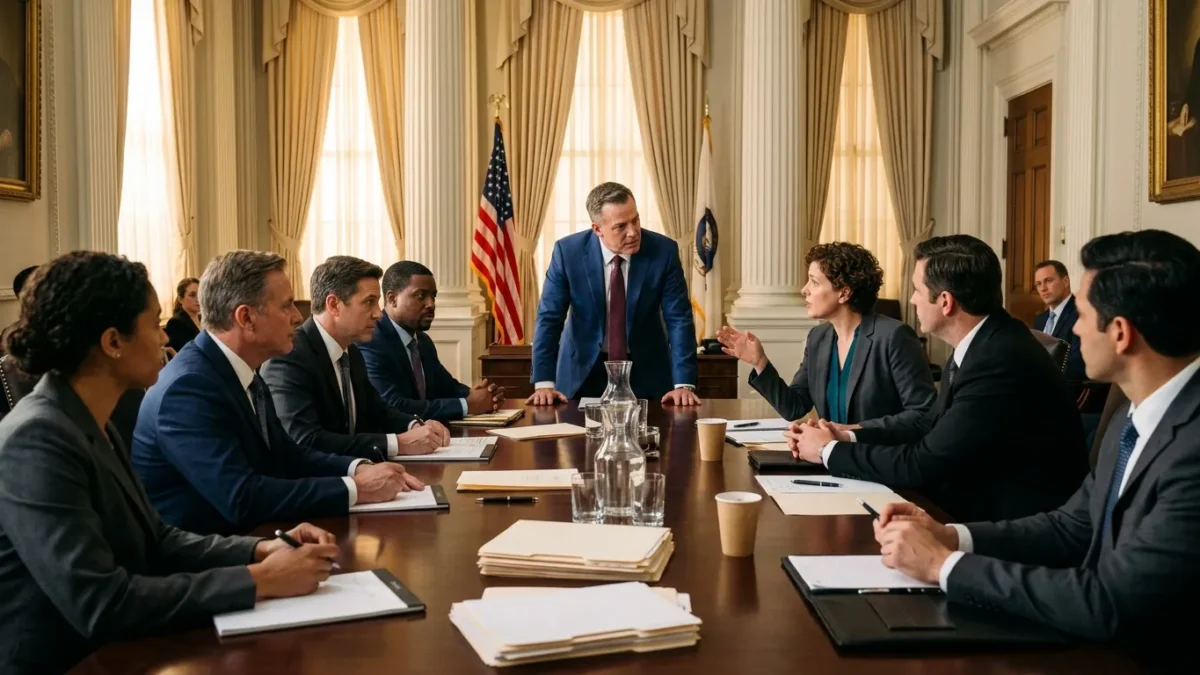
President Trump formed five separate committees in March, following a high-profile “Saving College Sports” roundtable in Washington D.C. The broader effort is led by New York Yankees president Randy Levine and Florida Governor Ron DeSantis as vice chairs, with Trump chairing an oversight committee. The roster also includes former Alabama coach Nick Saban, NBA commissioner Adam Silver, former Secretary of State Condoleezza Rice, and power conference commissioners. These are not obscure bureaucrats — this is a room full of people who understand money, power, and competition.
The draft, reviewed by CBS Sports on Friday and marked “discussion purposes only,” lays out a three-phase plan : stabilization, media rights reform, and permanent governance. The committee is actively seeking input from athletes and industry participants before anything becomes formal policy. Still, the direction is unmistakably bold.
Phase 1 hits hardest. Salary caps for coaches and administrators would represent the most direct federal intervention into athletic department spending ever proposed. The logic is straightforward : programs are cutting non-revenue sports and shrinking staff because costs are spiraling. Capping salaries addresses the source of the hemorrhage. The draft also calls for prohibiting NIL-based salary cap circumvention — a real and growing problem, since booster collectives are funneling multimedia rights and apparel revenues to supplement the $20.5 million schools can share with players under the House v. NCAA settlement.
Two other Phase 1 ideas stand out. First, modifying how the College Football Playoff distributes revenue, and creating a separate playoff structure for Group of Six conferences. Second, introducing a college version of the NBA’s Bird Rule — a mechanism that would let schools offer financial incentives to players who stay put across consecutive seasons, slowing the transfer portal frenzy that has reshaped rosters every offseason.
The congressional bottleneck and antitrust protection
Here’s the uncomfortable truth : none of this works without Congress. Every proposal in the draft hinges on legislation that would shield the NCAA and its member institutions from antitrust lawsuits. The committee is pushing hard for that legislation to pass before the summer recess — and explicitly stated it wants this done “even if such legislation is inconsistent with any recommendations made in this memo.” That’s an unusual level of urgency.
The long-anticipated SCORE Act is expected to reach the House floor the week of May 18, 2026. But leadership acknowledges the bill is at least six votes short of passing the Senate. That gap isn’t trivial.
The draft proposes creating a College Sports Reform Task Force within the existing NCAA structure. This body would hold limited antitrust exemptions and the authority to override state laws. It would operate for two years — and critically, any rules it sets during that window would carry permanent antitrust protection, remaining in effect even after the task force dissolves, unless Congress or a successor body intervenes. That’s a significant mechanism, essentially baking policy durability into the task force’s design.
| Phase | Key proposals | Timeline |
|---|---|---|
| Phase 1 – Stabilization | Salary caps, NIL circumvention ban, Group of Six playoff, Bird Rule transfer incentive | Immediate / near-term |
| Phase 2 – Media rights | Pooled media rights model, opt-in for 75+ schools, amend Sports Broadcasting Act | Mid-term (tied to contract expirations) |
| Phase 3 – Permanent governance | 15-member oversight board, sport-specific commissioners, successor to task force | Long-term structural reform |
Media rights, governance, and what comes next for college sports
Phase 2 targets the money pipeline that funds everything : media rights. The committee proposes a pooled model where 75 or more schools combining their broadcasting rights at contract expiration would receive antitrust protection. It’s an opt-in structure — no forced consolidation — but the incentive is real. The proposal would require amending the Sports Broadcasting Act, no small legislative lift.
The idea of pooling media rights across conference lines was previously floated by Texas Tech booster Cody Campbell, who sits on the president’s committees. American Conference commissioner Tim Pernetti has since publicly backed the concept. The practical challenge is timing : the ACC’s deal is the last major conference contract set to expire, in 2036. Any structural shift in media rights will be gradual, not overnight.
Phase 3 envisions a 15-member permanent governing board built from the task force’s remains. Its composition would include :
- Active players
- Power conference commissioners
- Notre Dame’s athletic director
- Two representatives from other conferences
- One representative from Division II and III combined
- An independent representative
- An attorney
The committee also floated appointing sport-specific commissioners — a concept borrowed from professional leagues — to oversee individual sports governance separately from the broader board.
One angle worth watching closely : the suggestion to reshuffle conference membership for non-revenue sports to cut travel costs and reduce the burden on student-athletes. This would be a quiet but meaningful change — think a swimmer at a Big Ten school no longer flying cross-country for a dual meet. The financial and athletic welfare implications are real. If the reform effort only captures headlines around football and basketball, it risks missing the structural changes that would most benefit the other 85% of college athletes.
