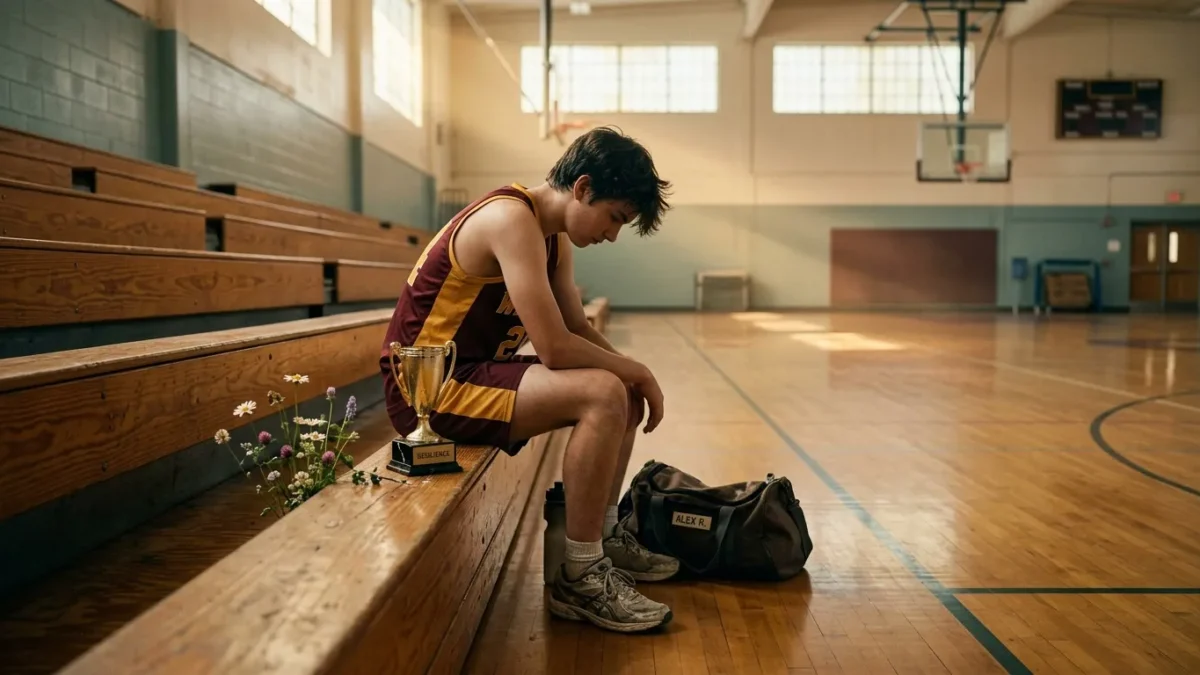
Over 4 million mid-lifers in the UK still carry painful memories of PE lessons, according to an Age UK survey that launched the Act Now, Age Better campaign. That figure isn’t just striking — it’s a wake-up call. A comparable number reported being put off physical activity for the rest of their lives precisely because of what happened in school gymnasiums and on muddy playing fields. When a single institutional experience shapes decades of sedentary behaviour, something has gone seriously wrong.
When school sport leaves lasting psychological scars
The gap between what sport could do for people and what it actually does is wider than most policymakers admit. Health bodies, sports councils, and think tanks have spent years piling up evidence that physical activity improves academic performance, mental health, and community cohesion. Yet activity levels among the population are barely shifting. That disconnect isn’t just a policy failure — it has deep roots in how millions of people experienced sport as children.
Think about what compulsory PE often looked like in practice. Students who weren’t naturally athletic were sorted, labelled, and left behind. Too many young people grew up believing they were simply “not sporty” — a label applied fast, rarely questioned, and carried for life. That’s not a minor inconvenience. Research consistently links negative early experiences with physical activity to long-term avoidance of exercise in adulthood.
The author of this piece knows this firsthand. As a tall, uncoordinated teenager who couldn’t run fast, spending PE lessons finding ways to avoid the school field wasn’t unusual — it was survival. His father had the same experience in the 1950s. That’s two generations of the same family shaped by the same institutional failure. It was only through discovering rowing at university, completely by chance, that sport became something joyful rather than humiliating. Camaraderie, competition for fun, a sense of belonging — none of that had been available at school.
That kind of serendipity shouldn’t be the only path to a positive relationship with sport. Yet the current system offers too few alternative routes.
Structural failures in physical education and why they persist
The problem isn’t just cultural — it’s deeply structural. Education policy in the UK has long prioritised individual academic subjects over a holistic understanding of how young people learn, develop, and thrive. PE has become almost optional in many schools, squeezed out by timetabling pressures and an exam-driven curriculum that treats movement as secondary.
Several recent reports make this painfully clear :
- The Centre for Social Justice report Inactive Nation highlights a growing health crisis among primary school children.
- The Youth Sport Trust has spotlighted the urgent needs of what it calls the Class of 2035.
- The House of Commons inquiry Game On : Community and School Sport called for better coordination between schools, clubs, and community organisations.
- Bradford’s Creating Active Schools framework offers a practical model where movement is embedded into the entire school day, not confined to one lesson.
The Creating Active Schools approach deserves particular attention. Rather than treating PE as a standalone subject, it asks schools to reorganise their culture around movement. The Centre for Social Justice recommends scaling this nationally — and frankly, it’s hard to argue against that when the alternative is another generation leaving school with a deeply negative relationship with their own body.
| Initiative | Focus | Key strength |
|---|---|---|
| Bradford’s Creating Active Schools | Whole-school movement culture | Embeds activity beyond PE lessons |
| Greater Manchester’s Moving Partnership | Health, transport and urban design | 10-year strategy with political backing |
| The Big Map (Mark Davies) | School-club connections | Links funding with local grassroots action |
| Age UK’s Act Now, Age Better | Adult reengagement with activity | Surfaces the scale of school PE trauma |
Mark Davies, entrepreneur and former chair of both British Rowing and Archery GB, has spent years advocating for direct connections between local schools and sports clubs. Frustrated by inaction since the era when Tracey Crouch served as sports minister (2015–2018), he built The Big Map — a platform enabling schools and clubs to connect and access funding. It’s exactly the kind of entrepreneurial thinking that top-down policy has consistently failed to generate.
Reshaping sport around people, not the other way around
Here’s the core issue : for too long, people were expected to fit sport, rather than sport fitting people. That sounds obvious when stated plainly, but it explains almost everything — why participation campaigns underdeliver, why activity levels plateau, and why 4 million adults still flinch at the memory of a cold Thursday morning on a football pitch.
Increasing participation numbers was treated as the goal. It isn’t. The quality of the experience is what determines whether someone stays involved for life. Age UK’s data makes that undeniable. People disengage not because they lack willpower, but because their experience told them sport wasn’t for them.
The sport for development sector — organisations like StreetGames and the Alliance for Sport in Criminal Justice — already understands this. These groups know how to adapt physical activity to meet people where they are : supporting young people at risk of offending, helping older adults re-engage with movement, building community through shared participation. They measure real-life outcomes, not league table positions.
The health system, meanwhile, has spent decades organising itself around treatment rather than prevention. Social prescribing is a step forward, but it remains fragmented. A genuine national shift toward preventative health — one where sport and movement are core tools, not afterthoughts — requires the kind of political will that has been conspicuously absent.
If you want a practical starting point : push for Bradford’s model to be adopted in your local schools, support clubs that explicitly prioritise inclusion over performance, and stop measuring sporting success purely by medals or competitive results. Sport has the potential to anchor a good life at any age. The first step is making sure it stops being a source of damage.
