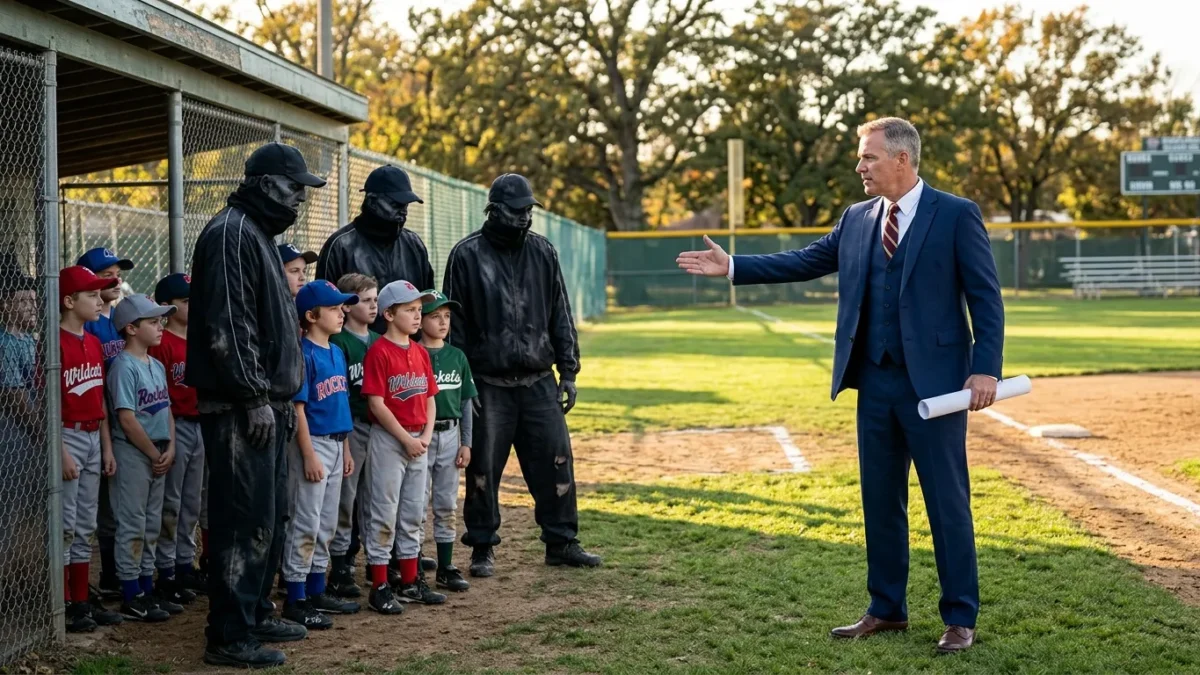
The youth sports industry pulls in more than $40 billion in annual revenue — and a growing share of that money flows not to coaches, fields, or kids, but to private equity firms that have quietly taken control of everything from ice rinks to cheerleading organizations. That’s exactly the problem Senator Chris Murphy (D-Connecticut) and Representative Chris Deluzio (D-Pennsylvania) decided to tackle head-on when they introduced the Let Kids Play Act on May 13, 2026, at the U.S. Capitol.
What the Let Kids Play Act actually targets
This bill isn’t a vague political statement. It zeroes in on what its authors call “vulture practices” — a term defined in the legislation itself as any practice, tactic, or method that causes harm or creates long-term risk of harm to extract profit for a private equity firm or its affiliates. That definition is deliberately broad, and intentionally so.
Concretely, the bill takes aim at behaviors that many sports parents know all too well :
- Stay-to-play requirements forcing families to book specific — often overpriced — hotels during tournaments
- Multi-season contracts with non-refundable tuition and mandatory travel commitments
- Streaming fees that charge parents to watch their own child compete
- Data mining through registration apps, harvesting financial and physical metrics from families and kids
- “Take it or leave it” contract terms with no room for negotiation
Murphy himself admitted he’s a victim of this system. His 14-year-old plays in a youth hockey league controlled by Black Bear Sports, a firm that has consolidated ice rinks and hockey teams across the Northeast and Midwest. “I admit I bear some of the responsibility for our fate,” he said. “Not everything in the world needs to be run for profit.” That kind of candor from a sitting senator is rare — and it underlines just how pervasive these practices have become.
Katherine Van Dyck, a senior legal fellow with the American Economic Liberties Project who has litigated against Varsity Brands over monopolization of cheerleading, put it bluntly at the Project Play Summit in Boston : these firms build what she calls walled gardens — ecosystems designed to trap families inside and keep competitors out. “None of those things are aimed at child development,” she said. “They’re aimed at extraction.”
What the law would actually do if it passes
The Let Kids Play Act goes further than symbolic condemnation. Its provisions carry real legal weight — assuming it clears Congress and lands on President Donald Trump’s desk for signature, which is no small hurdle given its Democratic backing.
| Provision | What it means for families |
|---|---|
| Full refunds for junk fees | Private equity firms must reimburse families for fees collected through vulture practices |
| Predatory contract cancellation | Outstanding debts, interest, and late fees imposed by these firms are wiped out |
| Liability for safety violations | Firms are directly accountable for debt and safety failures at acquired entities |
| Youth Sports Fund | Penalties paid by firms fund scholarships, reduce costs, and keep local fields free |
| Right to sue | Parents and state attorneys general gain legal standing to challenge abusive practices |
Representative Pramila Jayapal (D-Washington), who co-led the legislation and helped launch the Monopoly Busters Caucus in the House, summed up the core logic : “Wall Street and private equity have no business in kids’ sports.” Whether you agree with that statement politically or not, the systemic dynamics she describes are hard to argue with.
Deluzio was equally direct about the bill’s scope. It doesn’t target every travel sports organization — it targets the worst conduct. Varsity Brands, which has already faced litigation and settlements, is one example. Black Bear Sports is another. The focus is on practices, not corporate structures.
Can legislation actually fix youth sports — and what comes next ?
Here’s the honest answer : maybe not immediately. Passing federal legislation is slow. Getting a bill with exclusively Democratic sponsors signed by a Republican president is a steep climb. But that doesn’t make the effort pointless.
Deluzio acknowledged as much : “The public relations effort here may have a shaming impact on the industry, which will help kids and families.” Congressional hearings in December 2025 already described conditions in youth sports as a crisis — language that carries weight beyond the hearing room. Awareness, even without legislation, changes behavior.
Jay Adya, managing partner of Elysian Park Ventures, a global sports investment platform, offered a different frame at the same Boston summit. Private equity, he argued, is “much later stage investment in much more mature companies” — and how that capital is deployed matters. The problem isn’t investment itself; it’s investment without accountability.
For parents, Van Dyck’s advice is practical and immediate : contact your Congress member, reach out to your city council, and push back when something feels wrong. Youth sports should never be a luxury — Deluzio has said it repeatedly, and the data backs him up. When families pay thousands of dollars per child per season just to participate, something structural has gone badly wrong.
The real question worth watching isn’t whether this specific bill passes in its current form. It’s whether the pressure it creates forces organizations like Varsity Brands or Black Bear Sports to rethink pricing and contract structures before regulators force their hand. That kind of preemptive industry reform — driven by public scrutiny rather than courtroom orders — might actually reach families faster than any bill.
