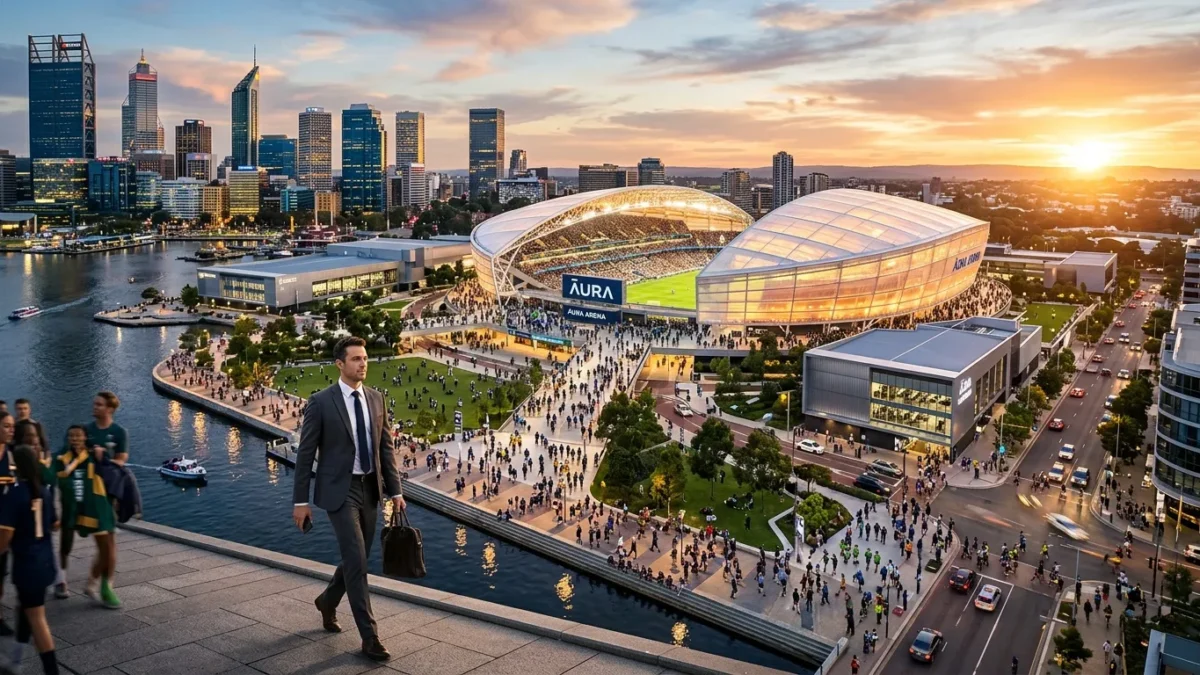
Atlanta just claimed the top spot in Sports Business Journal‘s fourth annual Best Sports Business Cities™ ranking — and frankly, it’s hard to argue against it. Sixty years after the city lured the Milwaukee Braves south with a brand-new ballpark, Atlanta has built something far more ambitious : a full-blown sports business ecosystem that rivals anything in North America. World-class venues, entrepreneurial ownership groups, a deep bench of blue-chip sponsors, and forward-thinking city officials have made it a genuine global leader in the industry.
Atlanta at the top : what makes a city a sports business powerhouse ?
The Best Sports Business Cities™ methodology is rigorous. For the 2026 edition, analysts examined 2,384 markets that host at least one professional or Division I college program, a permanent event, or a major industry stakeholder. The sheer scale of the data is striking : 9,409 unique entities tracked, over 520 construction projects monitored, more than 1,000 naming rights deals and uniform patches logged, and a cumulative attendance figure of 1.48 billion. Add 300+ sports industry B2B events and 1,600+ sponsors into the mix, and you start to understand why this ranking carries real weight.
So what actually separates the top markets from the rest ? It’s not just the number of franchises. Atlanta’s rise to No. 1 comes from a combination of factors that few cities can replicate simultaneously. The skyline around Centennial Olympic Park tells the story visually — Mercedes-Benz Stadium, the College Football Hall of Fame, and the Georgia World Congress Center all cluster in a zone that functions as a permanent sports and entertainment district. That kind of infrastructure density creates a virtuous cycle : events attract sponsors, sponsors fund venues, venues attract more events.
For me, the real differentiator in Atlanta is the ownership culture. When team owners think like entrepreneurs rather than landlords, deals get done faster, partnerships run deeper, and the economic ripple effects spread wider across the local economy. That’s exactly what’s happened here over the past decade.
The full 2026 top 50 : a snapshot of the best sports business markets
New York City holds second place — no surprise given its sheer market size and franchise density. But the genuinely interesting story in this year’s ranking is Indianapolis at No. 3, ahead of Los Angeles (No. 6) and Chicago (No. 19). Indianapolis consistently punches above its weight by hosting marquee events like the NFL Combine and leveraging the Indiana Convention Center’s direct connection to Lucas Oil Stadium.
Here’s a look at the complete 2026 Best Sports Business Cities™ top 50 :
| Rank | City / Market |
|---|---|
| 1 | Atlanta |
| 2 | New York City |
| 3 | Indianapolis |
| 4 | Charlotte |
| 5 | Minneapolis-St. Paul |
| 6 | Los Angeles |
| 7 | Las Vegas |
| 8 | Phoenix |
| 9 | Kansas City |
| 10 | Miami |
| 11 | Washington, D.C.-Northern Virginia |
| 12 | Salt Lake City |
| 13 | Tampa |
| 14 | Philadelphia |
| 15 | Nashville |
| 16 | Denver |
| 17 | Boston |
| 18 | Orlando |
| 19 | Chicago |
| 20 | Dallas |
| 21–50 | Northern New Jersey, Seattle, Research Triangle NC, Arlington TX, Houston, Columbus, San Diego, San Jose-Sunnyvale-Santa Clara, Detroit, Austin, San Francisco-Oakland, Pittsburgh, Cleveland, Cincinnati, Jacksonville, Milwaukee, St. Louis, Birmingham AL, Colorado Springs, Fort Lauderdale, Portland, Orange County CA, New Orleans, San Antonio, Greenville SC, Frisco TX, Oklahoma City, Louisville, Fort Worth TX, Greensboro-High Point NC |
Charlotte at No. 4 deserves a closer look. The city has quietly built one of the most dynamic sports corridors in the Southeast, with significant stadium construction activity and a growing sponsorship market driven by its financial sector. Las Vegas at No. 7 reflects the city’s rapid transformation — the Raiders’ Allegiant Stadium opened in 2020 and has since hosted Super Bowl LVIII in February 2024, confirming that the market can handle the biggest events on the calendar.
What these rankings actually mean for investors and decision-makers
If you’re thinking about where to place a sports business investment — whether that’s a franchise, a venue partnership, a sponsorship deal, or a B2B services company — this ranking is a practical starting point, not just an academic exercise. The cities in the top 15 share one trait : sustained infrastructure investment. They don’t just build for one event and move on.
Consider what separates a market like Nashville (No. 15) from one like Oklahoma City (No. 47). Nashville now hosts an NFL franchise, an MLS team, and a competitive NHL club — that multi-sport density creates year-round commercial inventory for sponsors and media partners. Oklahoma City has the NBA’s Thunder, but the surrounding ecosystem is thinner.
- Markets with multiple major professional franchises generate broader sponsorship pipelines
- Cities with active venue construction signal long-term public and private commitment
- Proximity to a strong corporate base directly impacts naming rights valuations
- B2B event density — conferences, summits, trade shows — multiplies networking and deal-flow opportunities
The Research Triangle at No. 23 is the wildcard pick worth watching. It’s not a traditional major-league market, but its concentration of universities, tech companies, and sports science infrastructure makes it an increasingly attractive hub for sports business innovation. Don’t sleep on secondary markets — sometimes that’s exactly where the next Atlanta story starts.
