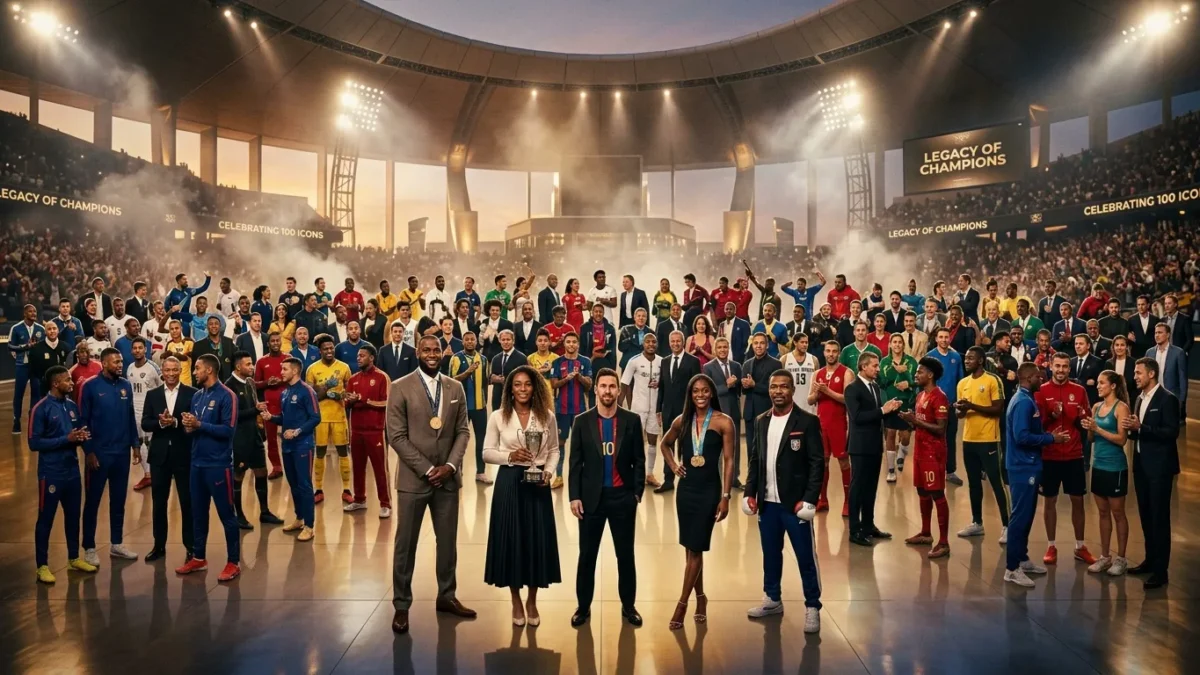
Every year, TIME magazine’s list of the most influential figures in sports cuts through the noise to spotlight who actually moves the needle. The 2026 edition, published on June 9, features 100 names spanning athletes, coaches, advocates, and investors, the people genuinely reshaping how we play, watch, and think about sport. This isn’t a popularity contest. It’s a deliberate editorial exercise led by project leads Lori Fradkin, Cate Matthews, Mark Selig, and Avery Stone, supported by a full team of writers, editors, designers, and digital specialists.
How TIME builds its 100 most influential sports figures
The selection process behind this ranking is more rigorous than most readers assume. A team of contributors, including Scott Allen, Sean Gregory, Tashan Reed, and Simmone Shah among others, researched and argued for each inclusion. Editors Merrill Fabry, Lily Rothman, and Karl Vick shaped the final editorial vision, while the art and design work fell to Rich Morgan, giving the project its visual identity.
What makes someone influential enough to land on this list ? The criteria go beyond medal counts or contract values. Cultural reach, social advocacy, and the ability to change conversations all weigh heavily. A coach who rebuilds a broken program matters. An investor who funds women’s leagues matters. An athlete who forces a federation to confront its own failures absolutely matters.
The audience team, including Diana Elbasha, Helen Ray, and Alyona Uvarova, handled distribution and engagement strategy, while photo editors Naomy Pedroza and Ava Selbach curated the visual storytelling. Video production came from a separate unit led by Andrew Johnson and Brian Braganza. This is, in short, a major editorial production, not a quick listicle thrown together overnight.
| Role | Key team members |
|---|---|
| Project leads | Lori Fradkin, Cate Matthews, Mark Selig, Avery Stone |
| Editorial contributors | Scott Allen, Sean Gregory, Alice Park, Rebecca Schneid |
| Editors | Merrill Fabry, Lily Rothman, Karl Vick |
| Photo | Naomy Pedroza, Ava Selbach |
| Digital | Nadia Suleman |
Profiles that define the 2026 sports power landscape
The 2026 list doesn’t just celebrate winners. It recognizes the full spectrum of influence, from the locker room to the boardroom. Athletes lead the count, but coaches, activists, and financial backers hold significant ground. The diversity of sports represented is genuinely broad : basketball, tennis, football, athletics, swimming, combat sports, and emerging disciplines all feature.
Frankly, what sets this edition apart from previous years is the weight given to off-field impact. Several honorees appear not because they dominated their sport statistically, but because they changed its structure. A women’s league founder who secured a broadcast deal worth tens of millions. A Paralympic champion who forced a national federation to overhaul its funding model. These stories carry as much editorial weight as any Olympic gold.
Here are the key categories the 2026 honorees fall into :
- Elite competitors, athletes at the peak of their discipline, setting records or dominating rankings
- Transformative coaches, figures who rebuild culture, not just tactics
- Sports advocates and activists, individuals pushing for equity, inclusion, and systemic reform
- Investors and executives, the money and strategy behind league expansion and media rights
- Emerging voices, younger figures establishing influence before reaching their prime
Contributors Charlotte Hu, Alice Park, and Leslie Dickstein brought depth to profiles that could have easily become formulaic. Their reporting adds texture : the detail about a coach’s philosophy, the context behind an athlete’s advocacy work, the numbers behind an investor’s portfolio. Good sports journalism treats its subjects as complex human beings, and this list, at its best, does exactly that.
What the 2026 rankings reveal about where sport is heading
Read this list carefully and a clear direction emerges. Women’s sports are no longer a footnote in coverage of influence. Multiple honorees come directly from the NWSL, the WNBA, women’s tennis, and women’s rugby. The financial backing flowing into these leagues in 2025 and 2026 has been substantial, and the list reflects that shift in power.
The presence of investors alongside athletes signals something important. Sport is increasingly shaped before the whistle blows, by the people deciding where money flows, which leagues survive, and which ones disappear. For me, that’s the most underreported angle in mainstream sports media, and TIME’s decision to include these figures is the right one.
Digital editor Nadia Suleman oversaw how this content reaches audiences across platforms. That matters more than it sounds. A list like this gains real influence when it circulates, sparks debate, and pushes readers to look up names they didn’t recognize. The 2025 edition of TIME’s sports list drove measurable spikes in search interest for several lesser-known honorees within 48 hours of publication.
If you want to understand sport in 2026, don’t just watch the games. Track the people on this list. Follow the coaches changing training philosophies, the advocates rewriting the rules, and the investors deciding which sports get a future. The 100 names TIME assembled this year are, collectively, a map of where sport is going next. Some of them you know well. Others you should.
